Bus-VAO Lane A-2: schedules, accesses, and who can use it

The infrastructure enters the testing phase between Madrid and Torrejón de Ardoz and will affect drivers accessing the capital from Soria via the highway.

2 minutes

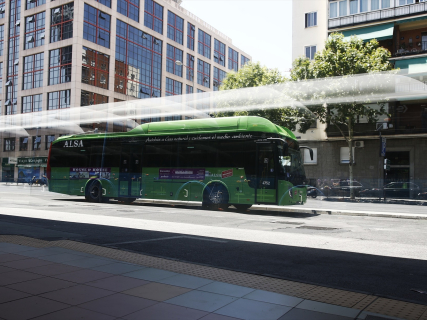
EuropaPress 2264906 autobus servicio interurbano madrid

EuropaPress 2264906 autobus servicio interurbano madrid

Add DEMÓCRATA to Google

Ask FREN

Published

Last updated

2 minutes

Most read

The new Bus-VAO lane of the A-2 has started its testing phase this Monday to organize the traffic entering and leaving Madrid. It will be reserved during certain time slots for buses, motorcycles, authorized vehicles, and cars with at least two occupants, including those arriving from Soria via this highway.

Bus-VAO A-2: schedules, accesses, and who can use it

The Bus-VAO lane of the A-2 entered the testing phase this Monday, August 3. The adaptation period will last throughout the month and the first week of September to check the installed technology and familiarize drivers with the new signage.

The infrastructure affects one of the main accesses to Madrid and, therefore, those arriving from Soria via the A-2. This is not a physically separated lane: the left lane in each direction changes use according to the hour and the indications of the panels and light beacons.

Schedules of the Bus-VAO of the A-2

During the first week of August, the lane will remain active from 7:00 to 9:00 hours in both directions.

Starting from the second week and until the testing phase ends, it will maintain that morning schedule and add a second time slot from 15:00 to 17:00 hours in the direction of leaving Madrid. Outside of those periods, it can be used as an ordinary lane.

What vehicles can use it?

When it is operational as Bus-VAO, the following can circulate: buses, motorcycles, authorized and emergency vehicles, and cars with two or more occupants, regardless of their propulsion system.

The DGT expressly warns that electric vehicles will not be able to use it when only the driver is traveling. They must also meet the minimum requirement of two occupants.

Where can you enter and exit?

In the direction of Madrid, the entries are located in Torrejón de Ardoz, Rejas, and Canillejas. Once inside, the only exit is on Avenida de América, with no possibility of leaving the lane before.

Drivers arriving from Soria can join at the point of Torrejón de Ardoz, as long as the lane is activated and they meet the occupancy conditions.

In the direction of leaving Madrid, the accesses are located at Arturo Soria-Josefa Valcárcel and the Eisenhower junction. The exits are enabled in Canillejas and Rejas.

Green, amber, or off beacons

The operation will be indicated by beacons installed on the roadway:

  • Greens: allow entry or exit.
  • Amber: prohibit merging or leaving the lane.
  • Off: the lane becomes general circulation again.

The gantries of the highway will also display pictograms and variable messages. The infrastructure has license plate readers and occupant detection systems to ensure that the restrictions are respected.

The first phase only reaches Torrejón

Although the technological installation covers about 19 kilometers between Madrid and Alcalá de Henares, the first operational phase ends in Torrejón de Ardoz. Its extension to Alcalá is pending for a second stage.

The DGT will monitor the effect on traffic, the operation of the beacons, and the degree of compliance with the rules over the next few weeks before authorizing its definitive commissioning.

Tests with intercity buses

The Regional Transport Consortium of Madrid has incorporated ten intercity lines into the pilot test. Between 7:00 and 9:00 hours, 107 trips to Madrid have been scheduled, 40 of them express via the Bus-VAO.

In the opposite direction, there will be 83 trips, of which 32 will be express. On Friday afternoons, 30 of the 75 scheduled services will use the reserved lane.

More key points, information and questions with FREN

AI-GENERATED CONTENT

What procedures remain pending for the extension of the Bus-VAO lane on the A-2 to Alcalá de Henares?

The Bus‑VAO lane infrastructure on the A‑2 is already technologically enabled along the entire Madrid–Alcalá de Henares stretch, but the first phase of operation only reaches Torrejón de Ardoz. According to official notes, there is no new informative study or specific environmental assessment to “extend” the Bus‑VAO to Alcalá, because that extension was already planned in the original design. What remains pending is mainly an operational and management decision (schedule, signage, and bus reinforcement) to activate the second phase to Alcalá, along with complementary public transport priority works that have already been tendered at the Madrid entrance. No official fixed schedule for this extension appears in the consulted sources.

What has already been done on the A‑2 Bus‑VAO

The Ministry of Transport, the DGT, the Community of Madrid, and the Madrid City Council explain in their joint note that the left lane “between Madrid and Alcalá de Henares” (about 19.2 km) has been enabled to function as a Bus‑VAO during peak hours and as a normal lane the rest of the day, through dynamic management and luminous beacons, with a total investment of 13.9 million euros, equally assumed by the four administrations, according to the Transport Ministry note and its counterpart at Mitma. The DGT and the Ministry of the Interior confirm the same scheme and investment in their own notes (DGT, Interior).

The Madrid City Council indicates that it is not a physically segregated lane, but the left lane of each direction “between Madrid and Alcalá de Henares” technologically enabled, and specifies that, in a first phase, the effective operation only reaches Torrejón de Ardoz, as reflected in its municipal press release.

That is: the physical “extension work” to Alcalá is not pending; it was already executed within the original project. What exists today is a two-phase design: complete technological stretch Madrid–Alcalá, and initial operation only up to Torrejón.

What does “extending it to Alcalá” mean then?

In official sources, the second phase would imply allowing the Bus‑VAO regime (restriction to buses, high-occupancy vehicles, motorcycles, and emergency vehicles) to extend from Torrejón to Alcalá during peak hours, using the already prepared infrastructure. There is no mention of the need for a new construction project or a new environmental declaration for this in the notes from Transport, DGT, Interior, or City Council (Transport, DGT, Interior, City Council).

From a political point of view, Más Madrid has explicitly requested postponing the deployment of the A‑2 Bus‑VAO until there is a coordinated mobility plan that strengthens buses between Alcalá and Madrid and improves frequencies and routes in the Henares Corridor, as reported by the newspaper Demócrata in this information. This also introduces a political and planning condition, not just a technical one.

Administrative procedures recorded around the A‑2

Although there is no specific file called “extension of the Bus‑VAO to Alcalá,” complementary public transport priority works have been processed at the Madrid entrance. The Council of Ministers authorized in April 2025 the tendering of works worth 15.4 million euros to improve public transport accessibility on the A‑2 between the Arturo Soria junction and the San Fernando‑Coslada junction, including an exclusive bus-adjacent lane between the Eisenhower junction and San Fernando, according to the tender authorization. One month later, Transport effectively tendered these works for 17.782 million euros, as reported in the tender note.

Additionally, the Community of Madrid has awarded the first regional interchange in Alcalá de Henares, which will be operational in the second half of 2027 and will concentrate 16 urban and interurban lines, according to its official note. This infrastructure is key for the Bus‑VAO to make full sense up to Alcalá, by facilitating transfers between car, bus, and other modes.

In parallel, the DGT has regulated the new white diamond sign for VAO lanes and has included the Madrid A‑2 among the affected stretches, as detailed by Demócrata in this analysis on the VAO sign. This is part of the necessary regulatory adjustments to operate the lane along its entire length.

What procedures really remain pending

With the available information, the pending steps for the Bus‑VAO to also operate up to Alcalá are mainly:

  • Operation decision by Transport, DGT, Community, and City Council to move from the first phase (up to Torrejón) to use the entire technologically enabled stretch to Alcalá.
  • Signage and regulation adjustments (variable panels, VAO diamond, schedules, and usage conditions) on the Torrejón–Alcalá stretch, in line with what is already regulated for other VAO lanes.
  • Reinforcement of the bus offer for interurban and shuttle buses from Alcalá and corridor municipalities, something political groups explicitly demand and which would connect with the future regional interchange.
  • Execution of the already tendered works on the A‑2 between Arturo Soria and San Fernando‑Coslada, which improve the exit towards M‑14/M‑40 and create an adjacent lane for collective transport, facilitating access for buses using the Bus‑VAO.

No further information is available in the consulted sources about specific schedules or the approval of new specific administrative phases for the extension to Alcalá.

On what exact date is the second phase of the A‑2 Bus‑VAO to Alcalá de Henares scheduled to be activated? What reinforcement of bus lines and frequencies has been proposed to take advantage of the Bus‑VAO in the Henares Corridor? What positions do PP, PSOE, Más Madrid, and other parties hold regarding the extension of the A‑2 Bus‑VAO to Alcalá?

What are the functions and competencies of the Regional Transport Consortium of Madrid?

The Regional Transport Consortium of Madrid (CRTM) is the public body that coordinates and organizes regular public passenger transport throughout the Community of Madrid. The main legal basis is Law 5/1985, establishing the Regional Consortium of Regular Public Transport of Madrid, amended, among others, by Law 4/1986 and Law 6/2002. These laws grant it broad competencies: planning infrastructures and services, setting the tariff framework, managing concessions, inspecting and sanctioning, coordinating all involved administrations, and structuring the system's financing.

Legal nature and scope of action

According to Law 5/1985, the CRTM is an entity with its own legal personality and assets, through which cooperation and participation of the Community of Madrid and the adhering municipalities are articulated in the joint management of regular public passenger transport.

After the amendment of article 1.3 by Law 4/1986, the Consortium has the status of an autonomous body of commercial, industrial, and financial character, attached to the transport competent ministry of the Community of Madrid. Its territorial scope of action is the entire Community of Madrid.

General competencies

Article 2.1 of Law 5/1985 establishes that the CRTM exercises over regular public passenger transport circulating on any type of road:

  • The own or delegated competencies of the Community of Madrid in regular public passenger transport.
  • The competencies of the municipalities of the Community that adhere to the Consortium by plenary agreement.

Main functions (article 2.2 Law 5/1985)

1. Planning of infrastructures and services
  • Plan the infrastructure of public passenger transport, setting transport policy guidelines, investment programming, and project supervision.
  • Plan the services and establish coordinated operation programs for all companies providing the service (metro, urban and interurban buses, etc.).
2. Economic and tariff regulation
  • Develop and approve a common tariff framework that defines the fare revenues to be collected from users, including multimodal and combined tickets.
  • Collect revenues from combined tickets affecting more than one company and manage revenues from multimodal tickets implemented by the Consortium.
  • Distribute revenues among companies and make the necessary compensations among all types of companies for combined tariff systems.
  • Establish a special economic compensation regime for companies when the fare paid by the user is lower than the equilibrium fare, linking contributions to demand or kilometers traveled (model reinforced by Law 6/2002 and Law 6/2013).
  • Control income and costs of service providers to ensure correct application of fares and compensations.
3. Management of concessions, inspection, and sanctioning
  • Process and resolve authorizations and concessions related to regular public passenger transport within its scope.
  • Exercise inspection and sanction functions over concession-holding companies, and even review and unify concessions to guarantee network coordination.
4. Institutional coordination and system organization
  • Coordinate, through agreements, the investment activity of various bodies of the state, regional, and local administrations whose competencies have not been transferred to the Consortium.
  • Coordinate with bodies that carry out actions affecting transport (territorial planning, new road infrastructures, traffic management in large municipalities).
  • Develop proposals for agreements with other autonomous communities on matters related to Law 5/1985.
5. Relationship with companies and users
  • Exercise superior management and control of public companies dependent on the Consortium, setting plans, coordination programs, and operation guidelines.
  • Manage relations with public and private companies, with RENFE (through specific program contracts), with administrations, and with sector workers.
  • Handle publicity, information, and user relations, including processing complaints affecting the entire system.

Economic regime and financing

The economic regime is detailed in article 14 of Law 5/1985, amended by Law 6/2002 and Law 6/2013. CRTM's resources include, among others:

  • Contributions from the State, the Community of Madrid, and integrated municipalities, as compensation for the costs of services under their competence (also framed in fiscal measures laws such as Law 6/2011 and corrections like Law 2/2004).
  • Contributions from incorporated transport companies.
  • Revenues from the sale of multimodal tickets and fines.
  • Revenues from advertising, sponsorship, exploitation of intangible rights, and others provided in the Law on Fees and Public Prices and Law 1/1984 on Institutional Administration (cited in Law 5/1985 itself).

Besides these laws, there are complementary provisions and error corrections (for example, correction of Law 6/2002) and organizational developments such as Decree 46/2013 on the structure of the CRTM Management Directorate published in the BOCM ([link]), as well as other transport-related laws and agreements listed in the BOE ([link], [link], [link], [link], [link], [link], [link], [link], [link], [link], [link], [link], [link], [link], [link], [link], [link], [link], [link], [link]), which complete the regulatory framework on budgetary, organizational, or general land transport matters.

How is the Board of Directors of the Regional Transport Consortium of Madrid currently composed and what weight does each administration have? What role does the Regional Transport Consortium have in setting metro and bus fares and how is the so-called equilibrium fare calculated? What legal relationship does the Regional Transport Consortium maintain with RENFE and how are those services regulated through program contracts?

What legal requirements must a vehicle meet to be considered authorized for the use of Bus-VAO lanes according to current regulations?

In the current state regulations, the use of Bus-VAO lanes is based on the generic figure of high-occupancy vehicle (HOV) lanes. The basic framework is established by the Order of May 10, 1995, on the use of lanes for high-occupancy vehicles, published in the BOE on May 19, 1995 (1995 Order). This Order defines what is understood by an HOV vehicle, what types of vehicles can use these lanes, who can use them regardless of occupancy, and which uses are expressly prohibited. On this basis, the Directorate General of Traffic (DGT) specifies by resolution the stretches and the minimum number of occupants required in each.

Basic regulatory framework

The Order of May 10, 1995 is issued under the Traffic Law and the General Traffic Regulations, and aims to:

  • Define “high-occupancy vehicle (HOV)” and “lane reserved for HOV”.
  • Determine the conditions of use of such lanes.
  • Establish the DGT's authorization to set the stretches and the minimum number of occupants required in each case.

Violations of this Order are sanctioned according to the Law on Traffic, Motor Vehicle Circulation, and Road Safety (sanctioning article to which the Order itself refers), as it constitutes a breach of road use rules.

Definition of high-occupancy vehicle (HOV)

According to the first section of the 1995 Order, a high-occupancy vehicle (HOV) is:

  • A car not exclusively intended for goods transport.
  • Occupied by the number of persons set for each road stretch (established by the DGT through a specific resolution).
  • With a maximum authorized weight not exceeding 3,500 kg.

That is, for a car or mixed vehicle to be considered HOV and be allowed to use the reserved lane, it must simultaneously meet these requirements: vehicle type, weight limit, and minimum occupants set for that specific stretch.

Vehicles authorized to use the Bus-VAO lane

Section two of the 1995 Order sets which vehicles may use HOV lanes (and, by extension, Bus-VAO lanes):

  • Motorcycles.
  • Cars.
  • Mixed vehicles (those that can be used simultaneously for passenger and goods transport, provided they are not exclusively for goods).

Additionally, use is allowed for:

  • Buses and articulated buses, regardless of their number of occupants, under the same conditions as HOVs when so provided for the specific stretch.

Bus-VAO lanes enabled in access corridors to large cities (such as Madrid) rely on this general authorization, although operational details (schedules, signage, possibility of use by interurban buses, etc.) are set in DGT resolutions determining the specific stretches.

Vehicles expressly excluded from use

The Order also establishes clear prohibitions (section two):

  • Trucks.
  • Articulated vehicles.
  • Vehicle combinations, including cars with trailers.
  • Pedestrians, bicycles, mopeds, animal-drawn vehicles, and animals.

The analyzed basic state regulation does not include specific treatments by environmental badge (ECO or Zero). Any possible preference for these vehicles, if existing on a specific Bus-VAO stretch, would derive from specific DGT resolutions or complementary regulations by the road-owning administrations, but no further information is available in the consulted sources.

Emergency services and other authorized vehicles

Section four of the Order expressly authorizes the use of reserved lanes by:

  • Police vehicles.
  • Firefighting vehicles.
  • Civil protection and rescue.
  • Emergency medical service vehicles.
  • Maintenance teams of installations and road infrastructure.

These vehicles may use HOV/Bus-VAO lanes when on duty, regardless of the number of occupants, due to their priority or functional nature regarding infrastructure maintenance.

Determination of occupant number and stretches

Section five of the 1995 Order assigns the Directorate General of Traffic the competence to:

  • Determine the road stretches where reserved lanes for HOV will operate.
  • Set, in each stretch, the minimum number of occupants required for a vehicle to be considered HOV.
  • Publish and, if applicable, modify the list of stretches, in accordance with the General Traffic Regulations.

In practice, on Bus-VAO lanes accessing Madrid and other large cities, these requirements (number of occupants, schedules, combinations with use by interurban buses, etc.) are specified in such resolutions and in the vertical and variable signage on the road.

Special measures and annual traffic regulation

Additionally, the DGT may adopt special traffic regulation measures affecting the use of these lanes, through annual resolutions such as the Resolution of January 14, 2026, although these provisions focus more on special operations (holidays, vacations, etc.) than on redefining the structural regulation of Bus-VAO lanes.

What minimum number of occupants is currently required on the different Bus-VAO lane stretches accessing Madrid? What economic and points sanctions are currently applied for improper use of a Bus-VAO lane? How is the regulation of Bus-VAO lanes coordinated between the DGT, the Ministry of Transport, and the autonomous communities?

Play

Test your knowledge with FREN!

How much do you know about this topic? Answer the following 3 questions.

During what hours is the Bus-HOV lane on the A-2 active in both directions in the first week of August?

Question 1 of 3

What condition must cars meet to be able to use the Bus-HOV lane on the A-2?

Question 2 of 3

Up to which point does the first operational phase of the Bus-HOV lane on the A-2 reach?

Question 3 of 3

Hola, soy Fren. ¿Cómo te ayudo?