

The fight against disinformation requires greater collaboration among media outlets, institutions, universities, and social organizations. This has been one of the main conclusions of the IV Jornada against Disinformation, organized by the Club Abierto de Editores (CLABE) last November 10 at the Ateneo de Madrid, where around 40 organizations shared diagnoses and proposals to combat hoaxes, improve media literacy, and strengthen citizens’ trust in journalism.
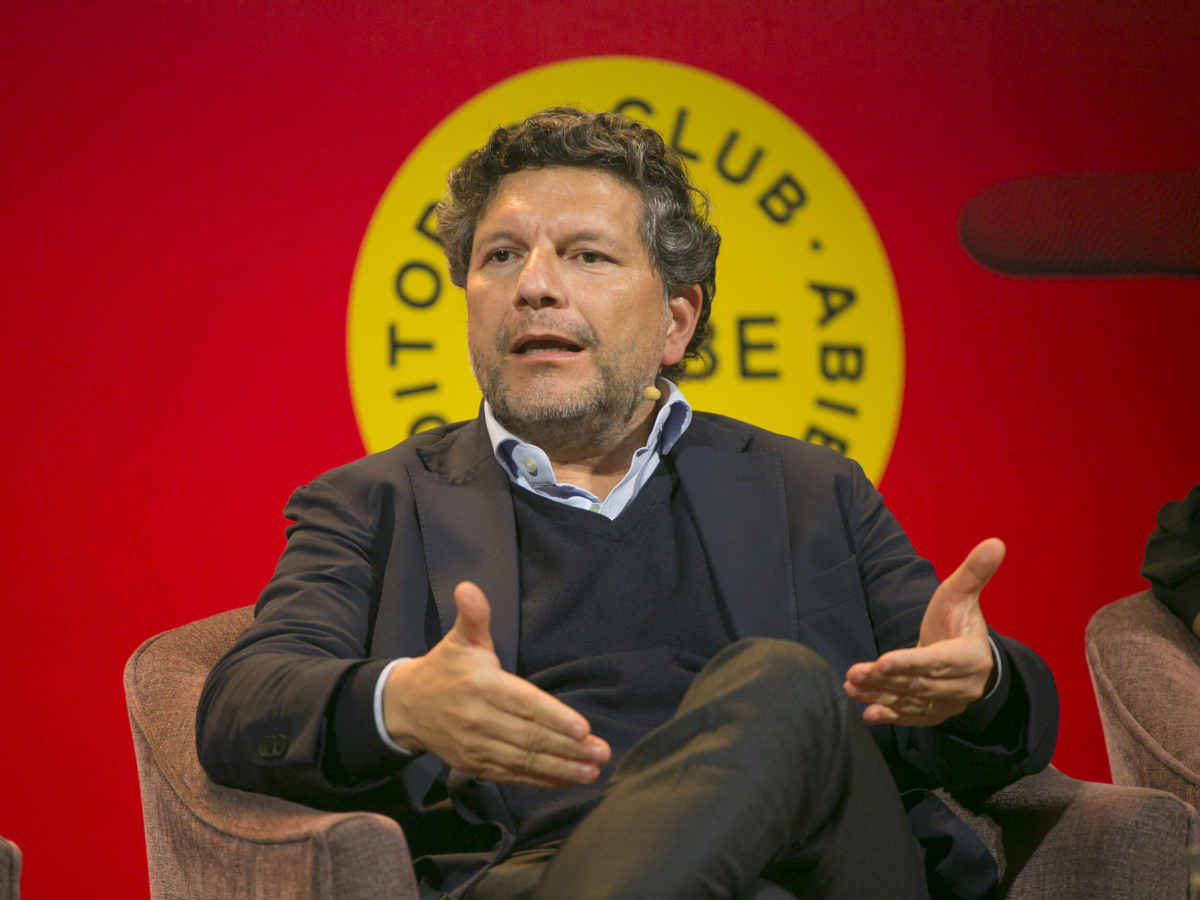
Under the slogan Who and how communicates?, the event brought together journalists, editors, academics, and communication professionals to analyze the challenges of the information ecosystem, especially the influence of algorithms, the development of artificial intelligence, and changes in news consumption habits. Among the speakers was David Córdova, president and editor of DEMÓCRATA, who took part in one of the panel discussions.
The event continued Committed to the Truth, an initiative promoted by CLABE in 2023 to promote journalistic rigor, transparency, and training for citizens capable of identifying misleading content.
Only 11% of citizens have participated in media literacy programs
The program began with a closed-door summit in which representatives from organizations dedicated to verification and media literacy participated. During the meeting, the economic and operational difficulties of these entities were addressed, the need to foster critical thinking from the earliest educational stages, and the importance of evaluating the results of their initiatives.
One of the main issues was the low level of citizen participation in programs aimed at improving information skills.
According to the report Initiatives of organized civil society for Media and Information Literacy (AMI), presented by Gloria Rosique Cedillo, researcher and associate dean of the Degree in Journalism at the Universidad Carlos III de Madrid, 75% of the population knows about this type of program, but only 11% have participated in them.
The research, based among other studies on a representative survey of 1,005 people, reveals that 64% know about the initiatives, even though they have never participated, while another 25% are unaware of their existence.
It also examines who citizens attribute responsibility for ensuring informational quality. 58% believe that journalists and information professionals have a great deal or total responsibility, compared with 50% who point to media companies, platforms, and social networks. 47% attribute that responsibility to the State and 35% to civil society.
The results led participants to insist on the need to improve the dissemination of the projects, expand cooperation networks, and seek funding formulas that allow continuity of activities.
David Córdova addresses editorial responsibility and media transparency
The afternoon session, open to the public, began with a welcome from Arsenio Escolar, president of CLABE, and a video greeting from Mihailo Jovetic, director of European Independent Media Publishers (EIMP).
Subsequently, Juan Miguel Aguado, chair of Journalism at the University of Murcia, delivered the opening lecture Is truth profitable? Reflections on the meaning of journalism in the era of disinformation.
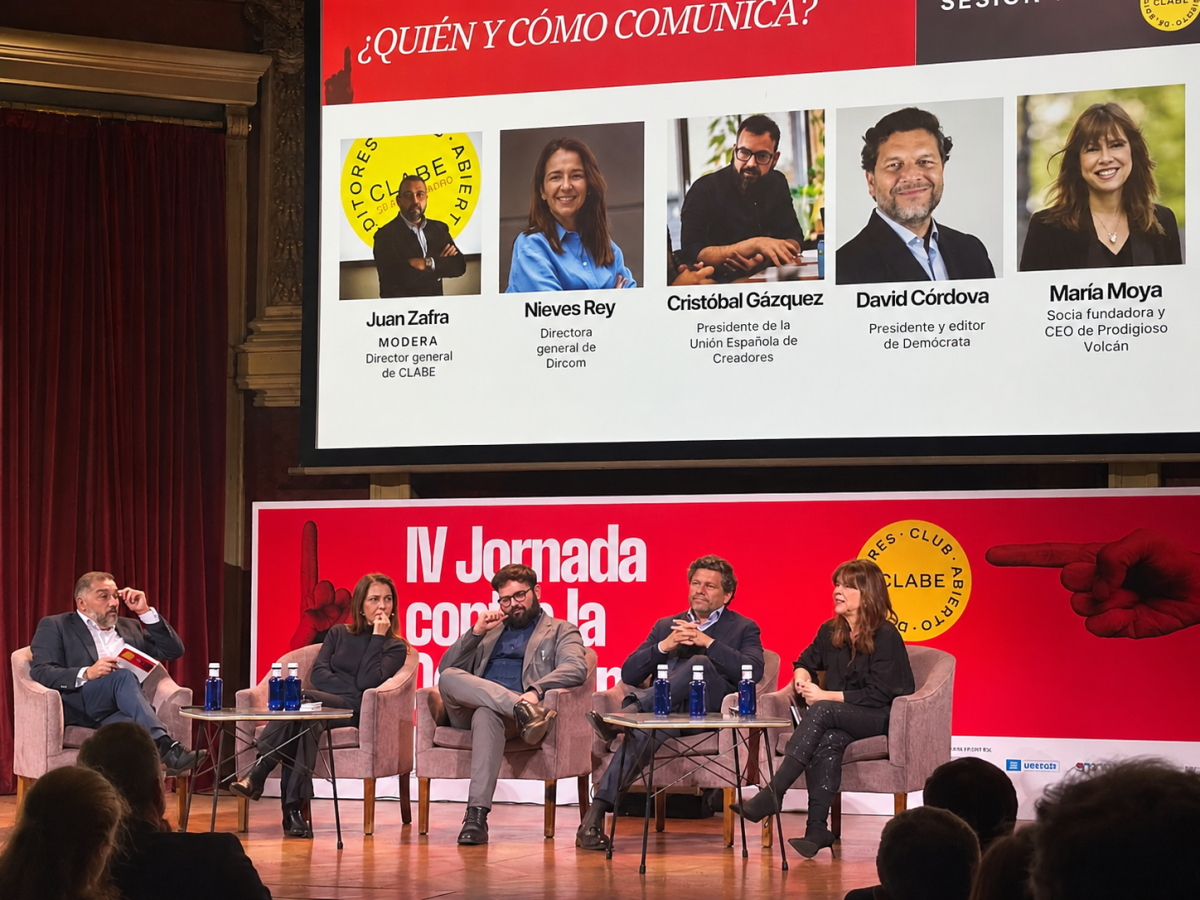
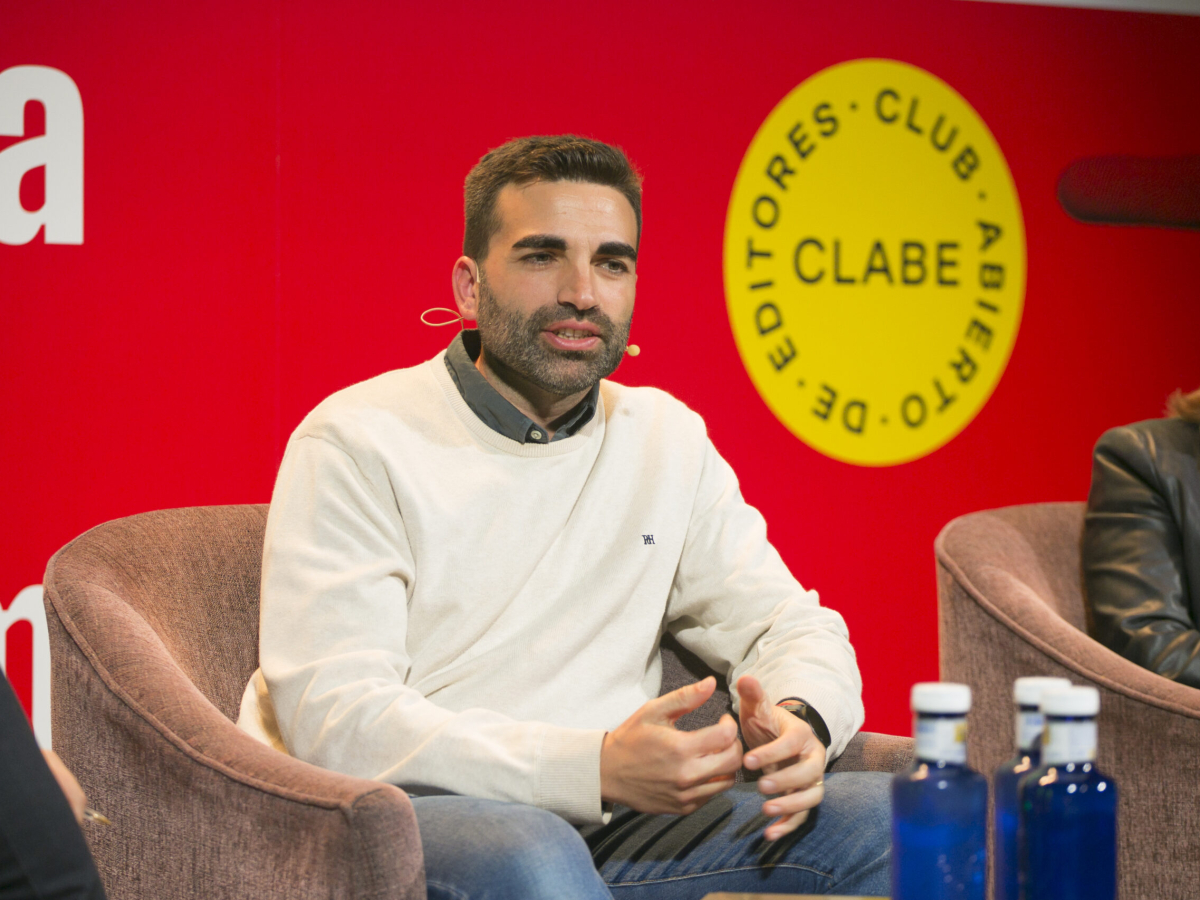
In the first panel discussion, devoted to who communicates and how they do it, participated David Córdova, president and editor of DEMÓCRATA; María Moya, co-founding partner and CEO of Prodigioso Volcán; Cristóbal Gázquez, president of the Unión Española de Creadores; and Nieves Rey, general director of Dircom. The conversation was moderated by Juan Zafra, general director of CLABE.
During his intervention, Córdova spoke about editorial responsibility and the need for media outlets to make their verification procedures visible. He addressed the importance of recognizing and correcting errors, clearly distinguishing between information, analysis, and opinion, and helping the reader access the original sources.
In the case of parliamentary information, he highlighted the possibilities offered by public documents such as the transcripts of proceedings, official bulletins, amendments, and votes so that citizens can directly verify the published data. He also referred to the advisability of identifying one’s own calculations and simulations as analytical products, avoiding confusing them with official figures.
Another of the matters he addressed was the European Media Freedom Regulation. Córdova assessed the transparency obligations regarding the ownership and financing of information companies, although he warned that these requirements should not become instruments of political control. In that context, he drew attention to the difficulties that independent journalistic projects and entrepreneurial initiatives may encounter.
Likewise, he addressed the influence of digital platforms on the distribution of news. Beyond knowing who owns a media outlet or how it is financed, he considered it necessary to take into account dependence on Google, social networks and their algorithms, which condition the visibility of content and citizens’ access to information.
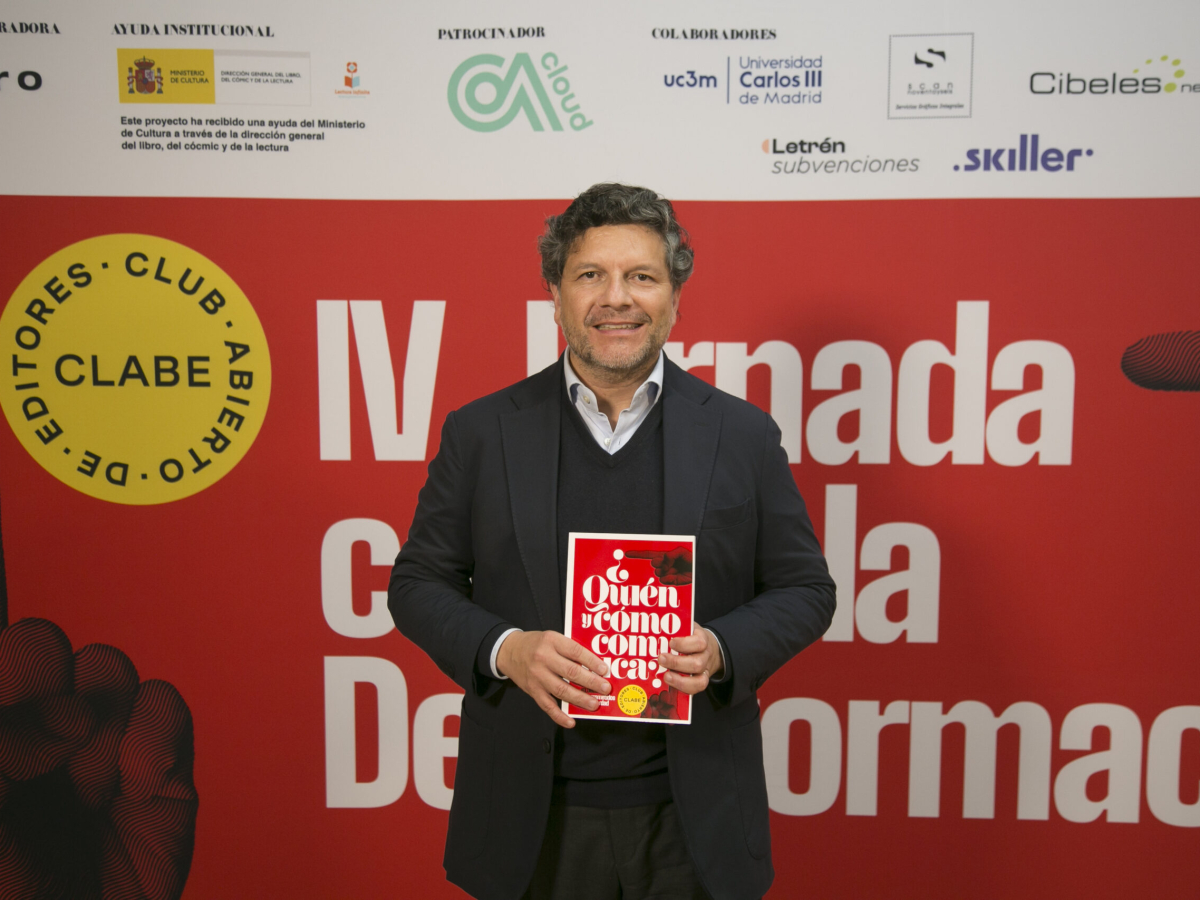
David Córdova, president and editor of DEMÓCRATA
Artificial intelligence and algorithms, among the challenges of journalism
Another of the highlighted moments was the presentation of the third volume of Committed to the truth, titled Who and how does it communicate?, which brings together analyses on the actors who produce and distribute information, their interests, and the changes that artificial intelligence is introducing to journalism.
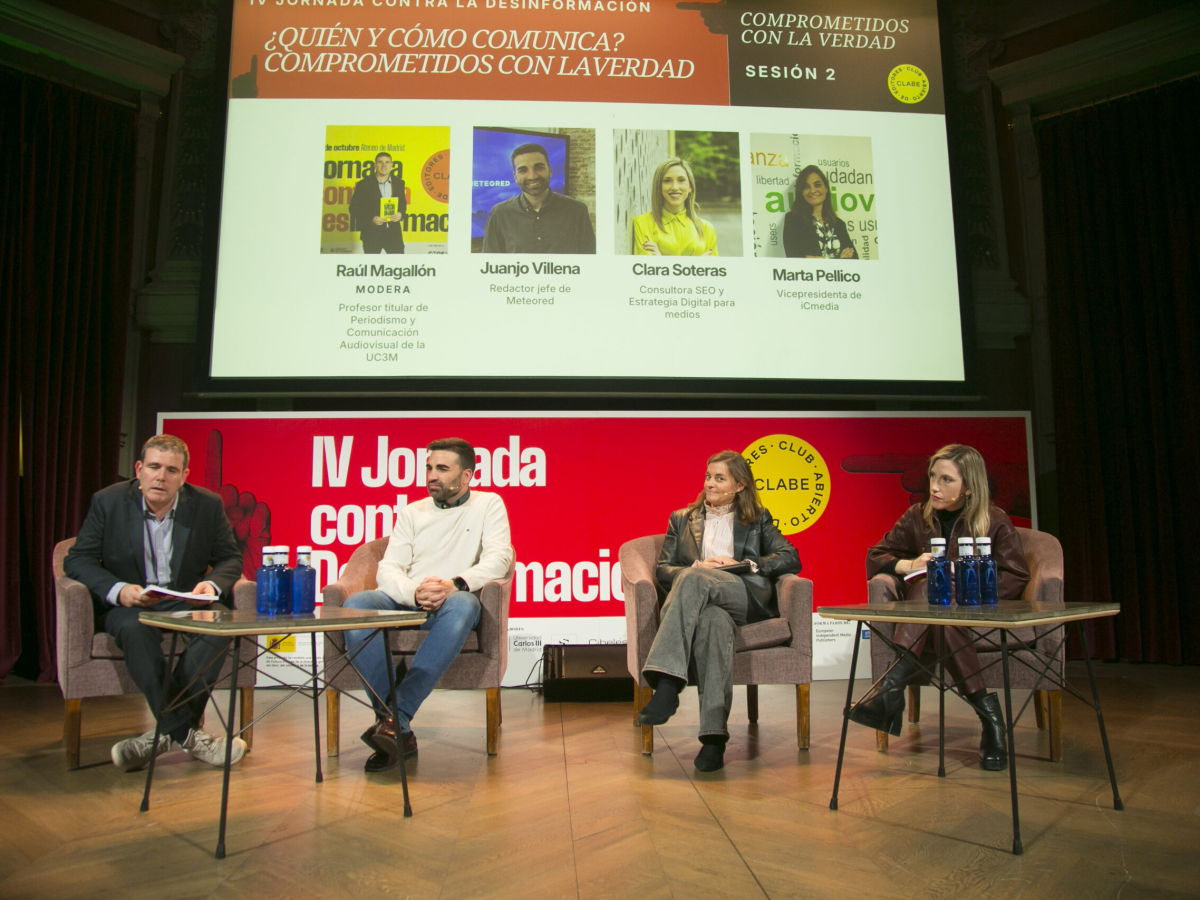
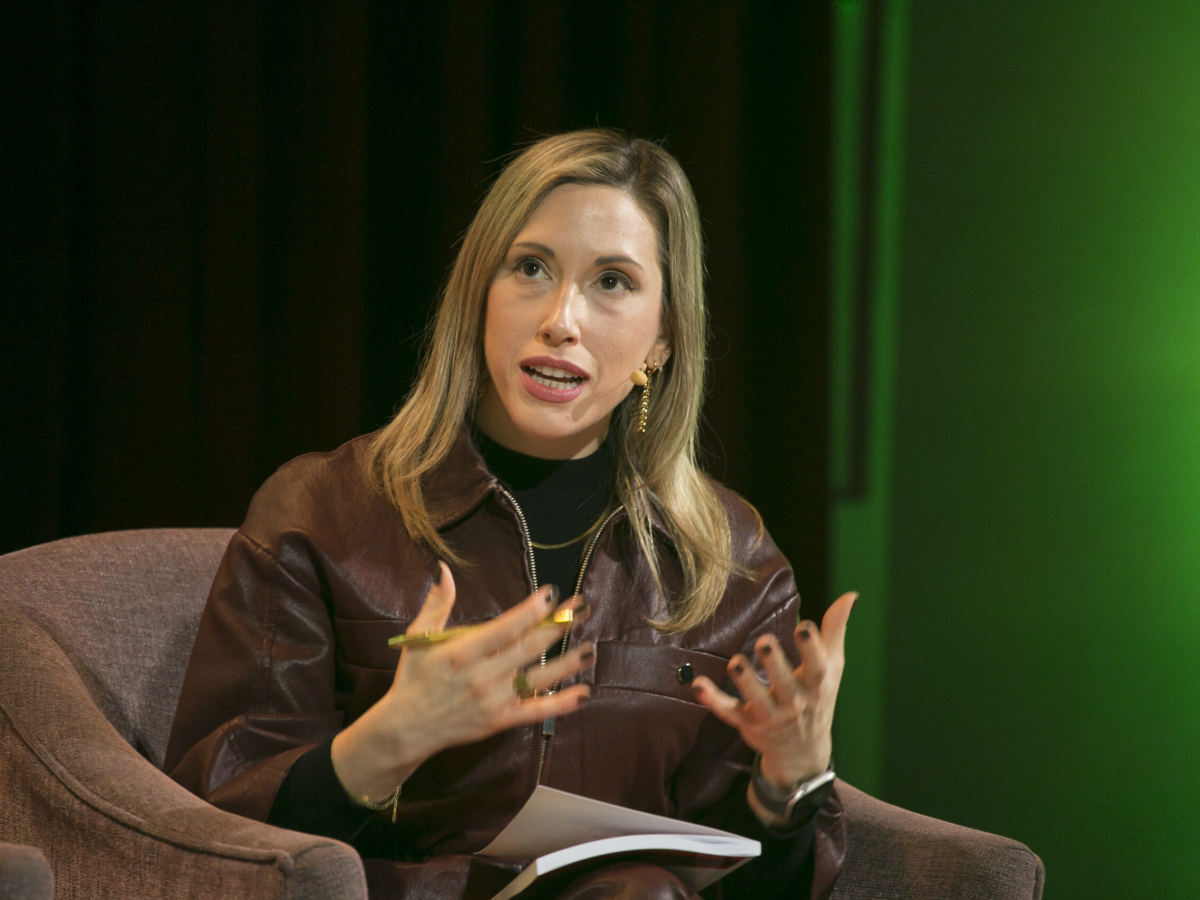
Juanjo Villena, chief editor at Meteored; Clara Soteras, SEO and digital strategy consultant for media outlets; and Marta Pellico, vice president of iCmedia, participated in the presentation. The session was moderated by Raúl Magallón, associate professor of Journalism and Audiovisual Communication at the Carlos III University of Madrid.

During the debate, Magallón warned about the normalization of a "economy of imprecise information", in which the speed and the appearance of reliability of responses may come to matter more than the truthfulness of the contents.
The publication also addresses the impact of artificial intelligence on search engines and traffic to the media, the training of journalists and citizens, responsible communication, and specialized coverage of issues such as climate and health.
Among the proposals collected are strengthening transparency about the origin of messages, improving the population’s digital skills, and encouraging critical thinking to identify echo chambers and discourses that appear authoritative without offering verified information.
Political communication and electoral processes
The conference included a panel dedicated to the challenges of political communication during election campaigns, with the participation of Rafa Rubio, professor of Constitutional Law at the Universidad Complutense de Madrid, and Imma Aguilar, general director of Amazonas.
Moderated by José Manuel González Huesa, vice president of CLABE and general director of Servimedia, the meeting examined the challenges faced by political communication in electoral processes.
The closing session featured an institutional address by Ángel García Castillejo, vice president of the National Commission of the Markets and Competition (CNMC), after Juan Zafra presented the main conclusions of the conference.
With this fourth edition, CLABE has insisted on the need to promote shared responses to disinformation, improve citizens’ media training, and strengthen the role of journalism in democratic quality.
The meeting had CEDRO as a collaborating entity, the support of the Ministry of Culture, the sponsorship of OA Cloud, and the collaboration of various organizations and academic institutions.