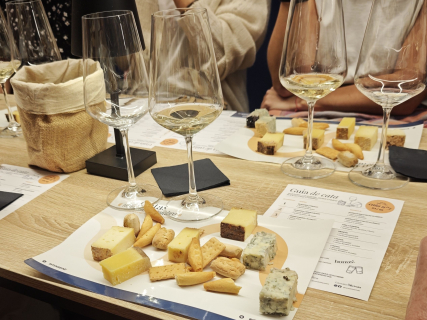

Cantabria Quesera y Cantabria Brinda lay out the basic rules to set up a home tasting with local designations
The rise of in-home culinary experiences finds a great ally in Cantabria’s pantry. To get the most out of its products when organizing a home tasting, Cantabria Quesera and Cantabria Brinda have joined forces and bring professional criteria to the consumer. Both initiatives offer clear guidelines for pairing the regional cheesemaking richness —from Liébana’s quesucos to Picón Bejes-Tresviso— with the native catalog of ciders, orujos, craft beers, and local wines, facilitating the technical keys of a professional tasting adapted to the home format.
Unique nuances
The region’s fresh and dairy cheeses, characterized by their soft, clean profiles and creamy texture, find their perfect counterpart in the region’s young white wines -such as those from the Indicación Geográfica Protegida Costa de Cantabria–, distinguished by their citrus freshness, balanced acidity, and notes of white fruit, as well as with light craft beers with an agreeable sip.
For their part, the cream cheeses -among which are included insignias of Denominación de Origen Protegida Queso Nata de Cantabria-, the tender and semi-cured cow’s cheeses, along with those cheeses covered under the DOP Quesucos de Liébana, enhance their buttery nuances when combined with white wines fermented in barrels or aged on lees, classic spiced vermouths produced locally, and malt beers with a moderate profile. Likewise, the pieces with long maturation, firm texture, and deep intensity typical of cured and aged cheeses harmonize with medium-bodied reds, reserva vermouths –many of them backed by the IGP Tierra de Liébana–, with woody notes and robust black beers with a marked toasted personality.
Against this, the rustic character and smoky nuances of the smoked preparations of fine paste are set in harmonious contrast with the bubble, persistent bitterness, and citrus or tropical touches of craft beers of the IPA or Pale Ale type. Finally, the blue and cave pastes –among which are included the DOP Picón Bejes-Tresviso– of high intensity and balanced sharpness interweave with the tradition of Liébana orujos, local liqueurs, and the region’s premium distillates, creating maximum-power contrast.
Cantabria Quesera and Cantabria Brinda
These collaboration initiatives are framed within the work promoted by the sectoral associations of the region. On the one hand, Cantabria Quesera brings together El Carmen Lácteos, Granja Quesería Cudaña, La Jarradilla, Quesería Tresgallo, La Pasiega de Peña Pelada, Quesos de Ruesga (La Estela and Peña Quebrada), Queso Las Garmillas, La Lleldiría, Río Deva, Quesoba, Granja Quesería El Pendo, Quesería Artesanal Siete Villas, Quesería Javier Campo, Quesería Río Corvera, Quesería Tasugueras, Quesería El Bardal and Queserías Lebanes.
On the other hand, Cantabria Brinda includes wineries and producers such as Bodega Bahía Santander, Bodega Hortanza, Miradorio Bodegas, Sel D'Aiz Bodegas, Casona Micaela, Picos de Cabariezo, Pago Casa del Blanco, Camesía Bodegas de Alto Ebro, Viña Carmina, Bodegas Cayo, Orulisa, Sierra del Oso, Dougall's, Rocker Beer, Redneck Brewery, Somarroza, Destilería Siderit, La Flor de Limón and El Coterón.