Electricity price today, November 8: the three cheapest hours

The price of electricity today, Sunday 8 November, concentrates its three cheapest hours between 11:00 and 14:00. The average price of the energy term of the PVPC stands at 0.1951 euros per kilowatt hour, without taxes, and the minimum goes from 12:00 to 13:00. Although all Sunday is an off-peak period, electricity does not cost the same throughout the day.

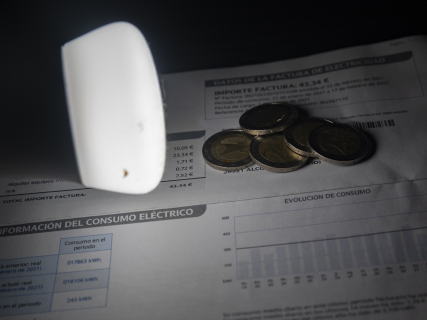
EuropaPress 4165629 lampara refleja importe factura dia precio luz marcado minimo primera vez

EuropaPress 4165629 lampara refleja importe factura dia precio luz marcado minimo primera vez

Add DEMÓCRATA to Google

Ask FREN

Published

Last updated

4 minutes
Elecciones 29N · Encuestas

La media de las encuestas

Media a 7 de noviembre de 2026 · 11 institutos

  • PP31,0 %
  • PSOE26,2 %
  • Vox19,5 %
  • Frente Amplio6,6 %
  • ERC2,4 %
  • SALF2,2 %
  • Podemos2,1 %
01020304050ene 2024jul 2024ene 2025jul 2025ene 2026jul 2026

Media del último estudio de cada instituto en 30 días y su evolución semanal desde el 23J. Partidos con al menos un 2 %.

Todas las encuestas

Elecciones generales del 29 de noviembre · Demócrata

The price of electricity today offers a clear difference between midday and the afternoon. For those who have the regulated tariff PVPC contracted, the 11.00 to 14.00 time band brings together the three lowest hourly prices of Sunday. From 16.00, the energy term again exceeds 0,22 euros per kilowatt-hour.

The daily average is 0,1951 euros/kWh, compared with 0,2056 euros on Saturday: an approximate drop of 5,1%. These are amounts for the energy term before taxes, not the full cost of the bill.

At what time is electricity cheapest this Sunday

The minimum occurs between 12.00 and 13.00, at 0,12410 euros/kWh. The previous hour costs 0,13329 euros and the following hour, 0,14054 euros.

The three together form a useful block for appliances whose programs last more than one hour. Their average price is about 0,1326 euros/kWh, although the specific cost of each use depends on how much the device consumes in each time band. Not all programs use electricity uniformly.

In the afternoon, the picture changes. Between 18.00 and 19.00, 0,22809 euros/kWh is reached, the highest value of the second half of the day. The maximum for the whole day corresponds to the first hour of the early morning, from 00.00 to 01.00, with 0,23421 euros/kWh.

Electricity price today by hour

The table shows the PVPC energy term for the Peninsula, without taxes, with peninsular time. The green rows indicate the three cheapest hours; the red row identifies the daily maximum.

SUNDAY · 8 NOVEMBER 2026

Electricity price today: 24 hours

Best three-hour block: 11:00–14:00. Daily minimum: 12:00–13:00.
PVPC · Peninsula · Euros/kWh without taxes · Peninsular schedule
Hour €/kWh Reference
00:00–01:000,23421Daily maximum
01:00–02:000,21732—
02:00–03:000,20757—
03:00–04:000,20487—
04:00–05:000,19227—
05:00–06:000,18765—
06:00–07:000,19264—
07:00–08:000,20795—
08:00–09:000,20592—
09:00–10:000,17265—
10:00–11:000,15736—
11:00–12:000,13329Second cheapest
12:00–13:000,12410Daily minimum
13:00–14:000,14054Third cheapest
14:00–15:000,15746—
15:00–16:000,18295—
16:00–17:000,22570—
17:00–18:000,22611—
18:00–19:000,22809Afternoon maximum
19:00–20:000,22268—
20:00–21:000,22448—
21:00–22:000,22071—
22:00–23:000,21731—
23:00–24:000,19870—

Source: Red Eléctrica prices reproduced by Iberdrola, verified with PVPC tracking services. Amounts for the energy term, without taxes. They do not include contracted capacity, meter rent, or other services. All Sunday is valley period for the tolls; the energy price varies by hour.

How much the cost changes depending on the hour

Consumption of 1 kWh between 12.00 and 13.00 means 0,12410 euros for the energy term before taxes. The same consumption between 18.00 and 19.00 represents 0,22809 euros.

The difference is approximately 10.4 cents per each kWh shifted. If it were 3 kWh entirely consumed within each of those time bands, the amounts would be about 0,37 and 0,68 euros, respectively: around 31 cents of difference before taxes.

It is an example of calculation, not the consumption attributed to a washing machine nor a monthly savings promise. To transfer it to an appliance, you have to know its actual cost and the program’s duration.

Why electricity changes price if all Sunday is valley

The valley period determines the tolls and regulated charges that apply, but it does not convert energy into a product with a fixed price during the 24 hours.

Red Eléctrica explains that weekends are valley all day. At the same time, it publishes the hourly values of the regulated tariff, which can vary within that same period. That is why waiting until the early morning does not guarantee paying less than at midday.

Who this table is useful for to organize consumption

The amounts are a reference for those who have PVPC. If the contract belongs to the free market and sets a fixed price per kilowatt-hour for the whole day, changing the washing machine time does not reduce that contracted price.

In tariffs with different periods or indexed tariffs, you have to review the specific conditions. The table also does not include the power term, the meter rental, the taxes, or other services that may appear on the bill.

To check the mode, look on the bill for the name of the tariff and the energy price. If you have PVPC, the 11.00 to 14.00 time band is the cheapest for this Sunday; if you have a fixed price, the reference is the one agreed in your contract.

More key points, information and questions with FREN

AI-GENERATED CONTENT

What are the steps to switch from the regulated PVPC tariff to the free market in Spain?

To switch from the regulated PVPC tariff to the free market, you must choose an offer and contract it with the new supplier, who will manage the change. The process is free, does not interrupt electricity supply, and usually does not require changing the meter or carrying out works. Before signing, compare the full cost and check the consequences if you receive the social bonus.

1. Review your bill and the social bonus

Confirm that your contract indicates PVPC and is with a reference supplier. Note the contracted power and annual consumption: these will allow you to compare offers adapted to your home, instead of deciding only based on an advertised discount.

If you have an electricity social bonus, you will lose it when leaving PVPC. The new supplier must inform you of the economic impact and obtain your express consent to waive it. As Demócrata explains about both modalities, PVPC is a requirement to access this aid.

2. Compare offers and request conditions

Use the CNMC tools to compare the annual expense with your actual consumption. The free market does not guarantee a cheaper bill by itself. Check:

  • The energy price, per kilowatt hour, and the contracted power price.
  • Whether the price is fixed or variable and when it can be reviewed.
  • The duration of discounts and the subsequent price.
  • Maintenance services, insurance, or additional products.
  • The contract duration, renewal, and possible penalties.

Request the conditions in writing. A fixed energy price does not necessarily mean that all components of the bill remain unchanged.

3. Prepare the data and contract

Have a recent bill, the holder's DNI or NIE, address, contact details, bank account, and CUPS ready, the code that identifies your supply point. The CUPS remains even if you change supplier.

Contact the chosen company through its official channels, indicate that you want to switch from PVPC to the free market, and review the contract before accepting it. Keep the offer, conditions, and proof of contracting. The CNMC reminds that every change requires the consumer's effective consent.

4. Let the new company process the change

Do not request the supply cancellation: you are not closing the electricity point. The new supplier processes the change with the distributor, and you do not need to cancel the regulated contract separately.

According to the Administration's information, the company must request it within a maximum of 24 working hours from contracting. The general deadline to carry it out is 10 business days, extendable up to five additional business days when complex technical actions are necessary. Request confirmation of the effective date.

5. Check costs and your right to withdraw

The supplier change is free. Simultaneously modifying the power may generate different costs, and added services may have their own fee. Do not confuse these concepts with a fee for changing tariff.

If you contract online or by phone, you usually have 14 calendar days to withdraw, according to the CNMC guide. If you request to start earlier, review the consequences of canceling once supply has already started.

6. Review closing and starting bills

You will receive a final PVPC bill up to the change date. Check that the first free market bill applies the agreed prices, without unaccepted services or duplicated periods. Keep the documentation and claim in writing to the supplier if you detect differences.

What powers does the National Commission on Markets and Competition (CNMC) have regarding the setting of electricity prices?

The CNMC does not set the full price of electricity nor decide how much each kilowatt hour should cost in all contracts. It does determine regulated components, especially network tolls, and supervises that prices are formed respecting market and competition rules. To understand its scope, it is useful to separate energy, tolls, charges, and taxes.

1. What it can set: electrical tolls

Its most direct competence consists of establishing the structure and methodology of transport and distribution tolls: the amounts intended to pay for the use of the networks that carry electricity to consumers. It also determines their applicable values, so its function is not limited to issuing recommendations.

The Law 3/2013 assigns it to establish "the structure and methodology for calculating access tolls to electricity networks intended to cover the remuneration of transport and distribution."

The Circular 3/2020 develops this methodology. It distributes costs among consumer categories through elements such as contracted power, consumed energy, connection voltage, and time periods. These tolls affect both the free market and regulated supply and must respond to criteria of efficiency, transparency, objectivity, and non-discrimination.

2. Remuneration of networks and system services

The CNMC also establishes the methodology, parameters, and asset base used to calculate the remuneration of transport and distribution installations. This includes investment, operation and maintenance values, regulatory useful life, and financial remuneration rate, within legal limits.

These decisions influence the costs that tolls must recover. However, they do not equate to setting the price of electricity produced by power plants.

Additionally, it regulates balancing and non-frequency service methodologies: services necessary to balance production and consumption and maintain the system's technical operation. It can approve procedures and rules affecting their costs, as shown by the voltage control resolution of June 2025.

3. What it supervises but does not freely decide

  • Wholesale market: it does not choose the price resulting from the crossing of buy and sell offers. It supervises its operation, transparency, and agent conduct.
  • Free market: it does not individually approve commercial tariffs. The price is agreed between supplier and client, respecting legal and contractual obligations.
  • PVPC: it does not discretionarily decide its amount. The voluntary price for small consumers is calculated with the regulated methodology, whose definition corresponds to the governmental framework. The CNMC performs supervision and reporting functions.

The electricity market supervision includes detecting possible manipulations, misuse of privileged information, and anti-competitive practices. It can investigate and sanction within its competencies; a price increase alone does not imply an infringement.

4. What is outside its competence

Charges are not tolls: they finance other system costs, such as certain renewable aids, extra-peninsular costs, or deficit annuities. Their methodology corresponds to the Government, through Royal Decree 148/2021, and their prices are set by ministerial order. It is also not CNMC's role to set bill taxes.

In short, its setting capacity focuses on networks and certain regulated aspects. The Electricity Sector Law distributes the remaining decisions between the Government and market mechanisms: supervising the price does not mean being able to replace it with another.

What were the results of the last general elections in Spain and which parties form the current government?

The last general elections held in Spain were on July 23, 2023: the Popular Party obtained the most votes and seats but did not manage to form a Government. The Executive that emerged from that call is presided over by Pedro Sánchez and is based on the coalition between PSOE and Sumar. As of November 8, 2026, the elections called for November 29 have not yet taken place: their polls are not electoral results.

Results of the 2023 elections

The final distribution of the 350 seats in the Congress of Deputies was as follows. It is advisable to distinguish this result from the subsequent composition of parliamentary groups, which may change during the legislature due to deputies leaving or alliance modifications:

  • Popular Party (PP): 137 seats.
  • Spanish Socialist Workers' Party (PSOE): 121 seats.
  • Vox: 33 seats.
  • Sumar: 31 seats.
  • Republican Left of Catalonia (ERC): 7 seats.
  • Junts per Catalunya: 7 seats.
  • EH Bildu: 6 seats.
  • Basque Nationalist Party (PNV): 5 seats.
  • Galician Nationalist Bloc (BNG): 1 seat.
  • Canarian Coalition: 1 seat.
  • Navarrese People's Union (UPN): 1 seat.

The PP obtained approximately 33.1% of the votes and the PSOE, 31.7%. The absolute majority in Congress is 176 deputies. The results of the four main candidacies and that majority reference are collected in this Demócrata comparison.

Why the winning party did not form a Government

The key to the result was that no candidacy obtained an absolute majority alone. The 137 PP deputies and 33 Vox deputies totaled 170 seats, six below that threshold; including the UPN deputy, the sum was 171. Therefore, being the candidacy with the most representatives was not enough for the PP to gather the necessary support to govern.

PSOE and Sumar, on the other hand, jointly obtained 152 seats. They also did not reach an absolute majority alone, but Pedro Sánchez managed to gather additional support for his investiture, that is, the Congress vote that allows a candidate to access the Presidency of the Government. He was invested in November 2023 and the coalition Executive was formed.

Which parties make up the Government

The usual answer is PSOE and Sumar, although there is a nuance: Sumar was an electoral candidacy that grouped different organizations, not just one party. Within the Sumar space present in the Executive are Movimiento Sumar, Izquierda Unida, Más Madrid, and Comuns, according to information published by Demócrata about the coalition.

The Government members should not be confused with the parties that supported its investiture. ERC, Junts, EH Bildu, PNV, BNG, and Canarian Coalition supported that investiture but are not part of the Executive. Their parliamentary support does not automatically equate to backing all subsequent Government decisions.

Another important distinction concerns Podemos: it ran within the Sumar candidacy in 2023, so its representatives were included in the 31 electoral seats of that coalition. However, it did not enter this Government and later left the Sumar parliamentary group, as explained in this parliamentary analysis.

Play

Test your knowledge with FREN!

How much do you know about this topic? Answer the following 3 questions.

What is the lowest electricity price this Sunday, November 8, 2026, for users with the PVPC tariff?

Question 1 of 3

What is the approximate difference in cents per kWh between the minimum and maximum price in the afternoon?

Question 2 of 3

For which type of contracts is it useful to check the cheapest hours according to the hourly price table?

Question 3 of 3