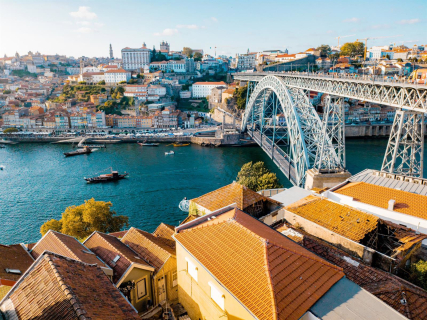

The Global Risk Map 2027 places Portugal as the safest country of the entire Ibero-American sphere, while it points to Venezuela as the nation with the highest level of risk. In addition, it identifies Culiacán (Mexico), Guatemala City (Guatemala) and Guayaquil (Ecuador) among the cities with the worst security indicators.
The study prepared by the US firm "Global Guardian", disseminated by "Economía XXI" and Europa Press, evaluates countries through a five-level scale, from low risk to extreme risk, considering aspects such as violence, geographical isolation, or difficulties in accessing healthcare.
Thus, the "Global Risk Map 2027" combines data on threats that shape the global security scenario, including crime, armed conflicts, public health, natural disasters, transport and infrastructure, political stability, social unrest and terrorism.
In Ibero-America, the extreme risk band includes the west of Mexico, the capital of Guatemala, the center west of Ecuador and certain areas of Venezuela. Against this, only Portugal appears classified at the 'low' risk level within the region.
In the second tier of lower risk are countries such as Argentina, Uruguay, Chile, Spain, Costa Rica or the Dominican Republic. "The regions of moderate risk are resilient and can manage most crises and threats to personal security quickly and effectively," the report details.
The 'medium' risk group includes Brazil, Colombia, Mexico, Guatemala, Nicaragua, El Salvador, Honduras, Cuba, Puerto Rico, Bolivia, Peru and Paraguay. According to the document, these areas cannot be considered fully safe due to political instability and poor law enforcement, which favors criminality and "sporadic unrest".
In this context, the report points to Culiacán, Guatemala City and Guayaquil as the cities with the highest security risk. At the same time, in Colombia and Mexico, localities are identified with an especially high environmental risk.
Main risks in Spain
The assessment of Spain is explained by security problems arising from political instability and increasing social polarization, to which is added a factor related to the rail network that, in the last week, has intensified concern in different sectors.
The European Union’s Commissioner for Transport and Tourism, Apostolos Tzitzikostas, admitted after the disaster in Urda (Toledo) that he finds it “very worrying” that two serious accidents have occurred on Spanish high-speed rail in just nine months. International media also picked up on the impact of the tragedy.
The most relevant change in Central America
In comparison with the 2026 edition, “Global Guardian” highlighted in “Bloomberg” the most notable modification in Cuba, which has moved from “moderate” risk to “medium” risk due to the worsening of the economic situation and basic services.
“The security environment has not changed, although the turn signals across the country, the severe fuel shortage and the new feelings against the largest state conglomerate have pushed both the electrical grid and the healthcare system to the brink of collapse,” “Global Guardian” has reported.