Price of electricity today, August 26: the cheapest hour falls to 0.0347 €/kWh and the most expensive exceeds 0.32

The price of electricity today, Wednesday, August 26, 2026, will be lower during the afternoon and will reach its maximum between 21:00 and 22:00 hours.

2 minutes

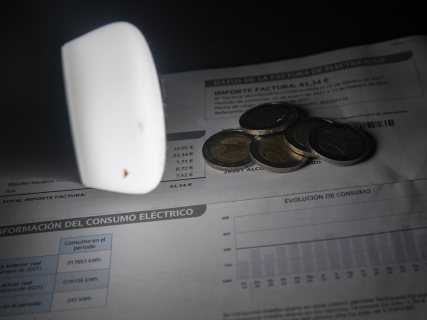
EuropaPress 4165629 lampara refleja importe factura dia precio luz marcado minimo primera vez

EuropaPress 4165629 lampara refleja importe factura dia precio luz marcado minimo primera vez

Add DEMÓCRATA to Google

Ask FREN

Published

Last updated

2 minutes

Most read

The price of electricity today, Wednesday, August 26, 2026, will again leave a wide difference between the cheapest hours in the afternoon and the most expensive stretch of the night. The daily minimum will be 0.0347 €/kWh, while electricity will reach 0.3248 €/kWh in the most expensive range.

The day will start with high prices during the early morning and will maintain high levels during the first hours of the morning. The cost will begin to drop more clearly from noon, concentrating its lowest values between 14:00 and 18:00, before the nighttime spike.

What is the cheapest hour of electricity today?

The cheapest hour will be from 14:00 to 15:00, when the price will drop to 0.0347 €/kWh.

The most favorable stretch for consumption will concentrate during the afternoon. Between 15:00 and 16:00, the price will be 0.0349 €/kWh; between 16:00 and 17:00, it will be 0.0352 €/kWh, and between 17:00 and 18:00, it will be 0.0379 €/kWh.

What is the most expensive hour?

Electricity will reach its maximum price between 21:00 and 22:00, with 0.3248 €/kWh.

The increase will begin to be noticeable from 19:00. Between 19:00 and 20:00, the price will be 0.2124 €/kWh and between 20:00 and 21:00 it will reach 0.3197 €/kWh, before registering the maximum of the day.

What is the average price of electricity today?

The average price calculated from the 24 hourly values of this Wednesday will be approximately 0.1750 €/kWh.

The difference between the cheapest hour and the most expensive will be 0.2901 €/kWh. The contrast between both extremes will again concentrate on the drop in prices during the afternoon and the increase recorded at the end of the day.

Price of electricity today by hours, August 26, 2026
Hour PVPC Price Stretch
00:00-01:00 0.2415 €/kWh Expensive
01:00-02:00 0.2340 €/kWh Expensive
02:00-03:00 0.2061 €/kWh
03:00-04:00 0.1958 €/kWh
04:00-05:00 0.1931 €/kWh
05:00-06:00 0.1921 €/kWh
06:00-07:00 0.2096 €/kWh
07:00-08:00 0.2271 €/kWh Expensive
08:00-09:00 0.2551 €/kWh Expensive
09:00-10:00 0.1891 €/kWh
10:00-11:00 0.1476 €/kWh
11:00-12:00 0.1056 €/kWh Cheap
12:00-13:00 0.1048 €/kWh Cheap
13:00-14:00 0.1039 €/kWh Cheap
14:00-15:00 0.0347 €/kWh Cheapest
15:00-16:00 0.0349 €/kWh Cheap
16:00-17:00 0.0352 €/kWh Cheap
17:00-18:00 0.0379 €/kWh Cheap
18:00-19:00 0.1170 €/kWh Cheap
19:00-20:00 0.2124 €/kWh
20:00-21:00 0.3197 €/kWh Expensive
21:00-22:00 0.3248 €/kWh Most expensive
22:00-23:00 0.2414 €/kWh Expensive
23:00-24:00 0.2363 €/kWh Expensive

How to save on the bill this Wednesday

The most suitable hours to concentrate the consumption of the highest power appliances will be between 2:00 PM and 6:00 PM. The best moment of the day will be the period between 2:00 PM and 3:00 PM.

On the contrary, it is advisable to avoid as much as possible the consumption between 8:00 PM and 10:00 PM, where the highest values will be concentrated. The time slot from 9:00 PM to 10:00 PM will be the least favorable to use the appliances that consume the most electricity in the price of electricity today.

More key points, information and questions with FREN

AI-GENERATED CONTENT

What regulations currently govern the hourly electricity price setting in Spain?

The setting of hourly electricity prices in Spain is supported by a “block” of European and national regulations that govern, on the one hand, the wholesale market (matching in OMIE and balancing services) and, on the other, the pass-through of those prices to the consumer, especially those under the Voluntary Price for the Small Consumer (PVPC). The main pieces currently in force are summarized below.

1. General framework of the electricity sector

  • Law 24/2013, of December 26, on the Electricity Sector – It is the basic law of the Spanish electricity system and defines the principles of market operation and price setting, the separation of activities, regulated remuneration, and consumer protection. – BOE: official text.
  • Regulation (EU) 2019/943, of June 5, 2019, on the internal electricity market – Establishes at the European level the design of the wholesale market: marginal matching, hourly/"quarter-hourly" price formation, rules of supply and demand, price limits, and principles for balancing markets and adjustment services. – Spain applies it, among others, through resolutions that set parameters such as the value of lost load and reliability standard, for example the Resolution of July 7, 2025 from the Directorate General for Energy Policy and Mines (link).

2. Wholesale market: OMIE, intraday markets, and balancing services

The hourly wholesale price (pool) is determined according to methodologies and rules approved by the CNMC and the Ministry, applying the above framework:

  • Circular 3/2019, of November 20, by the CNMC, which establishes the methodologies regulating the operation of the wholesale electricity market and system operation management – Sets the core methodologies for the operation of the day-ahead and intraday markets and the main operation procedures, based on European market regulations. – BOE: official text.
  • Resolutions on the rules of the day-ahead and intraday markets – The specific regulation of how bids are matched, products defined, and hourly prices calculated is detailed in the market rules, whose most recent version is:
    • Resolution of February 28, 2025, by the CNMC, publishing the operating rules of the day-ahead and intraday electricity markets for adaptation to quarter-hourly trading and the new types of day-ahead market offers – BOE: link.
    • It is complemented by the Resolution of March 6, 2025 on adapting operation procedures to quarter-hourly trading (link) and earlier resolutions from 2023 and 2024 adapting the market to European intraday auctions and the new economic regime for renewables.
  • Royal Decree-Law 10/2022, of May 13, and Royal Decree-Law 3/2023, of March 28 – Create and extend the temporary production cost adjustment mechanism (known as the “gas cap”), which modifies the wholesale price formation by introducing a difference payment for certain gas plants. – BOE: RDL 10/2022 and RDL 3/2023.

3. Voluntary Price for the Small Consumer (PVPC)

The PVPC passes on to the domestic consumer a price mainly indexed to the wholesale market, but with specific calculation rules for its components:

  • Royal Decree 216/2014, of March 28, establishing the methodology for calculating the voluntary prices for small electricity consumers and their contracting regime – Defines the PVPC, how it is constructed hour by hour from the market price, tariffs and charges, commercialization costs, and other regulated components. It has been modified (for example, by Royal Decree 469/2016) and partially repealed in Title IV by Royal Decree 184/2022 regarding electric vehicle charging, but remains the basic methodological reference. – BOE: official text.
  • Royal Decree 469/2016, of November 18 – Adjusts key articles of the PVPC methodology and introduces a new title on additional measures, later affected by Supreme Court rulings. – BOE: link.
  • Operation Procedure 14.12 “Estimation of the cost of PVPC components” – Updated by the Resolution of June 30, 2023, of the Secretary of State for Energy, operationally develops how the different PVPC terms (energy, balancing services, capacity payments, etc.) are calculated daily to produce the final hourly price. – BOE: link.
  • Royal Decree 148/2021, of March 9, and orders on charges and tariffs (e.g., Order TED/1484/2021 and subsequent) – Separate and set the methodology for charges of the electricity system, which together with tariffs calculated by the CNMC (Circular 3/2020) are incorporated into the PVPC and thus affect the final hourly price paid by the consumer. – BOE RD 148/2021: text.

4. Other relevant elements

  • Circular 3/2020, of the CNMC – methodology for transmission and distribution tariffs, which add to the energy component to form the hourly access price (link).
  • Royal Decree-Law 17/2021 and Royal Decree-Law 23/2021 – introduce temporary measures to mitigate the impact of price hikes (reductions, charge adjustments, etc.), which have occasionally affected the pass-through of wholesale prices to regulated and free consumers.

In summary, the hourly electricity price in Spain results from the joint application of the European market design (Regulation 2019/943), Law 24/2013, the PVPC methodology (Royal Decree 216/2014 and its development through operation procedure 14.12), and the methodologies and rules of the wholesale market approved by the CNMC (Circular 3/2019 and resolutions on day-ahead and intraday market rules), along with temporary regulations such as the production cost adjustment mechanism of Royal Decree-Law 10/2022 and its extension.

What are the requirements for consumers to be eligible for the regulated PVPC tariff?

The regulated electricity tariff, called PVPC (Voluntary Price for the Small Consumer), is a way to contract electricity at a price controlled by regulation. It is not available for all supplies: only those who meet certain technical and customer-type requirements can opt in.

1. Type of supply and contracted power

The basic framework is set by Royal Decree 216/2014, of March 28, which regulates the PVPC (text in the BOE). According to its article 3:

  • PVPC only applies to low voltage supplies, that is, voltages equal to or less than 1 kV (common in homes and small premises).
  • The contracted power at the supply point must be less than or equal to 10 kW in each existing time period.

In practice, this means:

  • Most households (with typical powers of 3.45 kW, 4.6 kW, 5.75 kW, etc.) can opt for PVPC.
  • Homes or premises with higher powers (e.g., 13 kW, 15 kW) cannot.
  • Certain small businesses or microenterprises can also if their power does not exceed 10 kW.
2. Who can be the contract holder

The same article 3 of Royal Decree 216/2014 establishes that the PVPC can be applied to: holders of supply points who are natural persons or microenterprises, meeting the above voltage and power requirements.

  • Natural persons: any domestic consumer listed as the contract holder.
  • Microenterprises: defined according to Regulation (EU) 651/2014. They must declare their status to the reference supplier through a responsible declaration.
  • Other types of companies or large consumers are generally excluded from PVPC.

For homeowners' associations, it is usually more complex: if the community supply point has powers above 10 kW (e.g., elevators, garages, etc.), it normally cannot opt for PVPC.

3. Contracting with a Reference Supplier

PVPC only exists in the regulated market. To have it, it is essential:

  • To contract electricity with a Reference Supplier (the list is set by Royal Decree 216/2014 and its amendments, and published by the CNMC).
  • To sign a specific PVPC contract with that supplier (if nothing is indicated, the default modality with a reference supplier is PVPC, unless another modality is expressly chosen).

If you are with a liberalized market supplier, you do not have PVPC even if the corporate group is the same. It is necessary to switch to a reference supplier.

4. Digital meter and remote management

The remote-managed digital meter is not a requirement to opt for PVPC, but it does influence billing:

  • If there is a meter with remote measurement and management properly integrated, PVPC is calculated hour by hour with actual consumption.
  • If not, Royal Decree 216/2014 provides calculation procedures using standard consumption profiles.

In practice, most domestic supplies already have a digital meter, but its absence alone does not prevent having PVPC.

5. Relationship between PVPC and Social Bonus

The Electricity Social Bonus is regulated by Royal Decree 897/2017, of October 6 (text in the BOE). This regulation requires, as a basic condition, that the consumer:

  • Be a domestic consumer in their habitual residence, with contracted power equal to or less than 10 kW, and
  • Be under PVPC with a Reference Supplier.

Therefore:

  • The Social Bonus is not a requirement to contract PVPC.
  • It is the other way around: to have the Social Bonus you must first be on PVPC and also meet the income and vulnerability requirements set by Royal Decree 897/2017.
6. Practical summary of requirements
  • Supply in low voltage ≤ 1 kV.
  • Contracted power ≤ 10 kW in each time period.
  • Holder who is a natural person or microenterprise (with responsible declaration in the latter case).
  • Electricity contract with a Reference Supplier under PVPC modality.
  • Digital meter recommended, but not legally mandatory.
  • The Social Bonus is an additional discount, not a requirement to access PVPC.

What differences exist in the structure of the Spanish electricity market compared to other European countries?

The Spanish electricity market shares the basic architecture of the European model — separation of activities, market operator, independent TSO, and marginal pricing system — but presents unique features in each link of the chain and in retail regulation that differentiate it from other EU countries.

1. Generation and energy mix

Spain has positioned itself among the countries with the highest renewable share in Europe. Red Eléctrica estimates that in 2024 renewables reached 56 % of generation and that installed renewable capacity already accounts for around 64 %, with strong wind power prominence and very rapid growth of solar photovoltaic, which displaces gas in the merit order (REE press release). In 2025, Spain's renewable share (around 55–56 %) clearly exceeds the EU average, which is about 48 %, according to sector analyses collected by Demócrata.

In contrast, other major European countries like Italy or Germany entered the energy crisis with higher fossil gas dependence, which has put more pressure on their final prices, while France maintains a much higher nuclear share and uses specific mechanisms such as the regulated ARENH tariff to supply its industry with nuclear electricity at a preferential price (42 €/MWh), something Spain lacks (AEGE analysis).

2. Transmission and system operator

Spain has a single TSO model: Red Eléctrica de España (REE), parent company of Redeia, which manages the transmission grid and system operation under a regulated monopoly. The company itself and European regulators point to this scheme as one of the most efficient TSO models in operational security and cost, with remuneration set by the CNMC in six-year periods and no participation in energy buying or selling (Redeia statements).

In comparison, other member states also have single TSOs (Terna in Italy, RTE in France, TenneT or Elia in Northern Europe), but Spain stands out for two elements:

  • Relative isolation: Brussels and the sector itself continue to label the Peninsula as an “energy island” due to its low interconnection capacity with the rest of the EU, limiting the export of renewable surpluses and imports in times of stress (submarine cable projects).
  • More demanding remuneration framework: comparative reports of distributors and TSOs place Spain among countries with the least attractive regulation and regulated profitability, something Redeia itself denounces as “the worst in Europe” in terms of WACC and inflation treatment (Corredor, Redeia).
3. Distribution: low costs, low regulatory attractiveness

In distribution, Spain has the lowest network costs per customer among major European economies: about 176 € per customer compared to over 400 € in Germany or France, according to an EY study (EY report). However, European distributor associations (E.DSO, GEODE) criticize that the Spanish revenue framework is the worst rated among the analyzed group (Austria, Finland, Ireland, Italy, Poland, Spain, and Sweden) due to low profitability, regulatory unpredictability, and imbalance between CAPEX and OPEX (analysis on WACC and networks).

This combination — low unit costs but high regulatory pressure — contrasts with more generous frameworks in Italy or Austria, which are using higher remuneration rates to attract network investment amid the energy transition.

4. Retail commercialization and competition

Spanish liberalization began in 1998 and culminated in 2003, with the creation of the market operator (OMEL, today OMIE) and the right of all consumers to choose their supplier (“Electricity sector liberalization”). However, more than twenty years later, the retail market remains highly concentrated:

  • The five large historic groups retain around 80 % of the free market.
  • There are about 300 independent suppliers — “a record of competition in Europe” — but together they barely sum to less than 10 % of the residential market (parallel with MVNOs).

The main uniqueness compared to other European countries is the breadth of the regulated PVPC tariff. While Directive 2019/944 foresees regulated tariffs as exceptional and limited to vulnerable consumers, in Spain PVPC is offered to any domestic consumer who wants it and can only be marketed by last-resort suppliers linked to the big groups. The social bonus is also channeled through these companies, although it is financed by the entire system (analysis of the PVPC “anomaly”). This contrasts with models like the British one, where the retail market is fully liberalized (with a regulatory price cap but no universal regulated tariff), or with France, which has progressively restricted its regulated tariffs.

5. Wholesale market design and flexibility services

Spain uses the same marginal pricing model as most of the EU: daily auction managed by OMIE, followed by intraday markets and balancing services. The price is set by the last technology needed to cover demand — often gas — and is passed on to PVPC with increasing references to futures markets (system explanation).

Two relevant differences compared to other European countries:

  • Demand participation and aggregators: in Spain demand participates only incipiently in balancing services and the figure of the independent aggregator is now being implemented. In markets like Germany, France, Belgium, or the UK, there is fuller participation of distributed resources and batteries in primary regulation and capacity markets (model comparison).
  • Mechanisms for electro-intensive industry: Spain does not have an equivalent scheme to the French ARENH nor compensations as broad as Germany’s. According to AEGE, electricity for an electro-intensive consumer in Spain has been between 120 % and 160 % more expensive than in France and clearly higher than in Germany, partly due to additional balancing service costs that are not passed on similarly there (AEGE barometers).

Overall, Spain shares the EU internal market framework but combines a very renewable mix, a single and efficient TSO, low-cost but under-incentivized networks, a retail market with a strong presence of the general regulated tariff, and a degree of concentration and protection for large industry that differs from main European partners.

Play

Test your knowledge with FREN!

How much do you know about this topic? Answer the following 3 questions.

What is the lowest electricity price on August 26, 2026, and during which time slot does it occur?

Question 1 of 3

What is the average electricity price calculated for August 26, 2026?

Question 2 of 3

During which time slot is it recommended to avoid using high-consumption appliances on August 26, 2026?

Question 3 of 3

Hola, soy Fren. ¿Cómo te ayudo?