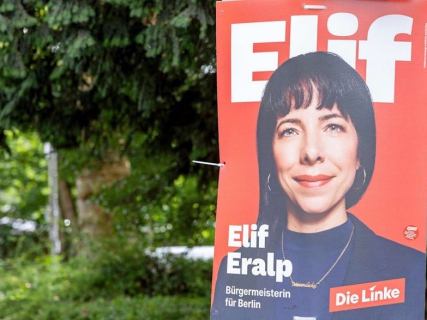

The left is clearly positioned for the first time at the forefront of the electoral race in Berlin. A survey by Forsa for t-online, conducted with 1,535 people between August 4 and 18, places Die Linke as the leading force ahead of the regional Parliament elections in Berlin on September 20.
The party led by Elif Eralp would reach 22% of the votes, nine points above its result in 2023. Behind them would be the CDU and AfD, tied at 18%, while the Greens would achieve 16% and the SPD would remain at 12%.
📊Forsa - 🗳️Regional Elections 🇩🇪 Berlin:
— Electodatos (@electodatos) August 22, 2026
‼️The "traditional" parties 📉would lose more than 20 points in Berlin.
⚫️CDU + 🟢GRÜNE + 🔴SPD + 🟡FDP: 49% (-20.6)
🟣LINKE + 🔵AfD + 🟤BSW: 44% (+22.7)
➡️(+/-) vs the electoral result 🗳️of 2023. https://t.co/PvpuLp1RKL
Die Linke skyrockets and leads the polls
The result represents a significant advance for Die Linke, which would go from the 12.2% obtained in the 2023 elections to the 22% now attributed to it by Forsa.
The candidate of the party, Elif Eralp, would thus become the most voted in the race for the Berlin Parliament, with four weeks left until the electoral date.
CDU and AfD tie for second place
The CDU, currently leading the regional government in coalition with the SPD, would obtain 18%, which would represent a drop of more than ten points compared to 2023.
The AfD would also reach 18%, nine points more than in the previous elections, and would tie with the Christian Democrats in second place. The Greens would be at 16%, while the SPD would fall to 12%.
BSW and FDP would be left out
Below the electoral threshold would appear the BSW, with 4%, and the FDP, with 3%, so they would not enter the regional Parliament. The rest of the candidates would gather 7% of the votes.
The result outlines a particularly fragmented scenario. According to the calculations published from the survey, a coalition of Die Linke, Greens, and SPD would reach 50%, while an alliance between CDU, Greens, and SPD would reach 46%.
More than 20 points drop for traditional parties
If the results of CDU, Greens, SPD, and FDP are grouped, the four formations would now sum up to 49%, compared to the 69.6% they obtained together in 2023. Conversely, Die Linke, AfD, and BSW would go from around 21% to 44% in the new estimate.
The data reflects a strong shift of the Berlin vote towards the two extremes of the ideological axis, with the left as the main beneficiary and the AfD consolidating as one of the major forces in the upcoming electoral appointment.
The elections on September 20 will decide the composition of the new regional Parliament and, with it, who will occupy the Government of Berlin during the next legislative term.