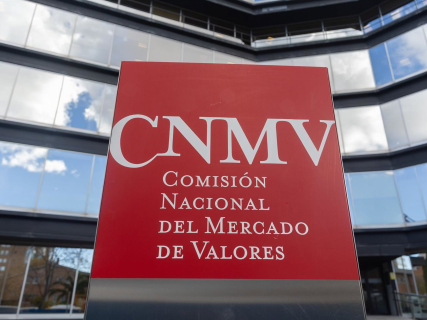

The National Securities Market Commission (CNMV) has issued a new warning due to the increase in financial fraud during the summer, a period when citizens have more leisure time and use the internet more.
"During holidays, leisure time increases, as does the time we spend browsing the internet and social media. This way, we are more exposed to attempts by scammers and financial 'chiringuitos' to lure new victims," the stock market supervisor points out in a statement.
The regulator emphasizes that, during the summer months, the massive arrival of tourists in Spanish coastal areas means that "there is a greater risk of being contacted by a 'financial chiringuito'," although it stresses that this type of threat "persists" throughout the year.
According to the CNMV, these groups' initial approaches are made through phone calls and emails, which "are followed by increasingly aggressive contacts" to convince potential victims. Furthermore, it warns that large hotels and social gathering places "are points where 'chiringuitos' can deploy their activity."
The supervisor explains that, as a general rule, the 'modus operandi' begins with an initial contact where they present themselves as authorized companies. Subsequently, a second call or message occurs in which specific financial products and a concrete investment offer are proposed; after gaining the client's trust through pressure tactics, the operation is finally completed.
Although this is an increasingly less frequent method, the CNMV recalls that some of these groups may also organize "no-obligation meetings or informational days in hotels" to approach potential investors.
"On occasion," explains the CNMV, "they gain the trust of clients by speaking their language (English, French, German, and Russian) and also, through attractive websites with abundant information, which show the listed companies they supposedly work with."
Role of 'data brokers' and how to protect yourself
In addition, the supervisory body focuses on the role of data intermediaries or 'data brokers', that is, companies or portals that collect personal information through forms, "investor profile" tests, sweepstakes, or the download of free content such as guides, profitability simulators, or webinars.
"The risk of these pages lies in the fact that, although the initial promise is a free report or access to exclusive content, the true purpose is to feed databases that are then exploited for aggressive commercial or directly fraudulent purposes," he assures.
The CNMV urges citizens to report any suspicious contact with these types of entities in order to act quickly. To do so, it reminds them that those affected can contact its investor helpline or send an inquiry through the form available in the investor section of its website.
"In the event of any incident suspected of fraud, in addition to informing the CNMV, report what happened to the Police or the corresponding Court," he adds.