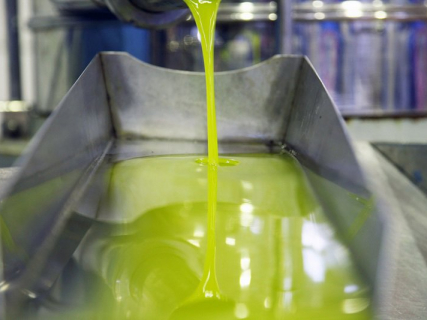

The Government has ordered the temporary withdrawal from the market of 12% of olive oil production, about 188,000 tons, to prevent excess supply from causing a collapse in prices. The measure, which is being applied for the first time in Spain, takes effect this Friday, 6 November, and requires olive oil mills to keep stored part of their production until 30 September 2027.
The resolution of the Ministry of Agriculture, Fisheries and Food, published in the Official State Gazette (BOE), affects the 2026/2027 campaign and responds to the increase in crop forecasts, which exceeds 1,602,596 tons, 23% more than in the previous campaign. To this amount are added the 357,040 tons that remained stored at the start of the season, also above the stocks from the previous year.
The available volume thus surpasses the threshold established by regulations to intervene in the market. With this decision, Agriculture intends to temporarily limit the amount of oil that reaches buyers and prevent excess supply from causing a drop in the prices received by producers, to the point of jeopardizing the profitability of their operations if income does not reach to cover production costs.
A harvest that could be the fourth largest in history
Estimates communicated by the autonomous communities point to one of the most productive campaigns in Spain’s olive-oil sector. If the forecasts are met, the 2026/2027 harvest would be the fourth largest in the historical series, aided by the weather conditions of last spring.
Mild temperatures and abundant rainfall in the main olive-growing areas facilitated flowering and the development of the olives, which has raised production expectations. At the same time, the sector has begun the campaign with stocks that are 23.3% higher than those of the previous year.
Regulations allow mandatory withdrawal to be activated when the sum of the oil stored at the start of the campaign and the expected production reaches at least 120% of the average of the previous six campaigns. The data reviewed by Agriculture meet that condition, so the Ministry has set at 12% the amount that must temporarily be kept out of commercial circuits.
How the withdrawal of olive oil will be applied
The obligation affects all the mills producing in national territory, which will have to keep stored 12% of the oil declared monthly. The percentage will be calculated on the accumulated production since November, without including the quantities corresponding to October, the first month of the campaign.
Each mill may choose which category of oil to withdraw, whether extra virgin, virgin or another, and decide whether to keep it in its own facilities or resort to external warehouses. The product remains immobilized in order to limit its commercialization during the established period.
Companies will have to declare their production volumes and stocks through the Olive Oil Markets Information System (SIMO), as well as keep the documentation that allows compliance with the obligation to be verified.
Agriculture will coordinate with the autonomous communities a control plan to supervise the quantities stored and the facilities used. The competent authorities may request documentation and carry out the corresponding checks.
Agriculture may review the withdrawal starting in December
Although the resolution establishes that the oil must remain out of the market until September 30, 2027, the Ministry may review the measure starting December 31, 2026, once it has more precise information about the evolution of the harvest.
The regulations include the possibility of reducing the withdrawal percentage if new production estimates or the behavior of demand and prices advise modifying it.
The mechanism, provided for in the regulation approved in 2021 and developed for this campaign through a ministerial order of October 29, is used now for the first time in the face of production forecasts and initial stocks that exceed the established limits to intervene in the supply of olive oil.