
The companies dedicated to medical imaging diagnostics achieved in 2025 revenues of €435 million, which represents an increase of 6.1% compared with 2024, according to data from the DBK Sector Observatory by Informa. With this result, the business has already chained four consecutive years with growth rates in the range of 5% to 7% following the recovery that began in 2021.
This pattern is explained mainly by the boost in health insurance and by the growing need to turn to private healthcare in light of shortcomings in the management of the public system. This context has allowed operators to strengthen their structure, increase their care capacity, and drive investments in cutting-edge technology aimed at improving patient care.
In terms of activity, in 2025 around 58 million tests were carried out, 4% more than in the previous year. The overall value of these examinations stood at €3,550 million, of which 65% corresponded to public centers, 23% to private centers, and 12% to companies specialized in medical imaging diagnostics.
Specialized centers continue to increase their weight in the market thanks to the expansion of their service portfolio and the gradual transfer of demand to private providers, in an environment marked by the greater complexity of the diagnoses requested by medical professionals.
Sector concentration and more dynamic testing
The market shows a high level of concentration. The ten largest operators accounted for 68.5% of sector turnover in 2025, in a scenario shaped by the entry of investment funds and by the integration of companies into large healthcare groups.
The 17 main specialized companies concentrate around 80% of activity and employ about 5,750 professionals. In September 2026 they were managing a total of 247 centers: 70% were owned facilities, 18% units located in third-party hospitals, and 12% units in third-party non-hospital centers.
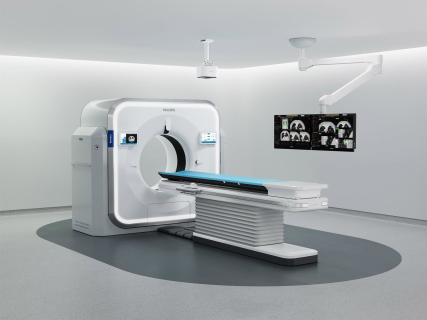
By type of test, conventional radiology (X-rays) continues to be the most widely used modality, although magnetic resonance imaging and CT are positioned as the techniques with the highest growth, driven by improvements and the renewal of technological equipment. In Spain, the fleet of high-technology equipment reached 3,843 devices in 2025, with special prominence of magnetic resonance systems, CT scanners, and mammography units.