
Gasoline has an advantage over any election speech: its price is seen from the road. This Tuesday, while the United States votes, the gallon of regular fuel costs on average 4.15 dollars. Filling a fifteen-gallon tank means shelling out a little more than 62 dollars. For whoever needs the car to work, take the children to school, or do the shopping, the discussion about the economy often starts there.
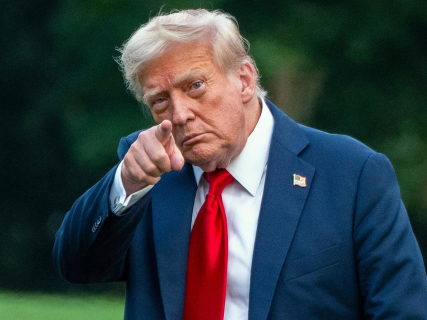
Donald Trump returned to the White House again with the promise that living would be more affordable. Twenty-one months later, he faces midterm elections with fuel prices soaring, a war with Iran that has made energy more expensive, and polls that favor his opponents. His name does not appear on the ballots for Congress. His management is behind much of what is decided.
Trump will remain president after these elections. What may change is how much he will have to negotiate, what initiatives he will be able to push through, and who will control the commissions tasked with overseeing his Administration.
Polls paint a Democratic advantage
The latest surveys point in the same direction, although they differ in intensity. The RealClearPolling average consulted places Democrats at 52.1% and Republicans at 43.3% in the national question about which party voters prefer for Congress. The difference is 8.8 points.
Ipsos’s latest poll, conducted between October 29 and November 2, gives 52% versus 44% among likely voters. The previous work, from October 22 to 26, gave Democrats a nine-point advantage. Both sketch out a scenario favorable to the opposition, without that small difference between polls allowing us to talk on its own about a change in trend.
DEMOCRAT · MIDTERMS 2026
Polls before the count
| Poll / average | Democrats | Republicans | Difference |
|---|---|---|---|
| RealClearPolling average Oct. 9–Nov. 1 | 52.1% | 43.3% | D +8.8 |
| Ipsos Oct. 29–Nov. 2 | 52% | 44% | D +8 |
| Ipsos Oct. 22–26 | 53% | 44% | D +9 |
The House of Representatives wins district by district. A national advantage helps to understand the atmosphere, but it does not, by itself, say where the vote is concentrated or how many close races will fall on each side. Democrats can add many votes in places they already dominate and, even so, still need narrow wins elsewhere to reach the 218 seats needed for the majority.
That will be one of the central issues of the early hours: to check whether the advantage shown by the polls has the territorial distribution needed to change control of the House.
The promise of getting better by the end of the month
In 2024, Trump received the support of Americans dissatisfied with what it cost to live under the presidency of Joe Biden. Now he is the one who has to explain why the bills keep going up.
The latest Ipsos poll puts his overall approval at 32%. In the late-October study, only 20% approved of his handling of the cost of living. The discontent also reached his own ranks: fewer than half of the Republicans surveyed, 48%, backed his performance in that area.
A voter can continue to identify with Trump, share his immigration policy, or distrust the democrats and, at the same time, consider that their household economy has worsened. For Republican candidates, the problem is to ensure that this disappointment does not translate into abstention or a punishment vote.
The pocketbook forces a comparison of promises with specific spending. It is not enough that inflation falls compared with a prior peak: that means prices are rising more slowly, not that shopping costs the same again. And in these elections there is not even a clear improvement in that recent comparison.
Average inflation between April and September was 3.67%, one point above the average recorded during Biden’s last six months. Gasoline costs almost 50% more than in February. Diesel has become about 70% more expensive.
War comes home through the shipping bills and the purchase
The war with Iran is not confined to foreign policy. The difficulties for commercial traffic through the Strait of Hormuz have moved the conflict to the price of energy, with consequences for transportation and for goods that depend on it.
Tariffs had already arrived. Protection of American industry was one of Trump’s major bets, but the increased cost of imports also affects those who buy those products. The long-term advantages promised compete politically, on an electoral timetable, with expenses that are paid this week. The president thus faces a difficulty that his predecessor knew: explaining an economy through aggregated indicators when citizens judge it with the accounts of their own home.
Republicans have data with which to defend their performance. GDP grew by 3.4% in the third quarter and private consumption continued to move forward. The United States does not arrive at these elections with a paralyzed economy. It arrives with growth and with a portion of its citizens dissatisfied with what that growth means for them.
Artificial intelligence also comes to the polls
Business investment increased by 12.7%, driven largely by the development of artificial intelligence. It is one of the bets with which the Administration intends to present a more competitive economy.
But an investment is not received the same way from every place. For a technology company it can mean capacity for expansion; for a worker, uncertainty about his or her job. For a locality that receives a data center, it can open up opportunities and raise questions about water and electricity consumption. The debate has a daily translation: who gets the new jobs, who benefits from the investment, and who assumes its costs. The industry’s ability to grow does not automatically resolve those questions.
In a campaign dominated by the cost of living, the technological promise needs to coexist with concerns that are far less abstract.
The Senate forces another map to be considered
Winning back the House of Representatives and winning the Senate are different objectives. In the upper chamber, 35 seats are up for grabs: 33 corresponding to the ordinary cycle and two special elections. Not all of the one hundred positions are renewed.
DEMOCRAT · THE MAJORITIES
How much power is at stake for Trump
| The key | House of Representatives | Senate |
|---|---|---|
| Seats at stake | 435: the whole House is renewed. | 35 out of 100: 33 regular and two special elections. |
| Decisive threshold | 218 seats for the majority with the 435 seats covered. | The Democrats need 51. With a tie at 50, the Republican vice president breaks the tie. |
| What to look at in the count | If the Democratic national advantage turns into victories in contested districts. | If the Democrats keep their seats and achieve a net gain of four. |
| If it changes hands | The opposition would control the House agenda and its investigative committees. | The opposition could block presidential and judicial appointments that require confirmation. |
The Democrats need a net gain of four seats to reach 51. A tie at fifty would leave the Republicans with the tie-breaking vote of the vice president, JD Vance. The opposition has to protect its positions and gain ground in states where Trump delivered strong results two years ago.
Among the races that capture attention are Michigan, with Abdul El-Sayed against Mike Rogers, and Texas, where James Talarico competes against Ken Paxton. The state that elects an entire senator matters as much as the national climate: a Democratic advantage across the country does not necessarily reproduce itself in each race.
For Republicans, keeping the Senate would be valuable even if they lose the House of Representatives. Maintain control of a decisive institution for confirming presidential and judicial appointments. For the Democrats, winning both chambers would significantly expand their ability to condition the second half of the term.
Winning Congress does not equal winning the White House
The Democrats face an opportunity, but also a test. Rejection of the president can bring together voters who disagree with each other on taxes, immigration, energy, or foreign policy. Turning that unease into a majority requires mobilizing them in the same elections, even though their motives are different.
If they recover the House of Representatives, they will be able to control its agenda, push investigations forward, and make it harder for Republican laws to be approved. They will not be able to impose their program on their own: Trump will retain the presidency and the veto, and the Senate may remain in the hands of his adversaries.
A Democratic victory would open a period of greater institutional confrontation and negotiation. A Republican resistance better than expected would allow the president to claim support in order to continue. The size of the victories, in addition to the color of the majorities, will determine how much room each party finds the next day.
For now, Americans continue voting. The first partial shutdowns will arrive at midnight in peninsular Spain, in areas of Indiana and Kentucky. The subsequent count will gradually replace the national advantage from the polls with concrete results, district by district and state by state.