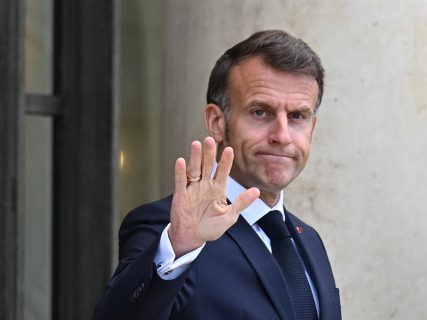

The consolidation of public accounts in France is progressing at a slower pace than expected and remains exposed to significant implementation risks, despite recent progress, according to the International Monetary Fund (IMF). For the organization, measures aimed at increasing revenue "will not be sufficient" to cover the country's broad adjustment needs, given the current high fiscal pressure, which is why it considers it "essential" to rethink the priorities of the large public spending.
Following the visit to the country by the IMF team responsible for preparing the annual Article IV report on France, the institution's experts conclude that the high level of debt and growing spending pressures reinforce the urgency of intensifying consolidation efforts, in line with the Medium-Term Fiscal Structural Plan and EU rules. In this context, they point out that "the next electoral cycle offers France the opportunity to articulate a credible and well-defined multi-year strategy" that supports fiscal consolidation and allows for the release of growth potential.
In its diagnosis, the IMF mission highlights that growth forecasts continue to be surrounded by strong uncertainty, both external and internal. The organization forecasts that French GDP growth will remain contained in 2026, moderating to 0.7% from the 0.9% forecast for 2025, which implies a cut of two tenths compared to the scenario published in April. This worsening is attributed to the indirect effects of the war in the Middle East raising inflation and cooling domestic demand.
In the short term, risks to the economic scenario continue to lean downwards, indicates the IMF, which mentions the increase in geopolitical tensions and the possibility of a disorderly correction in the AI market. On the domestic front, it adds that the increased political uncertainty ahead of next year's presidential elections "could further delay fiscal consolidation and planned structural reforms."
On this line, Fund technicians insist that "fiscal consolidation remains slower than expected and is still subject to significant implementation risks." They recall that the deficit was reduced to 5.1% of GDP in 2025, below the initial target, although they warn that the 2026 budget, despite complying with community rules, "does not meet initial plans," as it was not possible to advance additional reforms due to a lack of political support.
Even so, the French authorities maintain the objective of placing the deficit below 3% of GDP in 2029. However, the IMF warns that, "without additional measures, the current pace of adjustment would be insufficient to meet the objectives of the Medium-Term Fiscal Structural Plan (PEFP)," which would keep France under the Excessive Deficit Procedure (EDP) in 2029 and with a still high debt volume, forcing a greater adjustment effort in the future.
To avoid this scenario, the Fund staff proposes a clearly defined multi-year strategy, supported by high-quality fiscal measures and structural reforms that boost growth and steer debt towards a sustained downward trajectory. In their opinion, to respect the commitment to reduce the deficit below 3% of GDP in 2029, an initial structural fiscal effort close to 0.8% of GDP annually between 2027 and 2029 would be advisable, which could be moderated afterwards.
In particular, although well-designed revenue-increasing measures can contribute to the adjustment, the IMF considers that "they will not be sufficient" to cover the magnitude of the effort France needs, given that the tax burden is already among the highest in the euro area. This high revenue-to-GDP ratio reduces the room to continue supporting consolidation with further tax increases.
"The magnitude of the medium-term adjustment required makes relying even more on tax increases neither viable nor desirable, given the risks to business confidence, competitiveness, and growth," the experts emphasize.
The report recalls that French public spending reached 57.5% of GDP in 2025, the highest level in the euro zone, so the IMF estimates that reorienting it is key to generating fiscal space for new priorities and, at the same time, advancing consolidation. Population aging, defense needs, digital investment, and the ecological transition will, according to the organization, exert increasing pressure on public finances.
Given this scenario, the Fund's technicians argue that the adjustment strategy should focus on cutting less efficient spending and reallocating current and social items towards areas considered priorities, accompanying it with ambitious structural reforms and periodic spending reviews.
Among its recommendations, the IMF proposes adapting health and education spending to demographic changes, optimizing already available resources. To this end, it proposes introducing carefully designed health co-payments for non-essential or non-urgent services, with the aim of containing costs associated with aging, while guaranteeing access and quality of care and protecting low-income households with greater needs.
The organization also suggests reviewing the unemployment benefit system, which remains relatively generous for certain groups, which, in its opinion, may diminish incentives to prolong working life. Furthermore, it urges the definition of a credible pension reform strategy that restores long-term sustainability to the system.
"The suspension of the 2023 reform has reduced short-term savings and renewed uncertainty surrounding the system's adjustment path," the technicians conclude in their report.