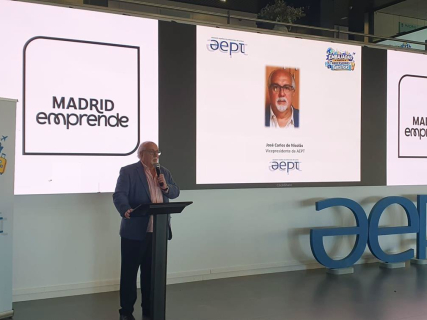

The Spanish Association of Tourism Professionals (AEPT) has organized this Wednesday in Madrid a specific day for students of Upper Secondary Education, with the aim of showcasing career exits and training options in tourism and encouraging generational renewal in this economic activity.
The event, held at the Carabanchel Business Nursery Center with the support of the Community of Madrid, was aimed at first- and second-year Upper Secondary Education students and allowed them to learn firsthand about different career paths through direct contact with employees in the sector.
The proposal, called the Tourism Professions Promotion Embassy (Eppts), has offered information points about travel agencies, hotels, transportation companies, and services provided by tourist guides, along with discussion spaces to clarify doubts about training, job functions, and internal promotion options.
The president of the AEPT, Santiago Vallejo, has highlighted the lack of knowledge that still exists among young people about the breadth of profiles offered by tourism, which is not limited to hotels and trips, but also includes event organization, destination management, the commercial area, and new technologies.
Vallejo argues that one of the sector’s major challenges is to strengthen its appeal as a professional career path through more competitive salaries, employment stability, reconciliation measures, manageable schedules, and genuine career development options, as well as to promote specific training and the social recognition of those who work in tourism.
"The tourism industry has to assume that it is not enough to offer jobs; it must offer professional projects, opportunities for growth, and expectations for the future," the association’s president said, who supports evolving toward a model focused on the development and retention of talent.
Among the lines of action proposed by the AEPT are also the promotion of innovation and technology, with special attention to artificial intelligence, sustainability, and data management, as well as greater cooperation between companies, public administrations, educational centers, and professional associations to ensure the continuity and competitiveness of the tourism sector.