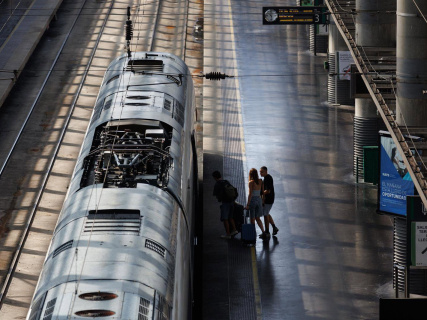

The tourism sector has expressed its concern about the consequences of the recent railway accidents and the disruptions to high-speed service in Spain, both because of their direct effect on bookings and on travelers’ mobility and because of the possible deterioration of the country’s image as a vacation destination.
While some associations already point to cancellations and declines in bookings, other entities argue that it is still too early to measure the impact precisely and call for specific actions to restore confidence in trains.
The Asociación Sevillana de Empresas Turísticas (ASET) puts the drop in hotel bookings in Seville at around 20% after the All Saints’ Day bridge, a setback that is accompanied by an increase in cancellations. In turn, Meliá anticipates that the accident in Urda could cause a certain specific slowdown in demand toward destinations in southern Spain during the fourth quarter.
At the same time, the Chamber of Commerce of Seville estimates that the interruption of the rail connection generates a direct economic impact of between 1.3 and 1.5 million euros per day in the province, in addition to no longer receiving more than 6,300 daily travelers by train.
From the Confederación Española de Hoteles y Alojamientos Turísticos (Cehat), its secretary general, Ramón Estalella, warns of a reputational effect on tourism, although he considers it impossible to quantify for the moment. The employers’ association recalls that mobility is essential for tourism activity and that the priority should be to guarantee the safety of the network.
In the agencies sector, UNAV-Fetave confirms an increase in inquiries and modifications to bookings, especially in package trips, which may require changes to connections, accommodations, or contracting additional nights. However, it considers it premature to talk about a generalized change in travelers’ preferences toward air travel and distinguishes between specific responses to connectivity problems and a loss of confidence in rail travel.
The Spanish Confederation of Travel Agencies (CEAV) also warns of the economic consequences of the situation, especially in Andalucía, due to its dependence on the rail corridor between Madrid and the Andalusian Community. The organization has requested an urgent meeting with the Ministry of Transport and demands information on safety measures, as well as road transport alternatives and public service routes to maintain connectivity.
INVESTMENT AND RECOVERY OF TRUST
For its part, the Tourism Board and the Andalusian Federation of Travel Agencies (FAAV) agree in calling for urgent investments from the Government to modernize rail infrastructure and guarantee its safety.
FAAV warns of the economic consequences of the interruption of the high-speed connection between Madrid and Andalucía and considers the capacity of air transport insufficient to absorb the volume of train travelers.
In the congresses and events segment, I of MICE, the Association of Incentive Agencies has called for a coordinated response to restore confidence in rail connections and ensure the mobility of participants, with updated information, transport alternatives, and coordination between administrations and operators.
The various organizations agree in pointing out the importance of restoring the safety and reliability of high-speed rail, although for the moment the consequences for tourist demand present different degrees of impact depending on the destinations and activity segments.