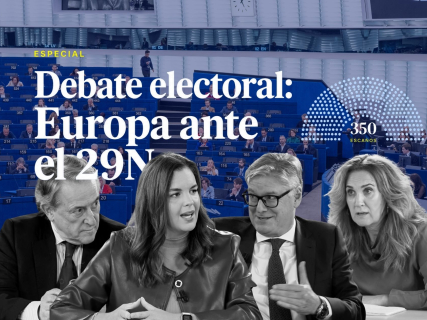
Democrat brings together in Brussels PP, PSOE, Vox, and Sumar for the first debate of 29-N in a European key

The outlet will hold next Tuesday, November 10, at 12:00 p.m., a meeting with representatives of the four parties to confront their proposals on the future Community budget, migration policy, and the war in Ukraine.

ILUSTRACIONES (1200 x 675 px) (1200 x 675 px)

ILUSTRACIONES (1200 x 675 px) (1200 x 675 px)

Add DEMÓCRATA to Google

Ask FREN

Published

3 minutes

Most read

Elecciones 29N · Encuestas

La media de las encuestas

Media a 7 de noviembre de 2026 · 11 institutos

  • PP31,0 %
  • PSOE26,2 %
  • Vox19,5 %
  • Frente Amplio6,6 %
  • ERC2,4 %
  • SALF2,2 %
  • Podemos2,1 %
01020304050ene 2024jul 2024ene 2025jul 2025ene 2026jul 2026

Media del último estudio de cada instituto en 30 días y su evolución semanal desde el 23J. Partidos con al menos un 2 %.

Todas las encuestas

Elecciones generales del 29 de noviembre · Demócrata

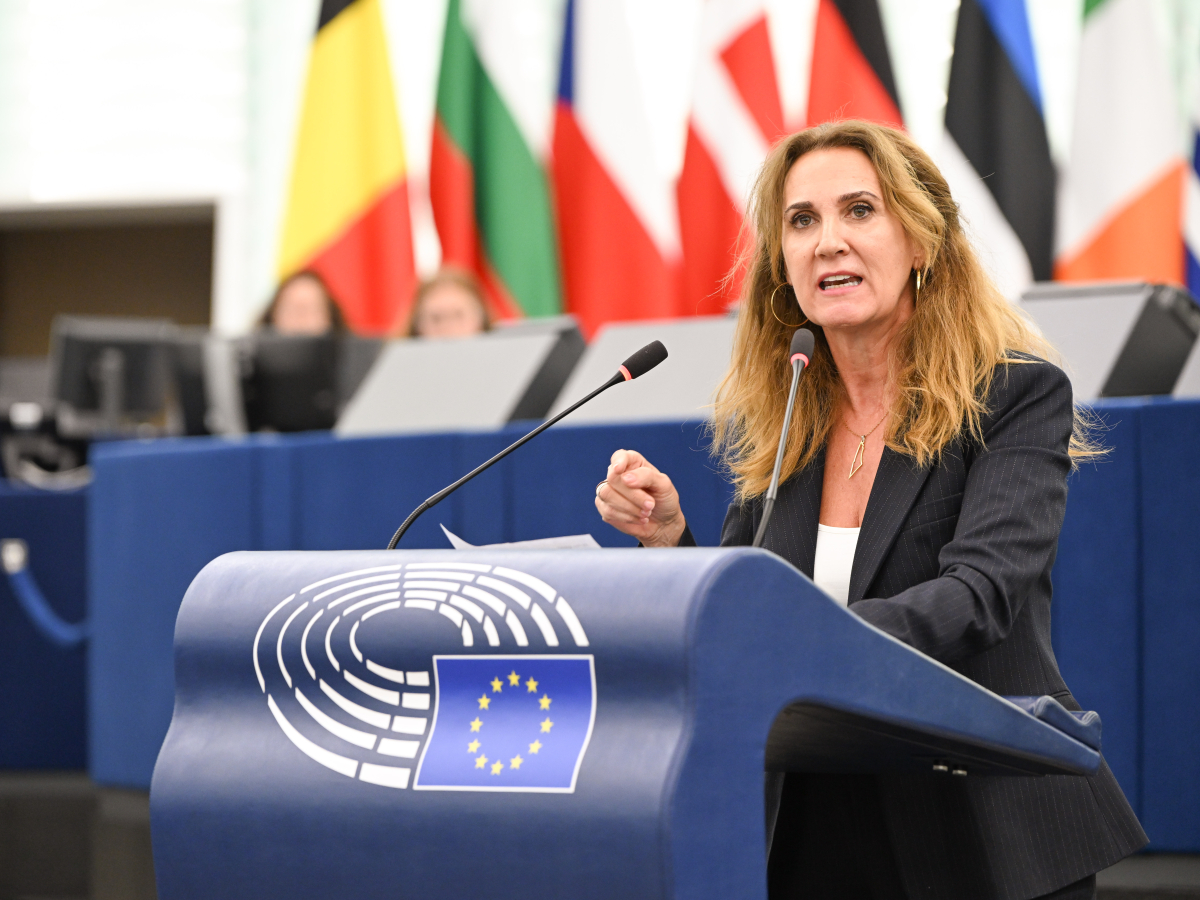
The general elections on November 29 next will not only set Spain’s political course for the coming years. They will also place the country before some of the most momentous decisions that the European Union will face in this parliamentary term. With that perspective, Demócrata will hold next Tuesday, November 10, at 12:00 p.m., the first electoral debate on the November 29-N polls in a European key, an event that will bring together in the European Parliament, in Brussels, representatives of the four main Spanish political forces with a presence in the Eurochamber.

The debate, which can be followed through Demócrata’s channels, will be moderated by the correspondent in Brussels, Álvaro Villarroel, and will include the participation of Tono López-Istúriz (Partido Popular), Sandra Gómez (PSOE), Hermann Tertsch (Vox), and Estrella Galán (Sumar).

The meeting will thus shift the Spanish election campaign to the heart of the Community institutions, at a time when the decisions being negotiated in Brussels will have direct consequences for the country’s economy, foreign policy, and social model.
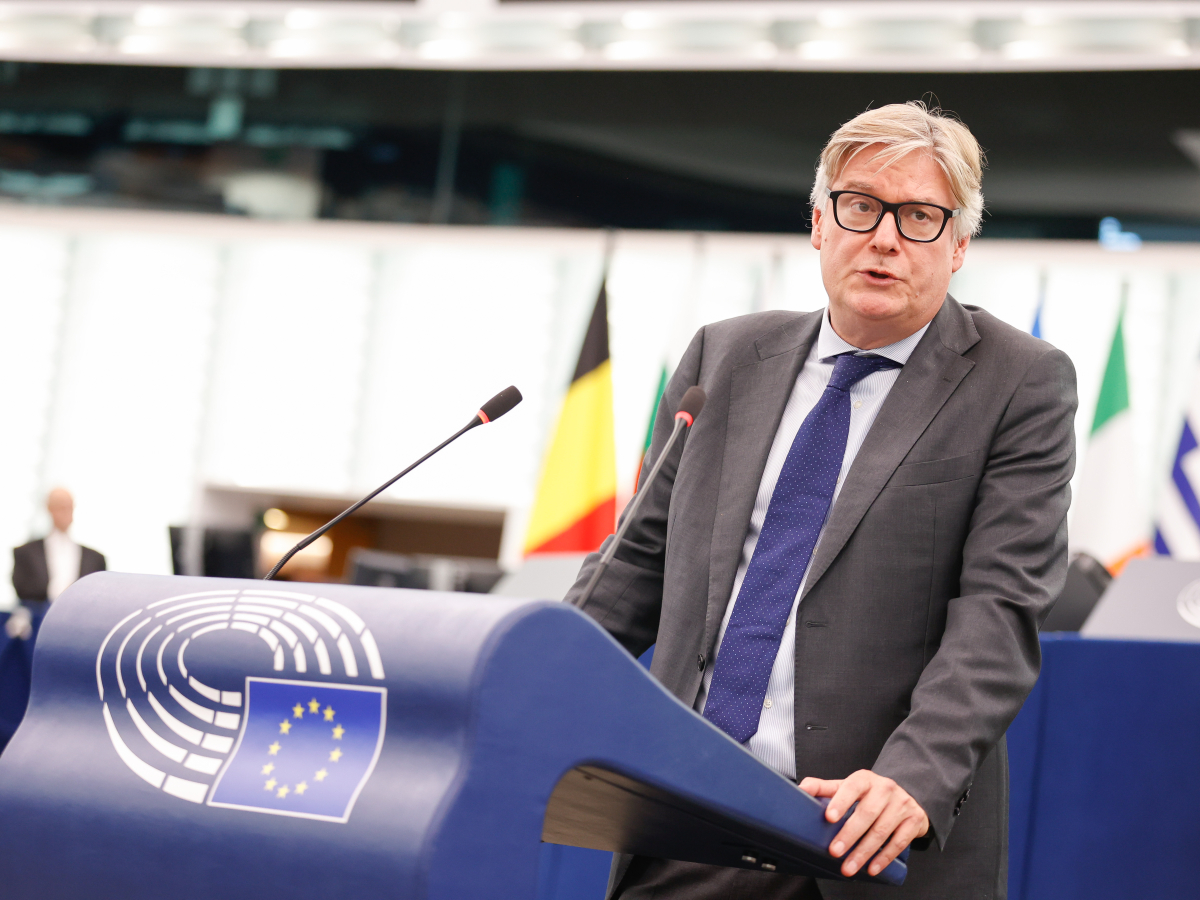
European Parliament
European Parliament -

The European budget, the first great battle

One of the central points of the meeting will be the next multiannual financial framework (MFP) 2028-2034, considered in Brussels as the mother of all agreements. Negotiating the Community budget will shape a large part of the European agenda for the coming years and will require the future Spanish Executive to take a position on issues such as the funding of the Common Agricultural Policy (CAP), cohesion funds, national contributions, and the introduction of new spending priorities.
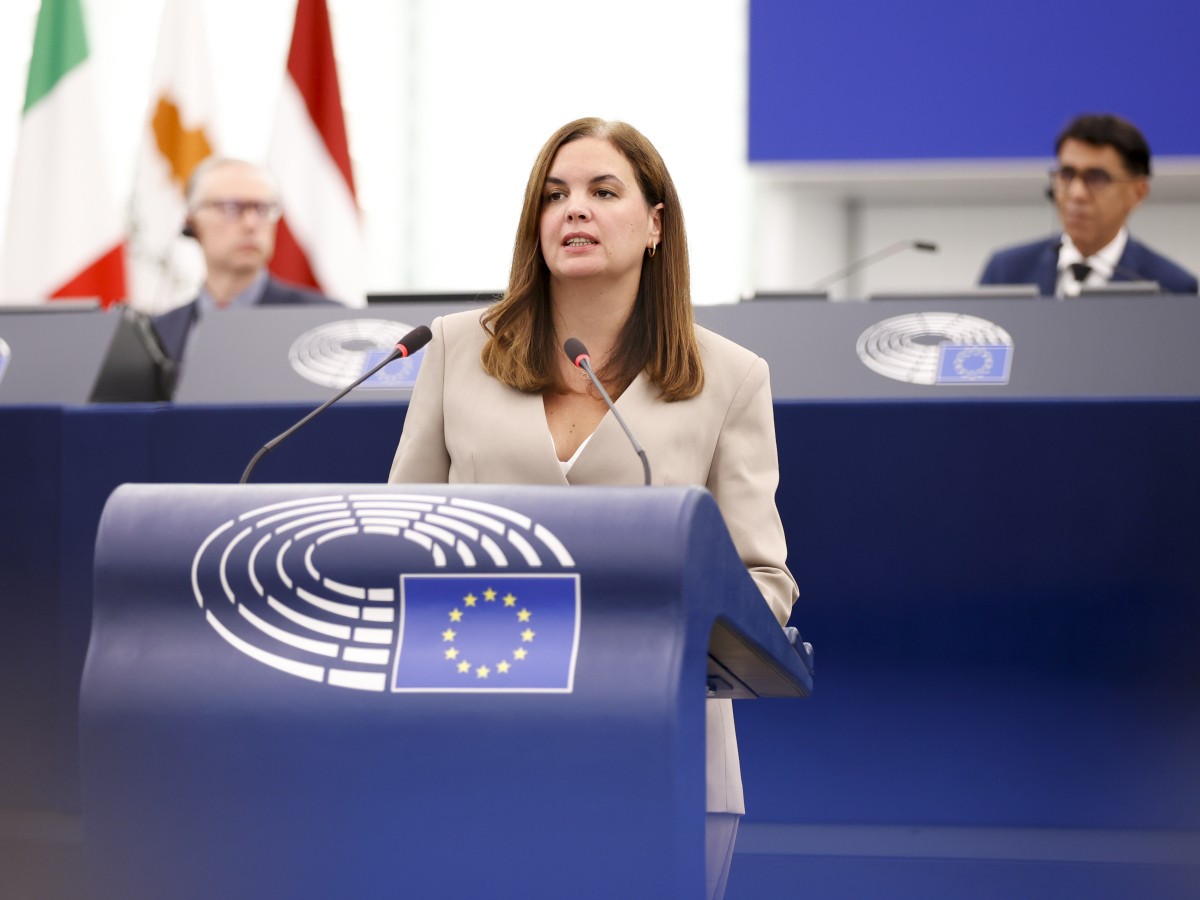
European Parliament
European Parliament -

The European Commission’s proposal has opened a debate about the future of the Union’s traditional policies and the allocation of resources between agriculture, cohesion, competitiveness, and defense. Spain, which historically has been one of the main beneficiaries of European funds, is also facing a negotiation in which its position as a net contributor is acquiring increasing relevance.

MEPs will also debate possible ways to finance the new Community priorities, from the creation of new own resources to proposals for levies on certain economic sectors, such as the major technology platforms.

Migration and Ukraine, two files that split Europe

Migration policy will be another of the major blocks of the debate. The entry into force of the European Pact on Migration and Asylum, the new rules of solidarity between Member States, and the proposals to speed up return procedures have reopened differences among Europe’s political families. A discussion especially relevant for Spain due to its geographical position and due to the migratory pressure experienced by territories such as the Canary Islands, Ceuta, and Melilla.
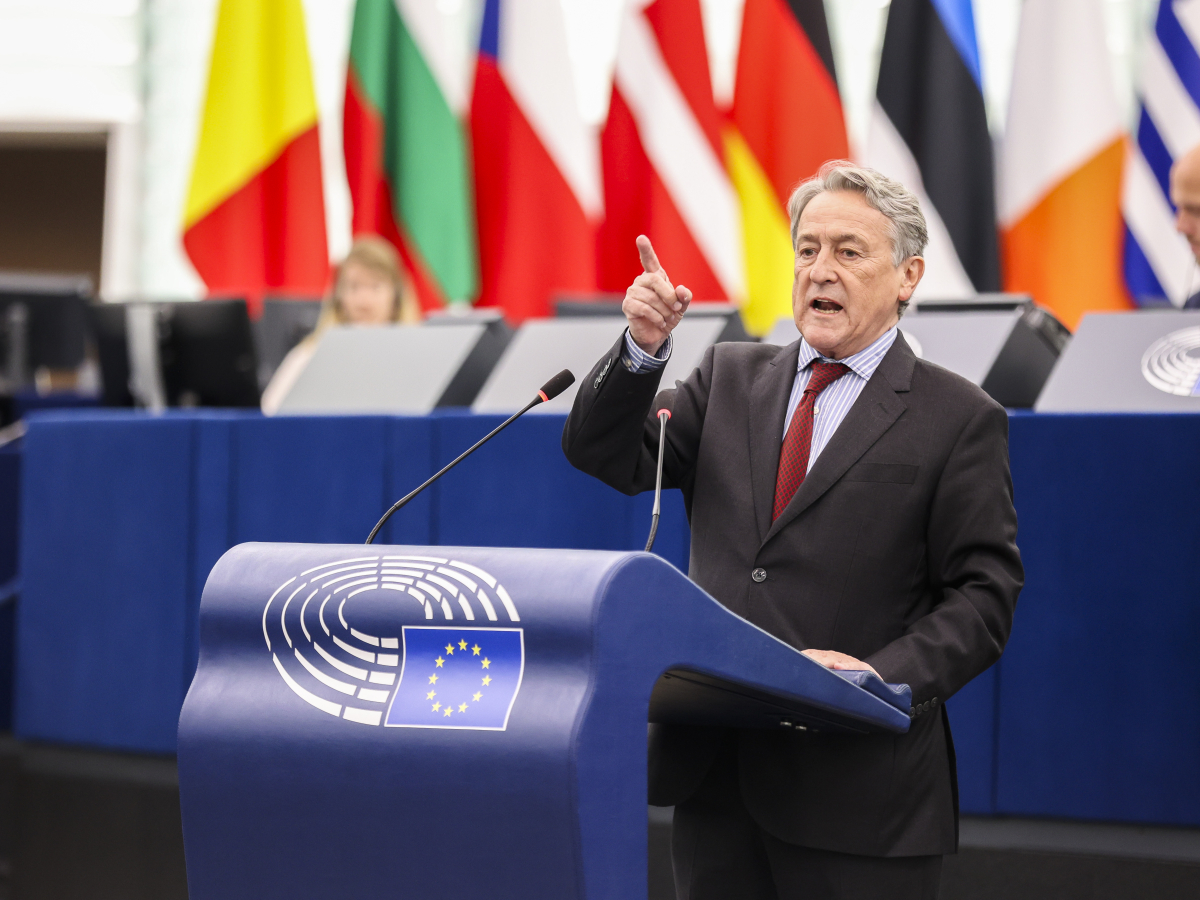
European Parliament
European Parliament -

The meeting will also address the future of European support for Ukraine at a time when diplomatic efforts to find a way out of the conflict are being intensified. Funding for Kyiv, the strengthening of the European defense industry, strategic autonomy, and the role of the United States in the continent’s security architecture will be on the agenda.

A Spanish campaign with European consequences

The Spanish elections on November 29 will also take place on the eve of an especially intense electoral cycle for the continent. France, Italy, and Poland have planned national elections in 2027, in a context of transformation of the European political balances and growing pressure on Community institutions.
European Parliament
European Parliament -

In that scenario, the next Spanish Government will have to take part in decisions that go far beyond national policy: from the closing of the multiannual budget to the redefinition of commercial relations, the European response to the war in Ukraine, or the development of a common migration policy.

With this debate, Demócrata strengthens its commitment to bring the major European debates to the Spanish reader and to bring Brussels’ decisions closer to national political current affairs, bringing together in the same space representatives of the main political forces to confront their proposals for the future of Spain in the European Union.

More key points, information and questions with FREN

AI-GENERATED CONTENT

What stage of parliamentary processing is the 2028-2034 European budget currently in?

As of 7 November 2026, the 2028-2034 European budget is in the negotiation phase, still without final approval. The European Parliament has already approved its negotiating position, but the Member States have not yet reached a global agreement on the figures and financing. Therefore, the file has not reached final parliamentary consent nor formal adoption by the Council.

What exactly is being processed

The so-called 2028-2034 European budget is the Multiannual Financial Framework (MFF): the Union's spending framework for those seven years. It is important to distinguish its regulation from the sectoral regulations that will develop the funded programs. Both works progress in parallel, but a partial agreement on a program does not mean that the entire budget has been approved.

The Commission presented the initial package on 16 July 2025 and completed its proposals in September. Its approach amounts to nearly two trillion euros at current prices, according to the Commission communication. That proposal opened the negotiation: it does not constitute an approved budget.

Where the European Parliament stands

The main parliamentary milestone has already occurred: on 28 April 2026, the plenary approved a provisional report setting its position on the main figures and structure of the MFF. This is reflected in the European Parliament press release.

The distinction is important: approving a negotiating position does not equate to giving final consent. The Parliament has a political basis for negotiation but must still decide on the final outcome. Institutional information from October confirms that the European Parliament maintains the position adopted in April while the Member States negotiate theirs, as explained in the October parliamentary overview.

Where the main obstacle lies

The immediate pending step is the global political agreement among Member States. Differences continue over the total volume, the distribution among policies, and the revenues needed to finance it. The compromise proposal from the Irish Presidency, presented on 10 October, did not allow closing that agreement at the summit on the 15th and 16th.

Meanwhile, the Council has approved partial positions on specific programs. These include national and regional plans, Horizon Europe, fisheries, and migration, borders, and security instruments. These mandates allow preparing or initiating sectoral negotiations with Parliament but leave financial allocations conditional on the general MFF agreement.

What is missing for approval
  • A global political commitment among Member States on figures, priorities, and financing.
  • The consent of the European Parliament, by absolute majority of its members, to the final MFF regulation.
  • Unanimous adoption by the Council, after obtaining that parliamentary consent.
  • Completion of the necessary sectoral regulations to implement the programs, according to their respective procedures.

These approval requirements are set out in the Council's official explanation.

Next milestone

The next key date is the extraordinary European Council on 26 and 27 November. António Costa announced a new compromise proposal for that meeting, according to Demócrata. The political goal is to close the agreement before the end of 2026 and complete the necessary legislation during 2027 to start the new framework on 1 January 2028; this timetable remains a goal, not a guaranteed outcome.

What are the exact competencies of a Spanish MEP according to European regulations?

A Spanish MEP has exactly the same competencies as any other member of the European Parliament: EU regulations do not distinguish by nationality once elected. The status of “Spanish” only matters for how they are elected (according to Spanish electoral law), but their powers derive from EU law (Treaty on European Union, Treaty on the Functioning of the EU, European Electoral Act, and the Parliament's Rules of Procedure).

1. Legislative competencies

The central function of an MEP is to legislate at the European level together with the Council of the EU (co-decision or ordinary legislative procedure):

  • Approve, amend, or reject EU laws (regulations, directives, decisions) proposed by the European Commission in most policies: internal market, environment, transport, consumer protection, energy, digital, etc.
  • Submit amendments to legislative proposals during committee work and in Plenary. Through amendments, they can change specific legal content (definitions, obligations, sanctions, deadlines, exceptions).
  • Appoint rapporteurs and shadow rapporteurs (through their political group) for each legislative file. As an MEP, they can be:
    • Rapporteur: drafts the parliamentary report, negotiates with other groups and with the Council/Commission.
    • Shadow rapporteur: follows the file for their group, proposes changes, and participates in negotiations.
  • Request the Commission to submit legislative proposals, through resolutions and initiative reports, although formal legislative initiative remains with the Commission.

2. Budgetary and financial competencies

Under the Treaties, the European Parliament and the Council are the joint budgetary authority of the EU. Each MEP:

  • Participates in approving the EU's annual budget, being able to submit and vote on amendments to expenditure items and budget lines.
  • Approves or rejects the multiannual financial framework (the multi-year spending ceiling), by voting.
  • Votes on the “discharge” of the budget to the Commission and other institutions, i.e., the political decision on whether they managed the funds properly.

3. Political control and accountability

The European Parliament exercises political control over the Commission and, to a lesser extent, over the Council. Each MEP can:

  • Submit written and oral questions to the Commission and the Council (including questions requesting a plenary response), which the institutions must answer officially.
  • Participate in interpellations and debates in Plenary with Commissioners and other representatives of the Council and European Council.
  • Vote on the investiture of the Commission President and the entire College of Commissioners, as well as their possible censure through a motion of censure against the entire Commission.
  • Initiate parliamentary committees of inquiry on possible infringements or mismanagement in the application of EU law.

4. Roles in appointments and treaties

European regulations assign the Parliament a key role in high-level institutional decisions; each MEP participates by voting:

  • Approval of the Commission President, proposed by the European Council.
  • Hearings and approval vote of the College of Commissioners.
  • Election of the European Ombudsman and the president and members of the Court of Auditors, according to Treaty procedures.
  • Consent to certain EU international treaties (e.g., major trade or association agreements), without which they cannot enter into force.
  • Participation in possible Treaty revisions, through resolutions and the requirement of parliamentary approval for certain changes.

5. Citizen representation and other functions

European regulations define the Parliament as the body of direct representation of the Union's citizens. This entails additional competencies:

  • Processing citizen petitions: EU citizens and residents can submit petitions; MEPs, through the Petitions Committee, can request information from institutions and propose actions.
  • Defending fundamental rights and the Rule of Law, through resolutions, reports, and activation of mechanisms provided in the Treaties (e.g., Article 7 TEU procedures).
  • Participation in interparliamentary delegations and joint assemblies with parliaments of third countries or international organizations, where they represent the European Parliament in the Union's foreign policy.
  • Political activity in their constituency of origin (in the case of a Spanish MEP, in Spain): although this is channeled through national law and parties, it is part of the representation function provided by EU law.

6. Rights and guarantees of office

Finally, European regulations recognize all MEPs:

  • Equality of voting and speaking rights in Plenary and committees, regardless of the Member State by which they were elected.
  • Parliamentary immunity according to the Protocol on the privileges and immunities of the EU, which protects freedom of vote and expression in the exercise of the mandate and establishes specific rules against national judicial actions.
  • Autonomy in exercising the mandate: they act with freedom of vote within the framework of their groups' discipline, without a binding legal mandate from their State or party, in accordance with the European conception of representation.

In summary, an MEP elected in Spain is a full member of the European Parliament, whose competencies are directly defined by the Treaties and the Parliament's Rules of Procedure, and encompass legislative, budgetary, political control, appointment, parliamentary foreign policy, and direct citizen representation functions.

What was Sandra Gómez's political career before representing the PSOE in this debate?

Sandra Gómez López has developed her political career mainly in València: she moved from youth activism and local leadership in the PSPV-PSOE to serving as councilor, socialist spokesperson, and deputy mayor, before being elected MEP in 2024. Her experience combines party responsibilities with municipal management in security, employment, and urban planning. As the specific debate is not identified, this overview summarizes her main stages without attributing a particular intervention.

Beginnings in Valencian socialism

Born in València in 1985 and linked to the Cabanyal neighborhood, she joined the Socialist Youth at 18. She held responsibilities in the youth organization and chaired the Consell de la Joventut de la Comunitat Valenciana between 2012 and 2014. In 2012 she also took on the Secretary of Ideas and Programs of the PSPV-PSOE executive in València city, one of her first responsibilities in the party's local leadership. These backgrounds appear in her European curriculum and in the municipal candidate profiles.

At the same time, she worked as a lawyer: she worked at Garrigues between 2009 and 2011 and then at Gómez-Belenguer Abogados, between 2012 and 2015. Her professional activity included defending private accusations in the Gürtel and Nóos cases, before taking on executive responsibilities in the City Council (European Parliament curriculum).

Entry into City Council and municipal rise

In the 2015 municipal elections, she held the second position on the socialist list led by Joan Calabuig and obtained a councilor seat. Within the municipal government chaired by Joan Ribó, she took on Citizen Protection, with responsibilities over Local Police and firefighters. She was the first woman to lead both services in València, according to the profile published by SER.

In August 2016, after Calabuig left the council, she became spokesperson of the socialist group and first deputy mayor. Her European curriculum places her tenure as deputy mayor between 2016 and 2023. During those years, she also chaired municipal entities such as Visit València, the Congress Palace, and València Activa (institutional career).

Leadership of the PSPV and mayoral candidacies

In February 2018, she was elected secretary general of the PSPV-PSOE of València city, winning the primaries against Maite Girau with 56.1% of the votes. Subsequently, she led the socialist candidacy for Mayor in 2019 and again in 2023; in both elections, the party obtained seven councilors (biographical summary).

During the 2019-2023 term, she headed Urban Planning. Her municipal executive career also included Employment and Entrepreneurship, Economic Development, International Relations, and senior citizen policies. The City Council reviewed these responsibilities in the farewell session of 2024, which closed nine years of presence in the corporation, including eight in local government.

The move to the European Parliament

She was elected in the European elections on 9 June 2024. On 12 July, the City Council formalized her farewell as councilor to assume the European seat, according to the municipal communication. In the European Parliament, she joined the Socialists and Democrats group and participates in the Budgets and Petitions committees (European Parliament).

In this new stage, she has also served as coordinator of her group in Petitions and drafted a report proposal to mobilize European aid after the DANA flood, as reported by Demócrata in October 2025. Her career prior to European representation was therefore mainly municipal and organizational within Valencian socialism.

Play

Test your knowledge with FREN!

How much do you know about this topic? Answer the following 3 questions.

Where will the first electoral debate about the general elections on November 29th with a European focus be held?

Question 1 of 3

What issue will be one of the central themes of the debate among representatives of PP, PSOE, Vox, and Sumar?

Question 2 of 3

Who will moderate and participate in the debate organized by Demócrata?

Question 3 of 3