
Everyone wants to play the match. They know it is not the final and that the referee has not yet signaled an extension to the encounter. In fact, he has not even blown the start of the semi-final and the stands are already cheering their respective teams. This Thursday, Brussels will once again turn into an Olympic stadium. In the Multiannual Financial Framework (MFF), the leaders of the Twenty-Seven meet in the Community’s capital to try to move forward on the latest negotiation draft submitted by the President of the European Council, António Costa. His proposal establishes a 10% cut compared with the Commission’s initial approach and puts forward a new basket of own resources to provide funding for the Community budget for the period 2028-2034.
But before the ball starts rolling in the Schuman roundabout, the different teams have already put on their respective scarves and begun to rehearse their chants. The Members of the European Parliament continue to voice their criticism of the size of the next European budget and the distribution of its items. Following the line set by the Irish Presidency, Costa has introduced new adjustments that mainly affect the headings intended to fund the new Community security capabilities and cohesion policies. Practically the entire chamber also shows reluctance for Member States to apply new cuts to the agricultural priorities, a possibility that, for the moment, is not reflected in the Portuguese’s proposal.
This emerges from the analysis of the positions defended this same week by the different Spanish delegations in the Eurochamber, just a few hours before negotiations between the Twenty-Seven begin. The criticisms coincide in their diagnosis of the insufficiency of the resources available, although the solutions proposed by each political family differ substantially.
"We are faced with a Financial Framework with serious difficulties in meeting the Union’s challenges, such as strengthening our competitive capacity, security on our borders, or support for the needs of the agricultural sector," the European People’s Party MEP Isabel Benjumea has said.
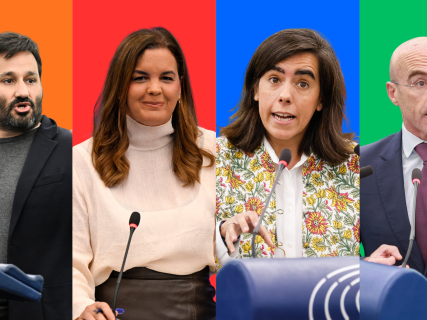
Along the same lines, the Vox MEP Jorge Buxadé strongly censures the latest draft by asserting that "agricultural policy and cohesion funds will be harmed again on the altar of their delusions", referring to the main budget negotiators. However, the proposal also does not fully convince the Greens family, which has played a relevant role during this legislature in negotiating different legislative files.
"Everything that is cut from the proposal that the Commission has already put forward is going backwards and it is not what the EU needs at this time", explains Compromís MEP, Vicent Marzà.
The tax basket, the other big front of the negotiations
President Costa has wanted to accompany his new negotiating box with a package of own resources that could provide the Community bloc close to an additional 60,000 million euros per year. During the meetings that are now opening in Brussels to try to reach an agreement, which requires the unanimity of the Twenty-Seven, the Portuguese will put on the table a new basket of tax figure proposals among which two stand out. His team believes these instruments could serve as leverage to unlock the talks and convince the most reluctant capitals to increase their national contributions to the European budget.
One of the main novelties is the so-called "digital tax". The levy proposed would be 3% on annual net billing obtained from online advertising, digital market services and user data monetization. The proposal provides for it to affect companies that exceed certain activity thresholds: more than 50 million euros in annual digital billing in the European Union and 750 million euros in income worldwide. The aim is for part of the economic value generated by these activities to contribute directly to funding Community policies.
The inclusion of this figure also responds to one of the main demands of the Socialists and Democrats group (S&D) during the negotiation of the new financial framework. Its negotiator, the MEP Sandra Gómez, has highlighted "the work that Parliament has done", by considering that Costa's proposal incorporates her approach of taxing the large digital platforms and the technooligarchs.
Socialists had been defending this measure, considering that the large technology companies also must contribute to financing the market from which they derive a large part of their income. "It was only fair that if they were doing business thanks to Europe, they should also pay Europe," they say from the Socialist delegation.
Gómez now calls for Member States to "make the agreement concrete" over the coming weeks so that the continent can take on new responsibilities without shifting the cost to other economic sectors. In particular, the MEP insists that the reinforcement of community resources must not be done at the expense of farmers. The negotiation of income, therefore, is directly linked to the discussion on the distribution of spending and the protection of the Union’s traditional policies.
The groups split over the new taxes
The creation of new tax categories, however, does not generate the same level of enthusiasm in all political families. The European People’s Party (EPP) maintains its reservations about the possibility that the increase in community revenues would rest mainly on new taxes. Benjumea argues that his party "cannot accept that the only solution for maintaining this ambitious budget is the creation of taxes" and calls on capitals to act with "responsibility".
Vox’s position is even more forceful. "Since they can’t agree, they propose raising taxes. It’s obscene while European States are bleeding out," Buxadé says, who rejects the tax approach put forward by the President of the European Council.
From Compromís, by contrast, Marzà views favorably the prospect of moving toward greater harmonization of own resources. The MEP considers it positive that there be common taxes, especially on large technology companies. In his view, the negotiation should move "more in the direction of seeking to tax large multinationals" in order to have greater resources that can be used to finance cohesion policies.
The differences reflect one of the main obstacles to the negotiations: while one part of Parliament calls for more own resources to finance the new European priorities, another rejects that the budget be supported by an increase in tax pressure. At the same time, the groups agree on the need to prevent budgetary adjustments from ending up affecting traditional policies, especially agriculture and cohesion.
Costa maintains December as the horizon for closing the deal
The negotiation model that will be used during this week’s summit, already put into practice in previous meetings, establishes that the Twenty-Seven will first negotiate in smaller groups, with the aim of bringing positions closer and finding possible partial agreements. Subsequently, once night falls, bilateral rounds will be opened and a final joint session will be held among all Member States.
Community sources explain that, if positions between the capitals continue to be at loggerheads—as it appears to be so far—Costa could decide to end the summit on Thursday night and resume the work with a view to December. The President of the European Council’s goal, from the very beginning, has been to try to seal an agreement before the end of the year, in line with the legal deadlines established so that the new budget can enter into force in 2028.
Pressure on the calendar also has a national political dimension. Leaders such as French President Emmanuel Macron urge their counterparts to reach an agreement as soon as possible. In his case, starting in January, with the beginning of the French national elections pre-campaign, his margin for maneuver in negotiations could shrink. At the opposite end, leaders such as Italy’s Prime Minister Giorgia Meloni argue that they will not back any budget simply for complying with a calendar.
Parliament reserves its final vote
In any case, despite not having negotiating capacity in the European Council or any power to directly modify the figures agreed by the Member States, the European Parliament will have to give its approval to the Multiannual Financial Framework. Its consent is essential for the budget to move forward, which turns the Eurochamber into an actor with leverage in the final stage of the process.
Therefore, Sandra Gómez has already warned that the socialists will be willing to accept "a more depleted budget only in exchange for the basket of new own resources". The MEP believes that Parliament must make its position prevail and prevent the new European priorities from being financed exclusively through cuts to traditional items. "Forget it. We are going to make our vote count. You can’t do more with less," she warned from Strasbourg.
The negotiations thus enter a decisive phase with two parties open simultaneously: the size of the budget and the origin of the resources with which it will be financed. The leaders will have to find a balance between the Union’s new strategic priorities, the protection of traditional policies, and the willingness of capitals to take on greater financial commitments. This Thursday’s summit does not have to settle the championship, but it will determine who arrives with the advantage in the next round.