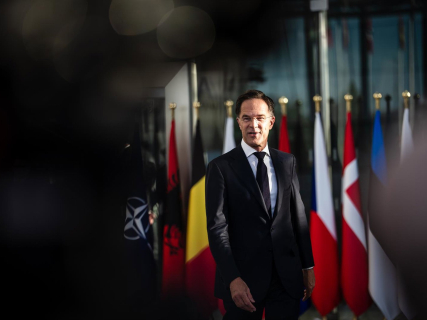
NATO 3.0: pay more … obey the same?

The former counselor at the Representation of Spain to the EU, Carlos M. Ortiz Bru, analyzes in Demócrata the future of NATO, the transatlantic relationship, and the challenge of a Europe that will have to decide whether it wants to limit itself to financing its security or also start directing it

7 minutes

fotonoticia 20260618110354 1920

fotonoticia 20260618110354 1920

Add DEMÓCRATA to Google

Ask FREN

Published

7 minutes

Most read

Europe has a curious capacity to be surprised by what it has seen coming for decades. Now it seems to discover, with a mixture of alarm and bewilderment, that the United States may not be eternally willing to bear the cost of Western security. A late revelation, comparable to discovering that water is wet or that dependence, when prolonged too long, eventually looks like an acquired right.

The E5 meeting in Berlin - Germany, France, the United Kingdom, Italy, and Poland - held at the end of June and the upcoming NATO summit in Ankara on July 7 and 8 are not minor episodes of Atlantic protocol. They are not another Atlantic liturgy of prefabricated smiles, solemn declarations, and photographs where everyone looks at a map with a grave expression. This time the fundamental issue is much less ornamental.

The new division of roles within the Western bloc is being negotiated, although no one puts it that way: who guarantees, who pays, and, above all, who decides. For more than seventy years, the arrangement was extraordinarily comfortable. Washington provided nuclear deterrence, technological superiority, strategic intelligence, and global intervention capability. Europe, meanwhile, invested in welfare, institutional expansion, and a certain moral pedagogy about the end of power conflicts.
The arrangement worked reasonably well. At least for one of the parties. But History - that artifact that Europe declares overcome every so often for its own peace of mind - has a habit of reappearing when it is least convenient.

First Crimea. Then Ukraine. Meanwhile, China has been silently occupying the center of the global strategic chessboard with that historical patience that only ancient civilizations and creditors possess. And there lies the real shift. Europe continues to think of risk in terms of its eastern border. The United States is beginning to think of it in terms of global systemic competition.

It is not exactly the same. For Washington, Russia is a serious but contained problem. China is another category: a dispute for primacy in the century. And that reorganizes priorities.

Trump did not invent this process. He simply removed the diplomatic wrapping. Obama initiated the pivot to Asia. Biden maintained it. Trump, as he usually does, limited himself to verbalizing it with that delicacy that turns every phrase into a controlled demolition: Europe will have to start taking more care of itself. European surprise is curious. Not because the message is new, but because it has been delivered for twenty-five years in increasingly unambiguous ways.
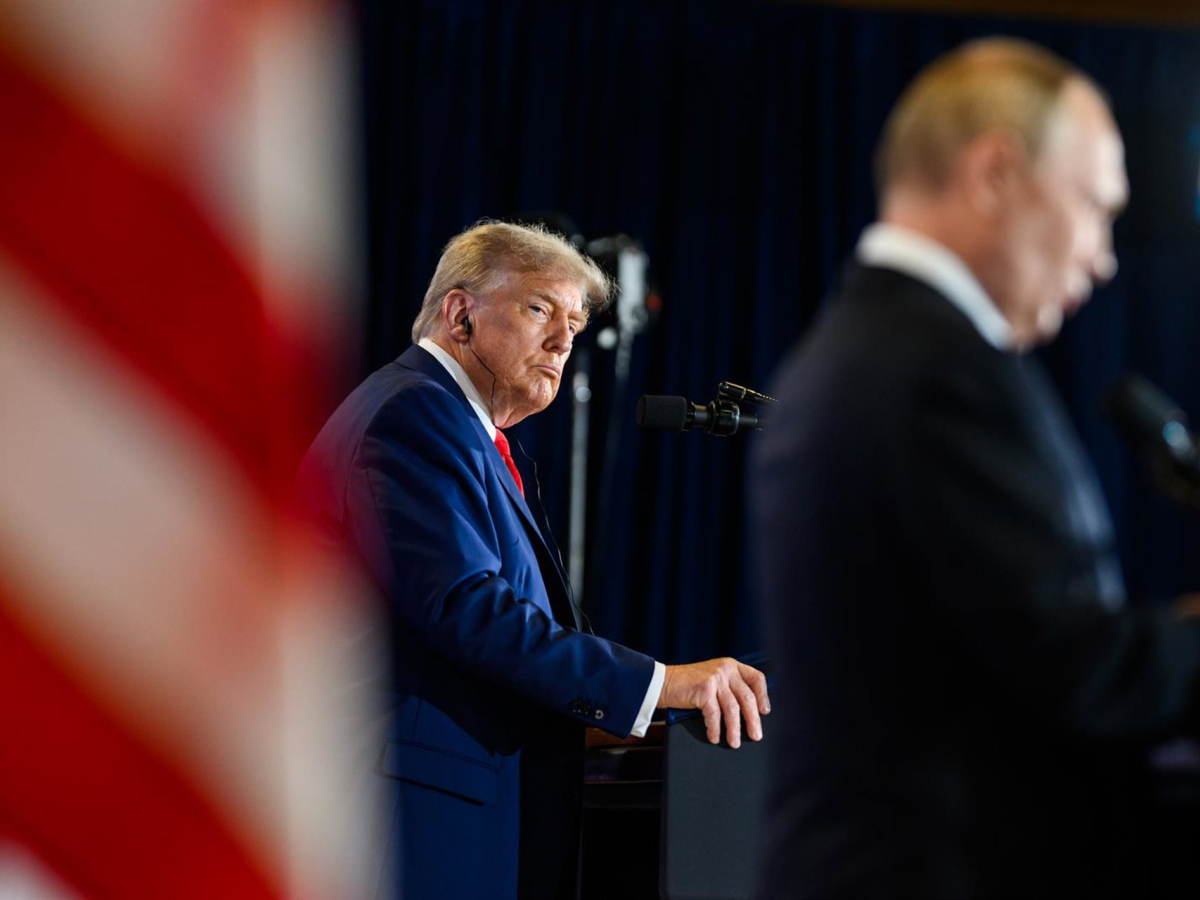
Donald Trump y Vladimir PutinEuropa Press/Contacto/White House
Donald Trump y Vladimir Putin Europa Press/Contacto/White House -

And the uncomfortable truth is that it makes sense. The extraordinary thing is not that the United States wants to redistribute burdens. The extraordinary thing is that Europe acts as if this were an unexpected betrayal. It is not. It is the logical consequence of almost thirty years of strategic displacement. Ankara may be the moment when this transition takes political shape: a NATO where Washington retains the technology, intelligence, nuclear capability, and doctrinal framework, while Europe assumes a larger share of conventional muscle, industrial effort, and, naturally, the bill. And here appears the first anomaly. Because paying more does not necessarily equate to deciding more. And that difference, which for decades was tolerable, is beginning to become uncomfortable.

NATO and the habit of redefining enemies

Europe has reduced the debate on defense to a simple matter of GDP percentages: two percent, three percent, five percent. As if security were an accounting operation and not a political decision. The real question is not how much to spend, but for what, how, and under what strategic logic.

NATO continues to define itself as a defensive alliance. Formally it is. But its historical evolution has been much more flexible than its self-description suggests. After the fall of the USSR, there was an opportunity - at least theoretically - to think about a European security architecture. One that was less expansive, less rigid, less based on the permanent logic of blocs, and more supported by structures like the OSCE, perhaps even capable of integrating Russia into some functional balance, however imperfect.

None of that happened. The opposite was chosen. Expansion. Then more expansion. And then turning expansion into identity. Kosovo opened up the legitimacy of out-of-area intervention. Afghanistan transformed the Alliance into an expeditionary tool. Libya confirmed that the conceptual elasticity of the term "defense" could be considerable. Ukraine has returned NATO to its original logic: territorial containment.

Each phase was different. But they share a constant: the structural need to redefine threats to justify continuity. And that deviates from the original concept: from a defensive Alliance to an offensive Organization. That does not absolve Russia of its responsibility - which is immense and evident - but it also does not allow us to pretend that thirty years of military expansion towards the East did not produce political effects. International politics has a simple rule: all pressure generates reaction. And normally cumulative reaction.

The problem for Europe is that today it faces a real Russian threat within an architecture whose deep logic continues to be defined from Washington, precisely when Washington begins to look in another direction. That is the paradox.

Europe and its different ways of understanding NATO

If the United States gradually reduces its material involvement, but maintains the intellectual monopoly and doctrinal centrality of the Alliance, Europe could end up in a rather unique position: assuming more costs without necessarily assuming more sovereignty. That is, paying more to obey the same.

That is not strategic autonomy. That is an accounting update of old vassalage. But the problem is not just American. It is profoundly European.

For Poland and the Baltics, NATO is an existential guarantee. The Alliance is not a security structure: it is the difference between tranquility and History. Their relationship with the Organization is almost biological because they believe - probably rightly so - that History always returns to their border and that geography rarely forgives.

For Germany, for decades, it was the comfortable way to reconcile rearmament and containment. Today it is also beginning to be the instrument of its strategic return after awakening from its long post-war geopolitical anesthesia, but with the historical caution of one who knows that when it moves too quickly the continent becomes nervous, especially when its rearmament is rumored. France has always maintained an ambiguous relationship with NATO: indispensable, but uncomfortable. It has never fully accepted a military architecture where European autonomy is subordinated to Washington. Its insistence on strategic autonomy is not born of European idealism, but of an old tradition of national sovereignty projected onto Europe.

Volodimir Zelenski, Keir Starmer, Emmanuel Macron, y Friedrich Merz reunidos en Londres a8 de diciembre de 2025Europa Press/Contacto/Wiktor Szymanowicz
Volodimir Zelenski, Keir Starmer, Emmanuel Macron, and Friedrich Merz meeting in London on December 8, 2025 Europa Press/Contacto/Wiktor Szymanowicz -

Italy looks at NATO from a different geography. It knows that the South exists, even though the Alliance often seems to remember the Mediterranean only when the problem has already crossed the border.

And then there is Spain.

Spain has historically experienced NATO with a very Spanish mix of pragmatism, distance, and a certain comfortable delegation. It has occupied a very common place in its foreign policy: the comfortable periphery. It has never seen it as Poland - an existential issue - nor as France - a sovereignty issue. Rather, as a stable framework to which to contribute without excess or the need to define it.

That explains many things. While Eastern Europe and Germany think of the Alliance as protection against Russia, Spain continues to look primarily to the South: Sahel, Maghreb, migration, energy, maritime insecurity. The problem is that it has rarely managed to turn this agenda into an Atlantic priority.

And there lies its structural limitation. Spain participates, accompanies, contributes, but rarely conditions. It continues to conceive of its membership as a contribution, not as design, direction, and leadership. And at a time when NATO is redefining its internal balance, that difference matters. Because in international politics there is something worse than not being there: it is being there without weight.

Ankara and the end of European strategic comfort

Ankara's central issue will not be how much more Europe will spend. Not even how much more it will support Ukraine. That matters, but it is not decisive. The real question is another: what kind of alliance does Europe want in an era when the United States no longer considers it the center of its strategic architecture? Because for decades Europe has lived in a singularly comfortable position: protected by an external power, but free to build a political identity based on law, multilateralism, peaceful dispute resolution, and a certain normative superiority. All of that is easier when someone else guarantees the last line of security.

Now that comfort is beginning to erode and with it the essential question arises: if Europe is going to pay more, risk more, and assume more military responsibility, the question is, does Europe simply want to finance the continuity of the logic, until today, existing within NATO, or does it want to take advantage of this transition to redefine it according to its interests and principles?
Because that is sovereignty. Not just spending, but thinking, prioritizing, and autonomously choosing its strategic interests. Assuming its own risks and not just inherited ones. This implies that it will have to decide more. Which threats it prioritizes, which borders it considers vital, what degree of confrontation it is willing to sustain, and what political costs it is prepared to assume. That is sovereignty, the rest are budgets.

Perhaps Ankara will not resolve any of this. Most likely it will not. Great alliances rarely reformulate their nature in a single summit, but it can mark something more important: the moment when Europe begins to understand that strategic autonomy and its participation in the Alliance do not consist simply of spending more. It consists, above all, of thinking collectively for itself, defending its independence and interests, and above all, its principles.

And for a continent that has been accustomed for eighty years to delegating that essential part of politics, that may prove much more difficult than increasing the defense budget.

More key points, information and questions with FREN

AI-GENERATED CONTENT

What is the current parliamentary status of the European strategic autonomy strategy in defense?

Currently, there is no initiative in the General Courts whose main purpose is to approve a “European strategic autonomy strategy in defense” or to formally establish Spain's position on a European strategy with that specific title. The concept of strategic autonomy (including its European and defense dimension) appears transversally in other regulations and initiatives, but not as a specific parliamentarily approved strategy. The closest initiatives are the Industry and Strategic Autonomy Bill and a bill proposal to strengthen parliamentary control over the European Councils, both still in early stages of processing.

1. Non-existence of a “European strategic autonomy strategy in defense” as a standalone initiative

From the parliamentary information consulted, it follows that:

No such figures explicitly referring in the title or purpose to a “European strategic autonomy strategy in defense” have been found in the Congress or the Senate:

  • Bill or bill proposal aimed at approving that strategy.
  • Government communication to debate and vote on Spain's position on a European strategic autonomy defense strategy.
  • Orientation debate or specific resolution approving a national strategy aligned with that particular notion.

What does exist are regulations and projects that include the broader concept of strategic autonomy (mainly industrial and security) or that seek to strengthen parliamentary control over the Government's foreign and European policy. These references are generic and do not constitute, by themselves, a “European strategic autonomy strategy in defense” approved by the Courts.

2. Industry and Strategic Autonomy Bill (121/000043)

The closest initiative in content is the Industry and Strategic Autonomy Bill, presented by the Government:

  • Chamber: Congress of Deputies.
  • Identifier: 121/000043.
  • Current status: in the phase of amendments to the articles; the deadline for submitting amendments has been extended until 09/02/2026, so the processing is still in an early phase of the Industry and Tourism Commission.
  • Initiative file: Industry and Strategic Autonomy Bill.

According to its publication in the General Courts Bulletin, the bill articulates a Spanish Industry and Strategic Autonomy Strategy and a State Industry and Strategic Autonomy Plan, with a Title III dedicated to “Resilience and Industrial Strategic Autonomy.” Among other elements, it includes:

  • Strategic Industrial Projects and strategic industrial ecosystems.
  • A Strategic Reserve based on National Industrial Production Capacities (RECAPI).
  • A company certification for strategic autonomy.
  • An additional provision on collaboration between the Ministry of Industry and Tourism and the Ministry of Defense for armament modernization programs and programs of interest for defense and security.

Still, this initiative focuses on industrial strategic autonomy (raw materials, production capacities, value chain resilience, etc.). It includes connections with security and defense (for example, in financing armament programs), but it does not itself constitute a “Spanish strategy on European strategic autonomy in defense,” nor does it formally establish Spain's position on EU strategic documents in that area.

3. Bill Proposal on Parliamentary Control of the European Councils (122/000051)

The other relevant initiative, although more procedural, is the Bill Proposal to amend Law 2/2014, on the State's Foreign Action and Service, presented by the Popular Parliamentary Group:

This proposal does not define substantive contents of European defense, but it does intend that the Prime Minister appear prior to the European Councils to inform about the positions he will defend and about changes regarding the Foreign Action Strategy. In practice, it would strengthen parliamentary control over any Spanish position related to European strategic autonomy, also in defense matters, but without constituting a strategy itself.

4. Conclusion on the parliamentary status

With the available information, it can be summarized as follows:

  • There is no European strategic autonomy strategy in defense approved by law or specific resolution of the General Courts.
  • References to strategic autonomy (including the European dimension) appear inserted in other initiatives, notably the Industry and Strategic Autonomy Bill, still in the amendment phase, and the bill proposal on prior control of the European Councils, also in the amendment phase.
  • Therefore, strictly in parliamentary terms, the “European strategic autonomy strategy in defense” is neither in process nor has it been approved; what exists is a progressive incorporation of the concept of strategic autonomy in sectoral regulations and political control instruments.
Could you detail what specific role the Industry and Strategic Autonomy Bill reserves for collaboration with the Ministry of Defense? Have there been recent plenary debates in the Congress on European strategic autonomy in defense even if they have not resulted in a specific law? What practical effects would the approval of the bill amending Law 2/2014 on Foreign Action have for parliamentary control of European defense policy?

What are the exact competencies of the NATO Secretary General according to the North Atlantic Treaty?

The 1949 North Atlantic Treaty does not explicitly define or mention the position of NATO Secretary General, so the treaty itself does not provide “exact competencies” for this role. The Treaty sets principles, collective defense obligations, and basic bodies (especially the North Atlantic Council), but does not regulate the figure who presides over them. The position was created and organized later through Council decisions and internal Alliance rules. Therefore, the Secretary General's functions derive from that subsequent institutional evolution, not from the Washington Treaty text.

Relationship between the Treaty and the Secretary General position

The North Atlantic Treaty, which established NATO in 1949, defines objectives, State commitments, and the consultation and collective defense framework, but does not include any article about the Secretary General; this absence is confirmed by analyses and documents on NATO, such as those collected by the Spanish Ministry of Foreign Affairs in its section on the Atlantic Alliance (Spain and NATO) and by the Congress of Deputies in its general information about the organization (general NATO information).

This basic Treaty architecture has been deployed in NATO practice, as seen in current defense and security policy described in analyses like that of Demócrata on NATO and the southern flank (NATO: strategies, defense spending, and the role of Europe's southern flank) and on Defense Ministers meetings (NATO Defense Ministers meeting), where the Secretary General appears as a central actor but always executing the Council's collective decisions.

Real normative origin of the Secretary General's competencies

Since they are not in the Treaty, the competencies are established in other NATO founding instruments and decisions:

1. North Atlantic Council Decision (1950)

According to information gathered from institutional and divulgation sources about NATO (position summary, PlayingNATO manual), in 1950 the North Atlantic Council agreed to create the Secretary General position. From this derive several key points:

• He is recognized as chair of the North Atlantic Council, the Alliance's supreme political body.
• He is the highest civilian authority of NATO and its main political-administrative leader.
• His central mission is to promote consultations and decision-making among Allies, ensuring the consensus system functions.

This role can be seen in practice in official agendas and notes — for example, Council meetings chaired by the Secretary General, currently Mark Rutte, in Brussels (Spanish Government agenda) or in his interventions in debates on European defense covered by Demócrata (European defense roadmap).

2. Internal regulation and institutional practice

Institutional synthesis sources — such as the NATO file at the Royal Household (Royal Household activities) or Spanish national security documentation (DSN) — agree that the Secretary General directs the International Secretariat and coordinates the implementation of allied decisions. Based on this, several practical functions are highlighted:

Chair the North Atlantic Council and other high-level political structures, facilitating agreement among States.
Represent NATO before third parties (states, international organizations, public opinion), acting as the main political spokesperson; this role is seen, for example, in NATO summits analyzed by the newspaper Demócrata (Washington Summit: NATO on alert) and in news about the succession of holders such as Mark Rutte (assumption of office).
Lead the Secretariat, that is, the Organization's administrative and technical apparatus, responsible for much of the analysis and decision monitoring work.
Supervise the implementation of agreed decisions on collective defense, partnership with third parties, and strategic adaptation.

The existence of a Deputy Secretary General, who assists and substitutes him, also appears in NATO practice and divulgation documentation (PlayingNATO manual), as well as the collegiate nature of decision-making, highlighted in analyses on possible scenarios of US or other countries' withdrawal (analysis in eldiario.es, ABC article on exit clause).

3. Mandate and institutional continuity

The Secretary General's mandate is, in current practice, four years, renewable by consensus, as recent summaries state (CEOExEuropa). This continuity provides stability to the Alliance in complex political cycles, including security crises and debates on US leadership (analysis on US replacement in NATO).

Conclusion: what the Treaty says and does not say

In summary: the North Atlantic Treaty does not assign specific competencies to the Secretary General because it does not even mention the position. His functions derive from later decisions of the North Atlantic Council and NATO's internal regulation, which grant him the chairmanship of the Council, the civilian leadership of the Organization, the responsibility to promote consensus among allies, and the political representation of the Alliance. Any strict legal analysis of his “exact competencies” must therefore focus on those instruments and institutional practice, not on the 1949 treaty text.

For the Spanish context, this reading is integrated into the defense and security policy described by the Government and other national actors in their relationship with NATO (collaboration with the Spanish Atlantic Association, agreement with the Spanish Atlantic Association, Defense Ministers meetings), where the Secretary General appears as a key piece of allied governance, but always executing decisions taken collegially by member States.

Other Spanish profiles historically linked to this position, such as Javier Solana, illustrate well this political rather than “legal-treaty” function, as specialized biographical analyses show (CIDOB). It is also reflected in Spain's participation in allied command structures (command of the Allied Maritime Reaction Force) and in NATO's high-level agenda, including the commemoration of its 75 years, analyzed by Demócrata (Washington Summit).

In which specific NATO documents are the Secretary General's functions detailed today beyond the Treaty, and how can I consult them? What real political margin does the Secretary General have vis-à-vis member States' governments in crisis decisions or use of force? How has Javier Solana's tenure as NATO Secretary General influenced Spain's defense policy and international position?

What results did the main European parties obtain in the last European Parliament elections?

The last European Parliament elections (June 2024) resulted in the European People's Party (EPP) as the leading force, with 190 of the 720 seats, followed by the Socialists and Democrats (S&D) with 136. In third place was the liberal group Renew Europe with 79 seats, while the two major radical right and Eurosceptic families, Conservatives and Reformists (ECR) and Identity and Democracy (ID), obtained 73 and 58 seats respectively. The Greens/EFA fell to 53 MEPs and The Left remained at 36, completing a hemicycle where the center-right and right are strengthened, but the so-called “pro-European center” maintains the capacity to form majorities.

Balance of forces by major political groups

According to consolidated EU-wide data, the approximate distribution by groups was as follows:

  • EPP: 190 seats, around 26.25% of the chamber, with an aggregate vote of approximately 34-35% in the countries where it ran.
  • S&D: 136 seats, about 18.75% of the Parliament and around 30% of the combined vote.
  • Renew Europe: 79 seats, close to 11% of the seats, after a significant loss compared to 2019.
  • European Conservatives and Reformists (ECR): 73 seats (just over 10%).
  • Identity and Democracy (ID): 58 seats (around 8%).
  • Greens/EFA: 53 seats (around 7%), with a significant drop.
  • The Left: 36 seats (around 5%).
  • Non-attached Members (NI): 45 seats.
  • Others/new forces: 52 seats distributed among new parties or formations not yet affiliated.

Information on the overall seat distribution and detailed national results can be consulted on the official EU results portal results.elections.europa.eu (with the breakdown for Spain on this specific page) and in statistical summaries such as those from Epdata or media coverage like El País.

Main political trends

The newspaper Demócrata highlights that across the EU there has been a shift to the right, with significant advances by conservative and radical right forces, although without breaking the predominance of the pro-European center (EPP-S&D-Renew), which remains the basis of the European Parliament's majorities. This analysis is reflected, for example, in its piece on keys and scenarios for the new European Commission: “European elections: national and community keys to the results and scenarios for presiding over the Commission”.

The EPP's dominance is explained, among other factors, by the good results of parties such as Spain's PP, Germany's CDU/CSU, or the traditional right in Central and Eastern European countries. An illustrative example is the health and political impact analyzed in this report, which highlights that the popular group, with 186-190 seats according to various projections, consolidates its role as the leading force and positions Ursula von der Leyen to renew the Commission presidency.

National example: results in Spain

In Spain, which elects 61 of the 720 MEPs, the national balance reinforces this reading of a rightward shift, as contextualized by the newspaper Demócrata in the cited analysis. With data from results portals such as Público, RTVE, or the Wikipedia page on the 2024 European elections in Spain, the main parties obtained:

  • PP (EPP): 34.21% and 22 seats.
  • PSOE (S&D): 30.19% and 20 seats.
  • Vox (affiliated with the ECR/ID group in the European Parliament): 9.63% and 6 seats.
  • Ahora Repúblicas (ERC-EH Bildu-BNG, affiliated with Greens/EFA and/or The Left depending on the party): 4.91% and 3 seats.
  • Sumar (progressive family, linked to The Left/Greens space): 4.67% and 3 seats.

The official agreement of the Central Electoral Board on the seat distribution in Spain can be consulted in the BOE: Agreement of June 27, 2024. The Ministry of the Interior had enabled a specific website and app for tracking the results, as announced in this press release: “Interior launches a website and app to follow the results of the 2024 European Parliament elections”.

Participation and composition of the new Parliament

The European Parliament, which has already started the 2024-2029 legislature, is composed of 720 MEPs. The newspaper Demócrata analyzes this new institutional configuration in “Anatomy of the European Parliament in the 2024-2029 legislature”, while another piece, “European Elections: some keys to the start of the tenth legislature”, focuses on how the EPP, socialists, and liberals remain the core of majorities despite the rise of radical rights.

The European Parliament's own press release on participation and political implications of these results can be consulted at this communication, and seat projections based on national counts were detailed in another European Parliament note. For a general contextual overview, one can also refer to the general entry on the 2024 EU elections in Wikipedia or local summaries such as those published by the Region of Murcia government (statistical report) or the Basque administration (electoral data portal).

Play

Test your knowledge with FREN!

How much do you know about this topic? Answer the following 3 questions.

What role has the United States historically played in NATO according to the article?

Question 1 of 3

What is the main paradox Europe faces in the new NATO context?

Question 2 of 3

What recent event is mentioned as key in the negotiation of the division of functions in NATO?

Question 3 of 3

Hola, soy Fren. ¿Cómo te ayudo?