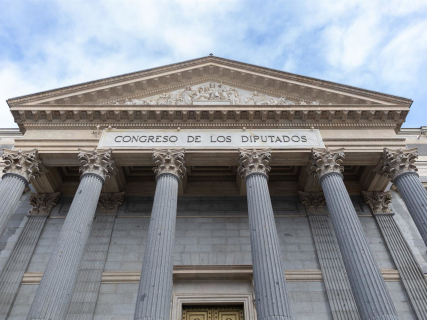

Who will win the general elections on November 29? Will PP and Vox manage to add up to an absolute majority? Will Pedro Sánchez manage to stay in La Moncloa? As the date with the polls approaches, surveys, party expectations, and possible government pacts are the focus of much of the political conversation. But now readers can take a step further and put numbers to their own forecasts. Demócrata offers an interactive electoral pool with which each user can distribute the 350 seats of the Congress of Deputies and share how they think Parliament will look after November 29.
The tool, available within the special of the general elections of Demócrata, allows for a personalized forecast about the composition of the next Lower House. Participants can assign deputies to each party and obtain a graphical representation of the hemicycle with the chosen results, ready to share on social media or send to family and friends. This is not a survey or a prediction made by Demócrata, but a proposal for readers to participate in the electoral conversation and check how their expectations fit into a Congress of 350 deputies.
Readers are already sharing their forecasts for the elections on November 29
The initiative has already begun to move to social networks, where users are sharing their own compositions for the upcoming Congress. One of the examples published on X shows a distribution in which the PP would obtain 123 deputies; the PSOE, 118; Vox, 55; and Frente Amplio, 23, while the rest of the seats would be distributed among the other candidates.
Como creo que va a quedar la cosa a día de hoy. PP-Vox: 48,5% y el escaño de UPN sería para el PP (124). PSOE y PP a menos de un punto y la derecha esperando no sufrir en voto CERAz pic.twitter.com/ACrBRyoS8A
— Pablo Morla Romero (@morlaromero) October 25, 2026
The shared result constitutes a personal bet of the user and not a vote estimate, an important distinction for correctly interpreting this type of graph. The tool allows for immediate visualization of what consequences each distribution would have on the parliamentary composition.
In this example, PP and Vox would add up to 178 deputies, two above the 176 seats necessary to reach an absolute majority in Congress. Although the difference between popular and socialist would be only five deputies, the sum of both right-wing formations would allow surpassing that threshold without the need to incorporate other political forces.
This is only one of the many scenarios that can be posed. Other readers may assign more representatives to the PSOE, foresee a different growth of Vox, or modify the weight of Frente Amplio and the territorial parties. Each forecast outlines a different parliamentary composition and allows for analyzing which combinations of seats would make different investiture agreements possible.
Absolute majority or pacts? The pool allows calculating the sums of Congress
One of the main attractions of the tool is that it forces going beyond just pointing out which party will get the most votes or deputies. In a general election, coming in first place does not guarantee the investiture by itself. The composition of Congress and the ability to reach agreements with other formations are determining factors for the election of the President of the Government.
The Democrat pool allows transferring that scenario to the realm of numbers. How many seats would Feijóo need to govern? What representation would Vox have? What support could Sánchez gather? What role would nationalist and independentist parties play? The user can create their own distribution and check how the main parliamentary sums would look.
The tool also invites taking into account the representation of formations such as ERC, Junts, EH Bildu, PNV, BNG or Coalición Canaria, whose deputies may be relevant in parliamentary negotiations when no candidacy reaches an absolute majority by itself.
The exercise has a fundamental condition: the deputies assigned to all formations must add up to the 350 seats that make up Congress. This allows for constructing a complete representation of the Chamber and checking how changes in the result of a candidacy affect the overall distribution.
How to make your electoral pool for the 29N with Demócrata
Participating in the pool is simple. To start, just access the special section of the general elections of Demócrata and open the interactive tool. From there, each reader can distribute the seats among the different candidacies according to their own expectations about the result of November 29.
Once the forecast is made, the tool generates an image of Congress with the number of deputies assigned to each party. The chart allows you to visualize the parliamentary distribution at a glance and share it with others to compare the different forecasts.
The participants can accompany the image with an explanation of their decisions: which party they believe will obtain the most representation, where they think the main changes will occur compared to 2023, or which formations could play a relevant role in the negotiations to form a Government.
Furthermore, keeping the forecast will allow comparing it with the official results once the elections are held. The pool is not only about trying to guess the winner, but also about checking to what extent the expectations about the parliamentary distribution coincide with what citizens ultimately decide at the polls.
Polls, calendar, and candidacies: all the tools of Demócrata's electoral special
The pool is part of the special coverage that Demócrata has prepared for the general elections on November 29, a space that gathers political information, campaign tracking, and tools to consult the main data of the electoral appointment.
Among the available resources is the average of polls, which allows following the evolution of the voting estimates of the different parties and comparing the results published by the polling companies. The special also includes an electoral calendar with the most important dates of the process, as well as information about the candidacies and the main heads of lists competing in the elections.
These contents are joined by the practical guides for voting, where readers can resolve their doubts about voting by mail, deadlines, polling places, and the requirements to exercise the right to vote. The coverage is completed with Digital Power, the space of Demócrata dedicated to tracking political communication, digital campaigns, and the activity of parties on social media.
Draw your own Congress and share how you think the elections will turn out
The general elections on November 29 will decide the composition of the next Congress of Deputies, but until then, citizens can follow the evolution of the polls, analyze the proposals of the parties, and make their own predictions.
With Demócrata's electoral pool, each reader can build their hemicycle, check the majorities, and share their bet with other political news enthusiasts. A way to participate in the electoral conversation using the same 350 seats that will be at stake in the polls.
How many deputies will PP, PSOE, Vox, and Frente Amplio get? What role will the territorial parties have? What combinations would allow reaching 176 seats? The final result will be known after the voting. Until then, make your pool for November 29 with Demócrata, share your forecast, and check what Congress you imagine for the next legislature.