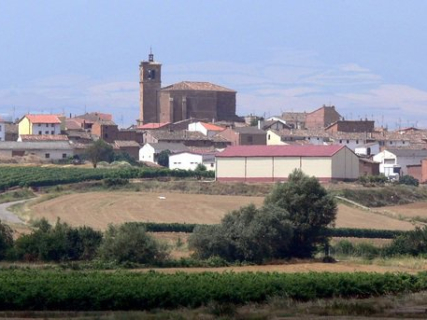
The town in Spain where PP and PSOE tied exactly with 1,243 votes in the last general elections

Mota del Cuervo, in the province of Cuenca, recorded an absolute tie between conservatives and socialists in 2023, with a turnout of 79.8%

Add DEMÓCRATA to Google

Ask FREN

Published

Last updated

3 minutes

Most read

Hasta el día de las elecciones (29 de noviembre) se muestran los resultados de las elecciones generales anteriores, las del 23 de julio de 2023.

Resultados de las elecciones generales del 29N en directo

Elecciones generales del 23 de julio de 2023 · Congreso de los DiputadosSenado

Escrutado: 100,00 %Votantes: 24.952.447Participación: 66,59 %

Votos

PartidoEscañosVotosPorcentaje
PP1378.160.83733,06 %
PSOE1217.821.71831,68 %
Vox333.057.00012,38 %
Sumar313.044.99612,33 %
ERC7466.0201,89 %
Junts7395.4291,60 %
EH Bildu6335.1291,36 %
EAJ-PNV5277.2891,12 %
BNG1153.9950,62 %
CCa1116.3630,47 %
UPN152.1880,21 %
PACMA0169.2370,69 %
CUP-PR099.6440,40 %
FO046.2740,19 %
NC-bc045.5950,18 %
PDeCAT-E-CiU032.0160,13 %
RECORTES CERO023.4210,09 %
PUM+J023.2900,09 %
U.P.L.023.2010,09 %
EXISTE020.4400,08 %
PCTE013.3820,05 %
GBAI099380,04 %
SY096970,04 %
Adelante091910,04 %
JM+082930,03 %
ESCAÑOS EN BLANCO079860,03 %
XAV073620,03 %
BQEX058070,02 %
CJ056200,02 %
FE de las JONS046830,02 %
PAR041730,02 %
PCTC038750,02 %
ESPAÑA VACIADA031580,01 %
PH029020,01 %
ASTURIAS EXISTE EV023140,01 %
XH019310,01 %
VP019170,01 %
Zsi018430,01 %
VB017740,01 %
POR MI REGIÓN016980,01 %
AHORA CANARIAS-PCPC016740,01 %
PARTIDO AUTÓNOMOS014460,01 %
EVB014420,01 %
CpM012980,01 %
JxG012180,00 %
EV-PCAS-TC011840,00 %
PREPAL09640,00 %
Somos Cc09630,00 %
ALM08740,00 %
PCTG07020,00 %
F.I.A.05060,00 %
3e04840,00 %
Ud.Ca04630,00 %
ESCONS EN BLANC04620,00 %
GITV03660,00 %
PUEDE02690,00 %
EVC02650,00 %
LB02630,00 %
PCTE/ELAK02590,00 %
UNIDOS SI02530,00 %
+RDS+01650,00 %
CCD01530,00 %
FUERZA CÍVICA01150,00 %

Porcentajes sobre votos válidos. Resultados definitivos del 23J de 2023.

Escaños (350)

Mayoría: 176
PP: 137 escaños en 2023PSOE: 121 escaños en 2023Vox: 33 escaños en 2023Sumar: 31 escaños en 2023ERC: 7 escaños en 2023Junts: 7 escaños en 2023EH Bildu: 6 escaños en 2023EAJ-PNV: 5 escaños en 2023BNG: 1 escaño en 2023CCa: 1 escaño en 2023UPN: 1 escaño en 2023137121333120232023
  • PP 137
  • PSOE 121
  • Vox 33
  • Sumar 31
  • ERC 7
  • Junts 7
  • EH Bildu 6
  • EAJ-PNV 5
  • BNG 1
  • CCa 1
  • UPN 1

Pactómetro

Pulsa los partidos para sumar sus escaños.

Los escaños más ajustados

Quién tiene el último escaño, quién le sigue y los votos que le faltan
  1. GironaJxCAT - JUNTSyPP285 votos

    El último escaño de Girona (el 6.º) es para JxCAT - JUNTS. Le sigue el PP, que necesitaría 285 votos más para quitárselo. Ver Girona ›

  2. CantabriaVOXyPP403 votos

    El último escaño de Cantabria (el 5.º) es para VOX. Le sigue el PP, que necesitaría 403 votos más para quitárselo. Ver Cantabria ›

  3. TarragonaJxCAT - JUNTSyPSC1247 votos

    El último escaño de Tarragona (el 6.º) es para JxCAT - JUNTS. Le sigue el PSC, que necesitaría 1247 votos más para quitárselo. Ver Tarragona ›

  4. AlbacetePSOEyVOX1412 votos

    El último escaño de Albacete (el 4.º) es para el PSOE. Le sigue VOX, que necesitaría 1412 votos más para quitárselo. Ver Albacete ›

  5. SalamancaPPyPSOE1495 votos

    El último escaño de Salamanca (el 4.º) es para el PP. Le sigue el PSOE, que necesitaría 1495 votos más para quitárselo. Ver Salamanca ›

Provincias con al menos el 30 % escrutado donde el último escaño cambiaría de manos con menos votos. Pulsa una para ver el detalle.

Senado

100,00 % escrutado
PartidoSenadores
PP120
PSOEPSOE: 73 senadoresSe presenta con estos nombres:
  • PSOE48
  • PSC12
  • PSdeG-PSOE4
  • PSE-EE (PSOE)4
  • PSN-PSOE3
  • PSIB-PSOE1
  • PSOE-SUMAR-EUIB-ARA EIVISSA1
73
EH Bildu4
EAJ-PNV4
ERCERC: 3 senadoresSe presenta con estos nombres:
  • ERC-ESQUERRES PER LA INDEPENDÈNCIA2
  • ERC1
3
Junts1
UPN1
A.H.I.1
ASG1

Los partidos que se presentan con varios nombres van juntos: pasa por encima para ver el detalle. Baleares y Canarias eligen sus senadores por islas.

Senadores (208)

Elegidos en las urnas
PP: 120 senadores en 2023PSOE: 73 senadores en 2023 (PSOE: 48; PSC: 12; PSdeG-PSOE: 4; PSE-EE (PSOE): 4; PSN-PSOE: 3; PSIB-PSOE: 1; PSOE-SUMAR-EUIB-ARA EIVISSA: 1)EH Bildu: 4 senadores en 2023EAJ-PNV: 4 senadores en 2023ERC: 3 senadores en 2023 (ERC-ESQUERRES PER LA INDEPENDÈNCIA: 2; ERC: 1)Junts: 1 senador en 2023UPN: 1 senador en 2023A.H.I.: 1 senador en 2023ASG: 1 senador en 20231207320232023
  • PP 120
  • PSOE 73
  • EH Bildu 4
  • EAJ-PNV 4
  • ERC 3
  • Junts 1
  • UPN 1
  • A.H.I. 1
  • ASG 1

Los senadores designados por los parlamentos autonómicos no se eligen en las urnas.

Mapa

Ganador por provincia

    CanariasCeutaMelillaAraba/Álava: PSE-EE (PSOE) 27,7 %Albacete: PP 39,9 %Alicante/Alacant: PP 36,7 %Almería: PP 40,9 %Ávila: PP 43,3 %Badajoz: PSOE 39,2 %Illes Balears: PP 35,6 %Barcelona: PSC 35,7 %Burgos: PP 40,6 %Cáceres: PSOE 38,9 %Cádiz: PP 34,8 %Castellón/Castelló: PP 35,2 %Ciudad Real: PP 40,5 %Córdoba: PP 37,9 %A Coruña: PP 43,1 %Cuenca: PP 39,8 %Girona: PSC 28,9 %Granada: PP 37,0 %Guadalajara: PP 36,3 %Gipuzkoa: EH Bildu 31,2 %Huelva: PP 36,4 %Huesca: PP 38,2 %Jaén: PP 37,3 %León: PP 36,9 %Lleida: PSC 29,5 %La Rioja: PP 45,6 %Lugo: PP 50,2 %Madrid: PP 40,6 %Málaga: PP 38,3 %Murcia: PP 41,2 %Navarra: PSN-PSOE 27,4 %Ourense: PP 50,0 %Asturias: PP 35,7 %Palencia: PP 42,0 %Las Palmas: PSOE 33,2 %Pontevedra: PP 39,7 %Salamanca: PP 46,9 %Santa Cruz de Tenerife: PP 35,4 %Cantabria: PP 42,1 %Segovia: PP 45,0 %Sevilla: PSOE 36,6 %Soria: PP 37,2 %Tarragona: PSC 32,9 %Teruel: PP 35,0 %Toledo: PP 37,8 %Valencia/València: PP 33,6 %Valladolid: PP 40,8 %Bizkaia: EAJ-PNV 26,9 %Zamora: PP 44,7 %Zaragoza: PP 36,0 %Ceuta: PP 38,8 %Melilla: PP 49,2 %

    Pulsa una provincia para ver sus resultados y elegir municipio.

    Mapa

    Partido con más senadores por provincia

    CanariasCeutaMelillaAraba/Álava: PSOE, 3 de 4 senadoresAlbacete: PP, 3 de 4 senadoresAlicante/Alacant: PP, 3 de 4 senadoresAlmería: PP, 3 de 4 senadoresÁvila: PP, 3 de 4 senadoresBadajoz: PSOE, 2 de 4 senadoresIlles Balears: PP, 3 de 6 senadoresBarcelona: PSOE, 3 de 4 senadoresBurgos: PP, 3 de 4 senadoresCáceres: PP, 2 de 4 senadoresCádiz: PP, 3 de 4 senadoresCastellón/Castelló: PP, 3 de 4 senadoresCiudad Real: PP, 3 de 4 senadoresCórdoba: PP, 3 de 4 senadoresA Coruña: PP, 3 de 4 senadoresCuenca: PP, 3 de 4 senadoresGirona: PSOE, 3 de 4 senadoresGranada: PP, 3 de 4 senadoresGuadalajara: PP, 3 de 4 senadoresGipuzkoa: EH BILDU-INDEPENDENTZIA EZKERRETIK, 3 de 4 senadoresHuelva: PP, 2 de 4 senadoresHuesca: PP, 3 de 4 senadoresJaén: PP, 3 de 4 senadoresLeón: PP, 3 de 4 senadoresLleida: PSOE, 3 de 4 senadoresLa Rioja: PP, 3 de 4 senadoresLugo: PP, 3 de 4 senadoresMadrid: PP, 3 de 4 senadoresMálaga: PP, 3 de 4 senadoresMurcia: PP, 3 de 4 senadoresNavarra: PSOE, 3 de 4 senadoresOurense: PP, 3 de 4 senadoresAsturias: PP, 3 de 4 senadoresPalencia: PP, 3 de 4 senadoresLas Palmas: PSOE, 4 de 5 senadoresPontevedra: PP, 3 de 4 senadoresSalamanca: PP, 3 de 4 senadoresSanta Cruz de Tenerife: PSOE, 3 de 6 senadoresCantabria: PP, 3 de 4 senadoresSegovia: PP, 3 de 4 senadoresSevilla: PSOE, 3 de 4 senadoresSoria: PP, 3 de 4 senadoresTarragona: PSOE, 3 de 4 senadoresTeruel: PP, 3 de 4 senadoresToledo: PP, 3 de 4 senadoresValencia/València: PP, 2 de 4 senadoresValladolid: PP, 3 de 4 senadoresBizkaia: EAJ-PNV, 3 de 4 senadoresZamora: PP, 3 de 4 senadoresZaragoza: PP, 3 de 4 senadoresCeuta: PP, 2 de 2 senadoresMelilla: PP, 2 de 2 senadores

    Pulsa una provincia para ver sus senadores y candidatos.

    Resultados definitivos de las elecciones generales del 23 de julio de 2023 (Ministerio del Interior). Mapas: Instituto Geográfico Nacional (es-atlas, CC BY 4.0). Demócrata.

    fotonoticia 20261106112313 1920
    fotonoticia 20261106112313 1920

    Not one vote more, not one vote less. The PP and the PSOE obtained exactly the same number of ballots in Mota del Cuervo (Cuenca) in the general elections of July 23, 2023. Both parties got 1,243 votes, equivalent to 35.9% of the total valid votes, in a tie that does not respond to rounding of the percentages.

    The locality in Cuenca will go back to the polls next Sunday, November 29, with the question of which of the two formations will manage to break an equality that turned the municipality into one of the most unique cases of the last general elections.

    PP and PSOE added up to 2,486 votes, split equally

    The popular and the socialists concentrated the bulk of the vote in Mota del Cuervo. Behind them came Sumar, with 536 ballots and 15.5%, and Vox, with 386 votes and 11.1%. The rest of the candidates gathered 30 votes, while 29 blank ballots and 59 invalid ballots were counted.

    In total, 3,526 people went to the polls out of a resident electoral roll of 4,421 electors, which placed turnout at 79.8%.

    Democrat | Municipalities and elections

    Mota del Cuervo: exact tie of 1,243 votes

    Results of the general elections of July 23, 2023.

    0Vote difference
    3.526Voters
    79,8%Turnout
    PP
    1.243
    PSOE
    1.243
    Sumar
    536
    Vox
    386

    Common scale: from 0 to 1,300 votes.

    The complete election results in Mota del Cuervo

    Candidacy Votes Percentage
    PP 1.243 35,9%
    PSOE 1.243 35,9%
    Sumar 536 15,5%
    Vox 386 11,1%
    Other candidacies 30 0,9%
    Blank vote 29 0,8%
    Total valid votes 3.467 100%

    Source: electoral results for Mota del Cuervo published by DEMÓCRATA and Voto Municipal, based on Infoelectoral. Resident register: 4.421 electors. Null votes: 59. Percentages are calculated on valid votes and are rounded to one decimal place.

    The PSOE had won in Mota del Cuervo in both elections of 2019

    The municipality’s electoral record shows a favorable evolution for the PP since the two 2019 calls. In April of that year, the PSOE was the most voted-for formation with 34.7%, while the right-wing/popular party obtained 20.8%.

    The socialists imposed themselves again in November, with 34.4% of the votes, although the PP improved its results until reaching 26%. In 2023, both parties finished tied with 35.9%.

    Turnout also experienced changes during this period: it went from 82.2% in April 2019 to 75.4% in November of that year and rose again to 79.8% in July 2023.

    What happens when two parties tie in votes in a municipality

    The tie between PP and PSOE in Mota del Cuervo does not imply that both formations had to share a seat. In general elections, members of the Congress are assigned by provincial constituencies and not by municipalities.

    The votes from Mota del Cuervo were included in the overall electoral constituency of Cuenca, which elected three members of Congress in the 2023 elections. Therefore, the equality of votes only affected the order of the candidates in the town.

    Mota del Cuervo goes back to the polls on 29N

    The election results of next Sunday will make it possible to check whether PP or PSOE manage to break the 2023 tie and how support for the other candidacies evolves.

    The comparison will also make it possible to observe whether the municipality maintains turnout close to 80%, as happened in the last general elections, and how much the weight of the two main parties varies with respect to the results from three years ago.

    More key points, information and questions with FREN

    AI-GENERATED CONTENT

    What is the procedure for the allocation of seats in the Congress in the Cuenca constituency and what were the official results of the province in the 2023 elections?

    Cuenca elected three deputies to the Congress in the elections of July 23, 2023: two belonged to the PP and one to the PSOE. To explain the distribution, two operations must be distinguished: determining how many deputies each province elects and then distributing them among the candidacies according to their votes.

    How the number of deputies is determined

    Articles 161 and 162 of the Electoral Law establish that each province constitutes a constituency and that the Congress has 350 deputies. Each province initially receives two; Ceuta and Melilla, one each.

    The remaining 248 are distributed among the provinces in proportion to their population. First, a quota is calculated by dividing the total provincial population by 248. Then the population of each province is divided by that quota: the integer part of the result is assigned and the remaining seats are awarded to the largest decimal fractions. The call decree specifies how many deputies each constituency elects.

    Therefore, this territorial distribution does not use D’Hondt. That method is applied afterwards, to distribute among the lists the seats already assigned to each province. In Cuenca there were three in 2023.

    How the three seats are distributed

    Article 163 of the same law establishes the following procedure:

    • 3% threshold: only candidacies that reach at least that percentage of valid votes in Cuenca participate. Blank votes count for calculating it, but do not receive seats.
    • Divisions: the votes of each list that surpasses the threshold are divided by one, two, and three.
    • Allocation: the three highest quotients are selected, ordered from highest to lowest. Each grants a deputy to its candidacy.
    • Ties: the candidacy with the most total votes prevails. If they also tie in votes, the first tie is resolved by lottery and the following alternately.
    • Elected persons: the seats are assigned following the order of the candidates on each list.

    Cuenca results in 2023

    The following definitive results are recorded in Election Guide. The consulted source reproduces the result, but it is not the official publication of the Electoral Administration. Percentages are calculated over 112,839 votes for candidacies, not over all valid votes:

    • PP: 45,255 votes; 40.11%; two seats.
    • PSOE: 42,528 votes; 37.69%; one seat.
    • Vox: 17,700 votes; 15.69%; no seats.
    • Sumar: 6,325 votes; 5.61%; no seats.
    • PACMA: 387 votes; 0.34%; no seats.
    • Frente Obrero: 207 votes; 0.18%; no seats.
    • Blank Seats: 168 votes; 0.15%; no seats.
    • For a Fairer World: 111 votes; 0.10%; no seats.
    • PCTE: 100 votes; 0.09%; no seats.
    • Recortes Cero: 58 votes; 0.05%; no seats.

    Additionally, there were 969 blank votes, so valid votes totaled 113,808, according to Electoral Data. The 3% threshold was equivalent to 3,414.24 votes: therefore, at least 3,415 were necessary. PP, PSOE, Vox, and Sumar surpassed it.

    Application of the calculation

    The three highest quotients were 45,255, from PP divided by one; 42,528, from PSOE divided by one; and 22,627.5, from PP divided by two. The next was 21,264, from PSOE divided by two; then came 17,700 from Vox and 6,325 from Sumar as the first quotients of those lists.

    This resulted in the distribution of two deputies for PP and one for PSOE. Surpassing the 3% allows entry into the calculation, but does not guarantee representation: with only three seats, it is necessary to obtain one of the three highest quotients.

    What powers and functions does a deputy of the Congress elected by the province of Cuenca have according to Spanish legislation?

    A deputy of the Congress elected by Cuenca has the same parliamentary powers as any other deputy: to participate in the drafting of laws, approve budgets, and oversee the Government. Cuenca is their electoral constituency, but it does not delimit their powers: they represent the entire Spanish people and do not exercise executive powers over the province.

    1. National representation and link with Cuenca

    Article 66.1 of the Constitution establishes that the General Courts represent the Spanish people. Article 67.2 adds that their members "shall not be bound by imperative mandate": no voter, provincial institution, or party can legally impose binding instructions on how to vote. This interpretation appears in STC 123/2017.

    They can convey Cuenca's needs to Congress through questions, legislative initiatives, or budget proposals. However, that political link does not make them a provincial authority: they cannot order works, grant subsidies, or direct the City Council, the Provincial Council, or the Junta of Castilla-La Mancha by virtue of being a deputy.

    2. Drafting laws and budgets

    They participate in the debate and voting of laws and the General State Budgets. It is useful to distinguish between their individual powers and those requiring support, according to the Congress Rules:

    • Propose laws: requires the signature of fourteen other deputies; they can also promote them through their parliamentary group, whose spokesperson can present them directly — article 126 —.
    • Present amendments to the text: can propose modifications, with the signature of the spokesperson for acknowledgment purposes. Total amendments are reserved for groups — article 110 —.
    • Intervene in budgets: can promote changes for actions in Cuenca, but spending increases must be offset by decreases of equal amount in the same budget section. Revenue reductions require Government approval — article 133 —.

    Decisions correspond to the Chamber or its committees, not to the deputy individually.

    3. Control and promotion of Government action

    They can ask questions and interpellations to the Government, that is, request information or explanations about its actions. They can also request data, reports, and documents from administrations, through the Presidency of the Congress and giving prior notice to their group — articles 7, 180, and 185 —. That notice does not equate to group authorization, as clarified by STC 57/2011.

    They participate in the investiture vote of the President of the Government and in confidence motions and censure motions. To present a censure motion, they need to gather, along with other deputies, at least one-tenth of the Chamber and include an alternative candidacy — article 175 —. Appearances and other control actions are agreed upon through regulatory procedures and support.

    4. Internal work, duties, and guarantees

    They have the right to join at least one committee; can vote in the Plenary and in the committees of which they are members, and attend without vote in the others. They can hold parliamentary positions if elected or appointed. Their vote is personal and non-delegable — articles 6 and 79 —.

    They must attend sessions, respect parliamentary discipline, keep confidentiality when appropriate, declare assets and activities, and observe legal incompatibilities. They cannot use their status for commercial or professional activities — articles 15 to 19 —. They enjoy inviolability for opinions expressed in their functions and immunity during the mandate, guarantees that do not constitute a general exemption from compliance with the law — articles 10 and 11 —.

    What has been the political and professional trajectory of the main candidates of the PP and PSOE in Mota del Cuervo in the last general elections?

    The main candidates for Congress that the residents of Mota del Cuervo could vote for in the last general elections, held on July 23, 2023, were Beatriz Jiménez Linuesa, from the PP, and Luis Carlos Sahuquillo García, from the PSOE. They did not lead municipal candidacies, but the lists of their parties for the province of Cuenca. To answer, it is useful to distinguish these lead candidates from the Senate candidates, among whom was Alfonso Escudero, with a direct political link to Mota del Cuervo.

    Beatriz Jiménez Linuesa: teaching and parliamentary representation

    Beatriz Jiménez headed the PP candidacy for Congress for Cuenca. Her professional profile is that of a teacher and civil servant, a trajectory linked to teaching that constitutes her main professional experience identified in the consulted sources. (Cuenca Candidacies).

    In the political field, she had been a national deputy since 2019, so she ran in the July 2023 general elections with prior experience in Congress. Additionally, she had been the PP candidate for Mayor of Cuenca in the municipal elections of May that same year. Her path thus combined parliamentary experience and a recent candidacy in the municipal politics of the provincial capital, not of Mota del Cuervo. (Profile and candidacy).

    Luis Carlos Sahuquillo García: Congress and provincial leadership

    Luis Carlos Sahuquillo headed the PSOE list for Congress for Cuenca. At the time of those elections, he was a national deputy and secretary general of the PSOE of Cuenca: he combined parliamentary representation with the responsibility of leading the provincial party organization. (Demócrata Information).

    His trajectory in Congress dated back to 2008. Compared to Jiménez's incorporation in 2019, Sahuquillo came to those elections with a parliamentary career started fifteen years earlier. The consulted sources allow describing that continuity and his organizational responsibility, but do not provide sufficient information about his education or professional activity prior to politics. (Candidate's trajectory).

    Other relevant candidates: Senate and local link

    If "main candidates" also include Senate candidacies, these names and paths should be added:

    • Benjamín Prieto Valencia, PP: mayor of Fuentelespino de Haro, deputy in the Cortes of Castilla-La Mancha, and president of the Provincial Council of Cuenca between 2011 and 2019. His experience was concentrated in municipal, provincial, and regional institutions. (Senate candidacy).
    • María Jesús Bonilla Domínguez, PP: had been mayor of Tarancón and had experience as national deputy and senator. (Institutional trajectory).
    • Alejo Joaquín Miranda de Larra Arnaiz, PP: ran with experience as a senior official of the Community of Madrid. (Provincial candidacy).
    • Alfonso Escudero Ortega, PSOE: had been senator in the previous legislature and was an elected councilor of Mota del Cuervo, the most direct municipal connection among the identified profiles. (Link with Mota).

    The socialist Senate candidacy also included Carmen Torralba Valiente and Ester Barrios. The consulted sources do not detail their professional trajectories. (PSOE list).

    Play

    Test your knowledge with FREN!

    How much do you know about this topic? Answer the following 3 questions.

    What percentage of turnout was recorded in Mota del Cuervo in the general elections of July 23, 2023?

    Question 1 of 3

    What was the exact vote count for PP and PSOE in Mota del Cuervo in the 2023 general elections?

    Question 2 of 3

    Which party was the most voted in Mota del Cuervo in the general elections of April and November 2019?

    Question 3 of 3