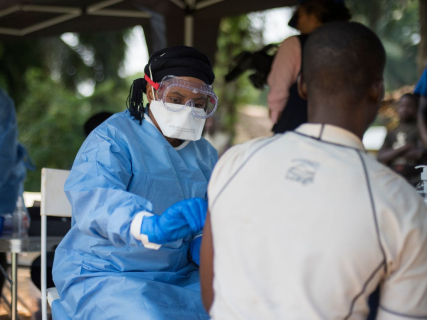

A decade after the Ebola crisis exposed serious deficiencies in global preparedness for epidemics and six years after the covid-19 pandemic turned those shortcomings into a global crisis, a group of experts linked to the World Health Organization (WHO) warns that the world is no more protected today against a new pandemic.
This is highlighted in the new report by the Global Preparedness Monitoring Board (GPMB), an independent body co-founded in 2018 by the World Bank and the World Health Organization (WHO).
The study argues that the increased risk has not been accompanied by sufficient investment or a sustained global improvement in response capacity. The document points out that outbreaks of infectious diseases are becoming increasingly frequent and also more devastating, with growing effects on public health, the economy, politics, and social cohesion.
More Risk and Less Resilience
The report indicates that, despite the initiatives launched in recent years to strengthen preparedness for health emergencies, these advances are being counteracted by other factors that increase global vulnerability.
Among these, it cites geopolitical fragmentation, ecological disruption, increased international travel, and a drop in development aid to levels not seen since 2009.
The Board analyzes a decade of public health emergencies of international concern, from the Ebola outbreak in West Africa to covid-19 and mpox, and concludes that the world is regressing in key aspects such as equitable access to essential health tools.
As an example, the report recalls that mpox vaccines reached low-income affected countries almost two years after the outbreak began, an even longer period than that recorded with covid-19 vaccines, which took 17 months to reach those countries.
The document also points out that the impact of these emergencies has gone beyond health and the economy.
According to the analysis, both Ebola and covid damaged trust in governments, affected civil liberties and democratic norms, and left societies less resilient to future crises, in a context marked by politicized responses, attacks on scientific institutions, and persistent polarization.
The Report's Warnings and Proposals
The Board maintains that a new pandemic would affect a more divided world, more indebted and with less capacity to protect its population than a decade ago, which could translate into health, social and economic consequences of greater scope.
The report also addresses the potential role of artificial intelligence and digital technologies in preparing for new health threats, especially for monitoring pandemic risks.
However, it warns that, without adequate governance and effective safeguards, these tools could weaken health security and widen the access gaps already observed during the covid pandemic.
The co-chair of the GPMB, Kolinda Grabar-Kitarovic, maintains in the report that solutions exist, but warns that without trust and equity these responses will not reach those who need them most.
For her part, co-chair Joy Phumaphi states that if trust and international cooperation continue to weaken, all countries will be more exposed when a new pandemic arrives.
The group identifies three concrete priorities: establishing a permanent and independent pandemic risk monitoring mechanism, promoting equitable access to vaccines, diagnostic tests and treatments through the conclusion of the Pandemic Agreement, and ensuring sufficient funding for both preparedness and immediate response to a new emergency.
The report concludes by pointing out that this political leadership will be tested this very year, as governments negotiate the conclusion of the WHO Pandemic Agreement and a future political declaration by the United Nations on pandemic prevention, preparedness, and response.