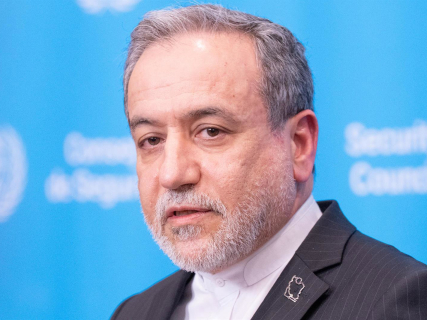

The Iranian Foreign Minister, Abbas Araqchi, has reiterated the urgency of articulating a framework for peaceful coexistence among the states of the Middle East, free from foreign pressures or interventions, and has emphasized that any real ceasefire must involve the end of fighting in all open scenarios.
"Today there is talk of war again, but I am already thinking about the period afterwards," said the head of Iranian diplomacy, who stressed that Tehran will maintain its political line even if a new military escalation occurs. In this regard, he pointed out that, if rationality prevails, his rivals will avoid a new armed intervention against Iran, after having attempted it twice.
Araqchi indicated that Iranian missiles have destroyed dozens of U.S. fighter jets stationed at ground bases and emphasized that stability in the region will only be possible with a comprehensive response to the various conflict hotspots. In this framework, he maintained that Iran supports proposals aimed at strengthening the internal security of neighboring states and improving their autonomy to rely on their own resources.
Regarding the Strait of Hormuz, the minister announced that its management will be reviewed through a new collaboration scheme with Oman. He specified that the current context requires rethinking the routes and supervision mechanisms of this strategic corridor, through ongoing consultations between both countries, recalling that in the past, its security was guaranteed without imposing obstacles to navigation.
Finally, the Iranian official urged those who promoted previous offensives to dismiss any new attack and to accept Tehran's stance. "Enemies should never repeat the option of the failure of military aggression," he noted, while again defending cooperation with neighboring countries, especially those of the Persian Gulf, as an essential instrument for achieving stable and lasting peace in the region.