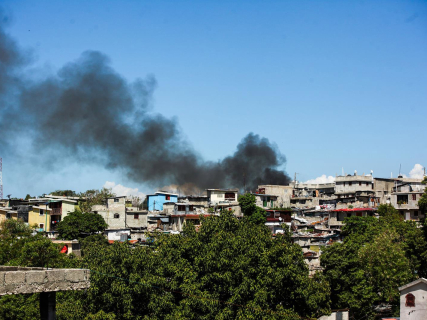

The president of El Salvador, Nayib Bukele, has stated that the Salvadoran Armed Forces have “destroyed” the headquarters of 400 Mawozo, considered the most influential of the nine major gangs operating in Haiti and which obtain their income through kidnappings, arms and drug trafficking, as well as extortion.
“We have kept our promise. We have destroyed the house of Lanmò San Jou and the headquarters of the 400 Mawozo gang,” he said in a message written in Haitian Creole and circulated through his social networks.
According to Bukele, “most” of the members of the organization “fled without even trying to fight.” “What cowards!” he added in a post accompanied by a video showing what it presents as the bombing carried out by the Salvadoran air force against the group’s facilities.
For his part, Wilson Joseph, known as “Lanmò San Jou” and identified as the leader of the gang, has requested the mediation of UN Secretary-General António Guterres after the deployment in Haiti of a contingent of more than 2,000 Salvadoran soldiers sent to locate four soldiers from this country who disappeared after an attack by the gangs.
The U.S. Secretary of State, Marco Rubio, has spoken in recent days about the military operations driven by Bukele in Haitian territory, ruling out both the sending of U.S. troops to Haiti and direct support for El Salvador in these actions.
“We are not involved in that,” he declared this Sunday to the media from a military base in Florida, in remarks later circulated by the Department of State.
Asked about the possible impact of the Salvadoran operations on the Gang Suppression Force—an instrument promoted by the UN—deployed in Haiti, Rubio warned of the risk of armed clashes due to the lack of clarity about the chain of command on the ground.
“What you can’t have is the Gang Suppression Force running into Salvadoran soldiers and shooting at each other because they think the other side is gang members,” he insisted.