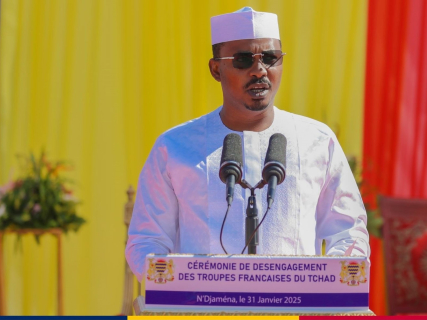

The Executive of Chad, headed by President Mahamat Idriss Déby Itno, has officially communicated this Monday its withdrawal from the Rome Statute, describing the International Criminal Court (ICC) as a "biased" body that acts to the detriment of countries in the global south and, in particular, of African states.
"The Government of Chad has notified the Secretary-General of the United Nations, depositary of the Rome Statute, of its sovereign decision to withdraw from the Rome Statute of the International Criminal Court, in accordance with the conditions and modalities provided for in Article 127 of said Statute," the Chadian Ministry of Foreign Affairs indicated in a statement.
The authorities have explained that this determination comes after an in-depth examination of the ICC's performance, which they attribute a "limited effectiveness" regarding "the expectations" generated at the time of its founding and reproach for having persistently focused its judicial actions on the African continent.
In this regard, the Government has emphasized that, according to the court's own data, nine of the thirteen open cases affect African states, something that, in their view, reinforces the idea of "political manipulation" in the functioning of international justice.
"The Government of Chad invites the African Union and its member states to reflect more deeply on the future of an apparently biased system and to accelerate the strengthening and implementation of African judicial mechanisms, with a view to consolidating a more equitable, balanced, credible, and effective continental justice system for the benefit of present and future generations, respecting African sovereignty and national sovereignties," it concluded.
According to the provisions of the Rome Statute, Chad's withdrawal will be effective one year after the written notification. The ICC, based in The Hague, has the mandate to investigate, prosecute, and judge individuals accused of crimes against humanity and war crimes.