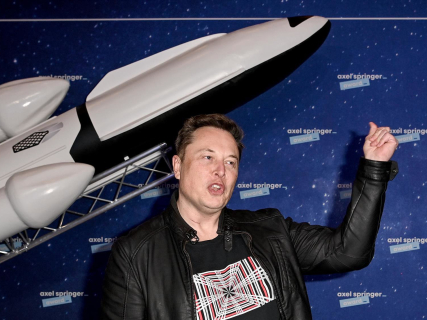

Elon Musk has reacted with irony to Democratic victories in the United States Senate and the House of Representatives, after having earmarked around $250 million to support Republican candidates in the 'midterms'. The businessman posted two messages on X in which he joked about moving his data centers to space and about the alleged failure of his “space lasers” to influence the election result.
“Data centers in space seem pretty attractive right now,” Musk wrote in one of the posts. The message refers to a business activity by the multibillionaire, who owns and is expanding data center facilities. In another message, he added: “I guess my space lasers to interfere with the elections didn’t work this time.”
Musk’s reaction came after James Talarico mentioned his name during the speech with which he celebrated his victory in Texas against the Republican Ken Paxton. The elected senator turned to the biblical story of David and Goliath to describe the campaign and placed Musk, the president Donald Trump, and the political establishment of Washington on the side of the giant he had to face.
What does it mean for Musk?
The Republican defeat also opens the door to greater parliamentary scrutiny of Musk’s activity during his time at the Department of Government Efficiency (DOGE). Before the elections, several Democratic congressmen had announced their intention to investigate the decisions of the agency, the cuts applied in the federal Administration, and the businessman’s relationship with the Government. Control of both chambers will allow them to push investigations and use parliamentary subpoenas to demand documents and testimony.
Democratic senator Richard Blumenthal had already advanced that, if his party regained control of the Senate, he would promote an investigation into Musk and DOGE. The lawmaker, who holds the top-ranking Democratic position on the Senate Standing Committee on Investigations, argued that citizens have the right to know the cost and consequences of the agency’s actions.
The electoral result could also affect expansion plans for data centers in the United States. Democrat Gina Hinojosa, who won the race for Governor of Texas, has opposed new projects of this kind. Investor Brad Gerstner, CEO of Altimeter Capital, warned during a broadcast of the podcast All-In that a possible moratorium in the state could complicate the development of infrastructure needed for the artificial intelligence industry.
Gerstner, however, considered it exaggerated to think that a Democratic victory will paralyze the construction of data centers across the country, although he did anticipate possible delays. Dylan Patel, founder of the analytics firm SemiAnalysis, also reacted to the results with a message on X in which he stated he was in favor of space-based data centers, an alternative that Musk had raised in his own post.