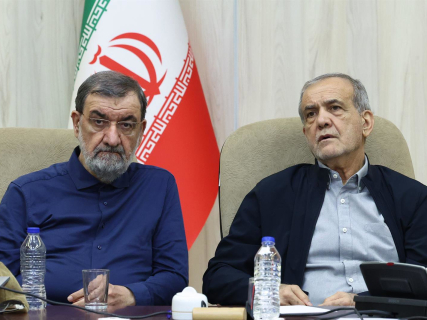

Iranian authorities reiterated this Tuesday that the United States must meet its demands in order to proceed with the reopening of the Strait of Hormuz, after criticizing that, until now, Washington has not answered “in a convincing manner” the requests raised by Tehran within the framework of the indirect contacts that both sides maintain with the mediation of Qatar.
The secretary of Iran’s Supreme National Security Council, Mohsen Rezaei, has stressed in a message shared on social media that “The response of the United States to Iran’s rights and demands was not convincing. They must respond in a complete and explicit manner to Iran’s seven conditions and comply with them”.
In this regard, the chief security adviser of Iran’s supreme leader has underscored that “Only then will the Strait of Hormuz be opened”.
At the same time, the Government of Egypt has asked Iran for “flexbilidad” this Tuesday during a phone conversation between Egypt’s Minister of Foreign Affairs, Badr Abdelatty, and his Iranian counterpart, Abbas Araqchi.
Abdelatty explained on his social media that “I emphasized the need to act with moderation, resort to diplomacy, and guarantee security in the Gulf, and I urged to show flexibility in order to reach a political solution that avoids escalation, about whose serious political, economic and security repercussions the president (Abedlfatá) has already warned Sisi”.
These statements come amid the diplomatic push of the past few days to close a peace agreement that includes a two-phase framework to reopen this strategic maritime corridor, such that Tehran would commit to allowing passage once certain conditions are met.
Qatar, which acts as mediator between the parties, has emphasized that there is “hope” of reaching an understanding and has insisted that the talks continue only because a real possibility of achieving a pact is perceived.