
The Kremlin has urged this Friday the United States and European countries to use its influence over Ukraine to support a humanitarian ceasefire in Kostantínovka, in the Donetsk region. This proposal was raised the day before by Russian President Vladimir Putin, taking as reference the scheme applied a little more than a week ago in Oleshki.
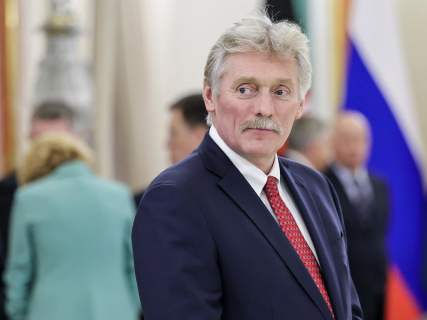
"We call on Americans and Europeans, who, if the claims that they are seeking peace are true, should also use their influence to influence the Ukrainians and encourage them to carry out this humanitarian operation in Kostantínovka," Dimitri Peskov, spokesman for Moscow, has appealed.
The Kremlin representative has rejected the interpretation by Kiev that a possible pause in the fighting would serve to rotate troops and consolidate its positions. "The claim that it will be used to transport armored vehicles does not stand up to any critical analysis because this is visible with satellites, drones and other surveillance equipment," he has pointed out.
According to Peskov, the Russian proposal seeks to facilitate the evacuation of civilians who remain trapped in the town. "Its goal is to allow the 400 or 500 civilians who still remain in Kostantínovka to leave that settlement and go wherever they want," he has explained, in line with the proposal made by Putin during his meeting with the special envoys of the United States, Steve Witkoff and Jared Kushner.
The spokesman specified that people who wish to leave could travel both to Russia and to areas under Ukrainian control. However, he emphasized that first it is essential to clear and secure the roads and access paths, which are currently covered with mines and other explosives.
Along these lines, Peskov has assured that, on the Russian side, there is willingness to begin as soon as possible demining and preparation tasks in the areas that Moscow controls, according to what the news agency Interfax reported.
Ukraine accuses Russia of continuing to mine the area
On the Ukrainian side, the commissioner for Human Rights, Dimitro Lubinets, one of the officials responsible for coordinating the humanitarian ceasefire in Oleshki together with his Russian counterpart, Yana Lantratova, has indicated that this new proposal regarding Kostantínovka has not been addressed in the talks held in Abu Dhabi.
In addition, he has warned that organizing a humanitarian operation in this area could require “several months,” since Russia continues to place mines, even on potential evacuation routes, and “there are no natural obstacles” that clearly separate the forces of both sides.
“This territory is actively mined; mines are planted almost every day (...) Therefore, any humanitarian mission can only begin after ensuring calm and the withdrawal of mines,” Lubinets said during his address to a commission on martial law, according to the Ukrinform agency.
In this context, he has cast doubt on whether Russia could complete demining in just five days, a deadline mentioned by Putin. “Not even in theory (...) I think it will take much more time. From several weeks to several months,” he assumed.
The precedent of Oleshki and the situation in Kostantínovka
Putin’s plan is inspired by the proposal of the first lady, Melania Trump for Oleshki, in the province of Jersón, a locality surrounded by minefields and cut off from supplies since the end of May this year.
In that case, Kiev and Moscow agreed on a three-day ceasefire to allow, on October 30, the development of a humanitarian mission in Oleshki —under Russian occupation since 2022— during which several dozen tons of aid were distributed and the departure was organized, both toward Ukraine and toward Russia, for those who chose to leave the city.
Unlike what happened in Oleshki, Kostantínovka has become one of the most active fronts of the war in eastern Ukraine. Although Moscow claims to control the city —much of it reduced to rubble— the area continues to be subjected to intense direct siege by Russian forces.
There are also substantial differences between the current situation in both localities that make it difficult to replicate the Oleshki model in Kostantínovka. In the latter, a large-scale evacuation has already been carried out beforehand, and the front line remains fully active, which means that any pause could be perceived by the parties as an opportunity to resupply and reinforce troops and ammunition.
Complete control of Kostantínovka would open up for Russia a direct corridor toward Kramatorsk and Sloviansk, the last major strongholds that Ukraine still has in the Donetsk province, which is already largely occupied by Russian forces.