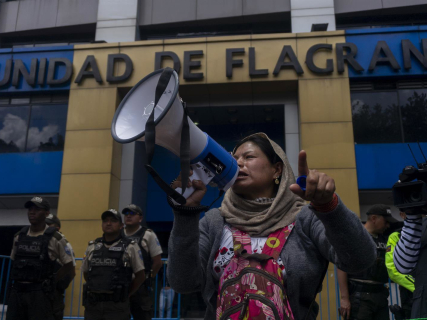

Thousands of people have taken to the streets of different cities in Ecuador this Saturday in marches convened by social groups, unions, and popular organizations to show their rejection of the policies of the Executive led by Daniel Noboa in areas such as education, healthcare, and security.
The protests have been strongly marked by the demand for the release of Ecuadorian opposition leader Luisa González, who has been in pretrial detention since October 23 of last year, accused of an alleged money-laundering crime linked to the 2023 electoral campaign.
González herself, through a letter shared on her social networks, has sent a message to the public in which she asks that "they do not give up, nor be discouraged in the face of this dictatorship" and has called for "not being afraid of the Government."
In Quito, the capital, rain has not stopped the presence in the streets of numerous protesters, mostly young people, who have protested against the Administration of Noboa. Renal patients and university groups have joined the march, according to what the Ecuadorian network Ecuasiva has reported.
The mobilization has advanced along several of the city’s main arteries to the rhythm of drums and music until reaching the Constitutional Court and the headquarters of the Prosecutor’s Office, both heavily guarded by the Police. During the course of the march, placards and flags of Ecuador were displayed, while slogans in defense of public education and healthcare were heard, as well as calls for Noboa’s resignation and for the freedom of the former presidential candidate of correísmo, Luisa González.
Similar actions have taken place in eleven other cities in the country. In Guayaquil, about 200 people have gathered with signs to bring their demands for improvements to the healthcare system to the forefront. In Cuenca, around 100 protesters have come together to criticize budget cuts that affect higher education.