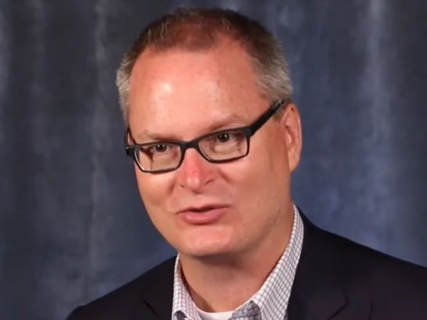

The United States 'midterms' are arriving and the Democratic Party aspires to wrest several seats from the Republicans in the Senate. Kansas is one of the states that could change color, despite its traditional conservative predominance. The Democratic candidate, Adam Hamilton, leads Republican senator Roger Marshall by seven points, according to the latest AtlasIntel poll.
The survey for these midterm elections, conducted between October 28 and November 1 among 2,038 likely voters, gives Hamilton 52% voting intention, compared with Marshall's 45%. The result represents a difference of seven percentage points in a race in which Democrats are trying to regain a seat that has been in Republican hands for decades.
From Methodist pastor to Senate candidate
Adam Hamilton was born and raised in Kansas and belongs to a family with five generations of roots in the state. His ancestors settled in Dickinson County in the 1870s, while his maternal grandparents arrived in Wichita to work in the aviation industry. He is married to LaVon, whom he met during his adolescence, and they have two daughters and one granddaughter.
His professional career has been linked to the Methodist Church. In 1990, when he was 25 years old, he founded, together with his wife, the Church of the Resurrection, in the Kansas City metropolitan area. The congregation began with four people and grew to become one of the largest Methodist communities in the United States, with around 24,000 members.
For more than three decades, Hamilton has served as senior pastor of this church, located in Leawood. He has also developed work as an author, with numerous published books on spirituality, religion and community life. In 2016 he was appointed by then-president Barack Obama as a member of the White House Advisory Council on Faith-Based and Neighborhood Partnerships.
Hamilton had not previously held elected office nor had he run in an election before announcing his candidacy for the Senate in April 2026. He initially considered running as an independent, but finally decided to take part in the Democratic primaries, which he won in August. His campaign for these 'midterms' is presented as an alternative focused on reducing the cost of living, improving access to healthcare and restoring cooperation between parties.