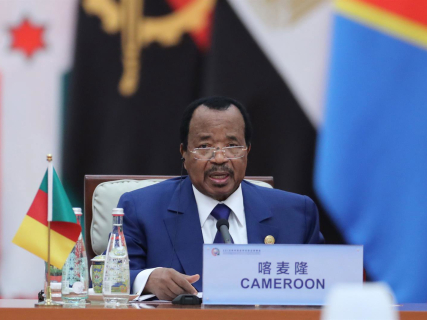

The president of Cameroon, Paul Biya, has signed a decree establishing 7 February 2027 as the new date for the holding of legislative and municipal elections, after more than two years of extension of the current mandates due to successive delays in calling the polls.
The decree, circulated by the Cameroonian Presidency through its official social media accounts, specifies that "the electorate is convened on Sunday 7 February 2027 to proceed with the election of the deputies of the National Assembly and municipal councillors".
It also details that "the counting will start at 8.00 a.m. and close at 6.00 p.m.", and specifies that the text will be published "according to emergency procedures" in the 'Official Gazette', in both French and English.
The country’s authorities had already postponed these elections on two occasions, which has meant the extension of the deputies’ mandate until 20 December and the municipal councillors’ mandate until 28 February 2027, pending a reshuffle of the Executive that includes the appointment of a new vice president, a figure incorporated in a constitutional reform approved in April.
Biya, in power since 1982 and considered the oldest head of state on the planet at 93 years old, secured re-election in the October 2025 presidential elections, results that the main opposition leader, Issa Tchiroma Bakary, has refused to accept by claiming that he was the true winner at the polls.
The state of health of the head of state, who returned to the country at the end of August after spending more than two months in Switzerland, has become one of the main arguments of the opposition, although the authorities have banned public debate on this issue after rumours circulated in 2024 about his possible death.
At the same time, the Government decided to suspend in October the activities of the Front for the National Salvation of Cameroon (FSN), Bakary’s party, who left for exile in Gambia after insisting that he won the presidential elections, in a context that activists and opposition figures denounce as an increase in repression and a shrinking of civic space in the African country.