
The head of the Israeli internal security service, David Zini, has asked the Office of the General Prosecutor for permission to interrogate four Arab political leaders, including the leader of the Raam party, Mansur Abbas, for alleged interference in the elections held last Tuesday. The request has already been dismissed by the Public Prosecution, which argues that there is an absence of solid evidence against those identified.
The top official of the Shin Bet has requested authorization from the attorney general, Gali Baharav-Miara, to interrogate Sami Abu Shehadeh, president of the Balad formation; Ahmad Tibi and a fourth parliamentarian, both from the Joint List.
The Israeli television network i24 has reported that the latter deputy is a member of the Knesset “whose identity cannot be made public.”
In response to this request, the attorney general has replied that “in a state of law, it is impossible to interrogate citizens or elected officials without evidence that justifies it”.
In statements collected by the newspaper 'The Times of Israel', Baharav-Miara has urged the Shin Bet to present any element it has in its possession and that “justify an investigation”.
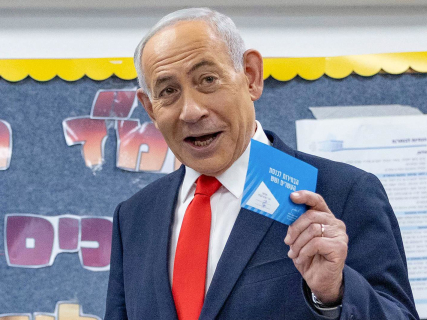
The Likud party, led by Prime Minister Benjamin Netanyahu, has accused the prosecutor of blocking inquiries into a supposed network of foreign interference in Israeli elections, a case reported on Thursday of last week and dubbed 'Ra'amgate'.
As the party has pointed out on social media, “Baharav-Miara is preventing the Shin Bet from applying investigative measures (...) and wanted to hide from the public that it is a security-related offense (...) She is acting to cover up and derail the investigation into the manipulation of the elections”, while also criticizing “selective enforcement of the law”.
Shortly before, Likud had demanded that the prosecutor “stop her attempts to conceal and delay the investigation into the case of foreign interference in the elections, that she stop putting obstacles in the way of the Shin Bet and allow the investigation of the lawmakers of the Arab parties and their assistants”.
The party has brought up the words of Judge Noam Solberg, president of the Central Elections Committee, who initially pointed to the possible actions of external agents that would have influenced the process and bribed voters in favor of Arab parties, although afterward he ruled out the hypothesis of electoral fraud.
The opposition warns of a "dangerous constitutional crisis"
The opposition leader Gadi Eisenkot has accused Netanyahu and Likud of trying to "carry out an attack against democracy and the rule of law," something he has linked to his "desperation" because of the difficulties in articulating a governing majority despite having won the elections with 27 seats.
Eisenkot has warned that "they are trying to drag us all into a dangerous constitutional crisis. Unfortunately, it’s not the first time. That is precisely why they are not worthy or fit to remain in power. That is why the majority of Israel’s citizens voted against them continuing in office," according to what he wrote on his social networks.
The opposition leader has denounced that "in this difficult time (...) they are trying to undermine the public’s confidence in the election results," and he has emphasized that "the officials of the security system, of the law enforcement forces and of Israel’s public administration are at the service of the State, not the king." To conclude, he called on the population: "Citizens of Israel, stand firm. This is a decisive moment for the future of the country as a democratic and liberal State."