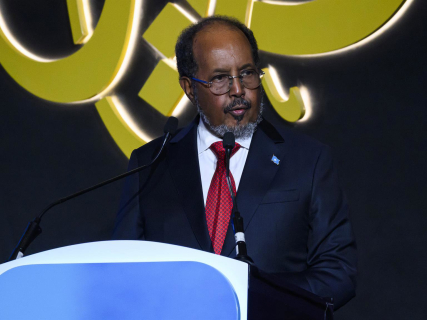

Somalia moves into a new episode of political instability following the decision adopted last May by the country’s president, Hasan Sheij Mohamud, to extend his term by an additional year, an initiative that Justice has considered unconstitutional and that has triggered the removal of the president of the Supreme Court by the president himself.
In its ruling, the five judges of the high court have declared "invalid" Mohamud’s decree that allowed him to remain in office until May 15, 2027, justifying their verdict by citing the failure of talks between the Government and the opposition to organize elections in a country marked by the presence of separatist states such as Puntlandia or Jubalandia.
The opposition responded immediately and unanimously against the presidential decree, and since then various political blocs have stopped recognizing Mohamud as the legitimate head of the Somali Executive.
The ruling, released this Thursday, orders "to annul and render ineffective all procedures and measures taken to amend the provisional Constitution of 2012," which includes "the extension of the constitutional term of the elected institutions, namely, the two chambers of the Federal Parliament, the President of the Republic and the Federal Government."
Open clash between the President and the Supreme Court
At the same time, and by means of an independent note, the court has rejected the removal of its own president, magistrate Baashe Yusuf Ahmed, agreed by Mohamud on Wednesday night, which was interpreted as a first reprisal for the opening of the process to review the legality of the president’s continued stay in power.
The five judges have concluded that the dismissal of the top official of the Supreme Court "lacks any legal basis" and have accused Mohamud of trying to "interfere" in the judicial review regarding the extension of his term.
The announcement from the Presidency was made this Wednesday through social media, where it was claimed that complaints filed by prosecutors and other magistrates were presented to justify Ahmed’s replacement, while it was also reported that he would be replaced by his predecessor in office, Ibrahim Idle Suleiman.
The Presidency framed this move as part of a package of reforms aimed at ensuring that Somali citizens have a "transparent and reliable judicial system."
Suleiman’s return to the leadership of the Supreme would take place eight years after he was dismissed by then President Mohamed Abdullahi 'Farmaajo'.