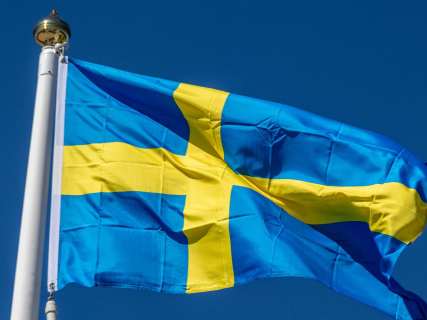

Sweden celebrates this Sunday, September 13, elections that could bring the far-right directly to the Government for the first time. The Sweden Democrats (SD), who for the last four years have allowed conservative Prime Minister Ulf Kristersson to govern from outside the Executive, have made it clear that they are no longer satisfied with playing that role. If the right-wing bloc prevails again, they want to occupy ministries and participate formally in the Council of Ministers.
The possibility is no longer rejected by their partners. Kristersson himself has acknowledged that he is willing to incorporate the Sweden Democrats into the next Government, a historic turn regarding the isolation that a party with roots in far-right and neo-Nazi movements has faced for years. The decision comes, moreover, in an extraordinarily close election, with the center-left bloc led by social democrat Magdalena Andersson slightly ahead in many of the polls, although some surveys narrow the gap between the two camps to just a few tenths.
What Sweden votes this Sunday
Swedes are called to elect the 349 members of the Riksdag, the national Parliament, as well as regional and municipal representatives. More than eight million citizens have the right to participate in an election whose early voting began on August 26. Polling stations will open between 08:00 and 20:00 hours and, from that moment, a count will begin that may be prolonged due to the tight forecasts.
The key will not only be which party gets the most votes, but which bloc manages to gather a sufficient majority to form a Government. The social democrats are expected to be the most voted force again, but Sweden has been depending for years on agreements between various parties and the distribution of seats will be decisive in determining who ultimately occupies the head of the Executive.
Four years governing thanks to the far-right
The 2022 elections marked a turning point. Kristersson managed to form a minority Government made up of Moderates, Christian Democrats, and Liberals, but needed the parliamentary votes of the Sweden Democrats to come to power and approve a good part of his agenda. The agreement known as Tidö allowed SD to exert considerable influence without directly assuming ministerial responsibilities, especially in matters such as immigration, crime, and security.
During this legislature, the formation of Jimmie Åkesson has managed to impose some of its priorities from outside the Executive and now considers that model exhausted. Its goal is to formally enter the Government and have its own portfolios. Kristersson has ended up accepting that possibility and argues that Sweden needs a more stable Executive to address issues such as organized crime, national security, or immigration policy.
From isolated party to possible Government partner
The evolution of the Sweden Democrats has been one of the great transformations in the country's politics. For years, the main forces maintained a sanitary cordon around the formation due to its origins and the historical presence of figures linked to neo-Nazi and supremacist movements. Since then, SD has tried to expel extremist leaders, moderate part of its discourse, and present itself as a national-conservative force comparable to other European radical right parties.
Electorally, the strategy worked. In 2022, the Sweden Democrats surpassed the Moderates and became the second force in the country, only behind the Social Democrats. The polls for this campaign place them again around 20%, and there is even the possibility that they will obtain more votes than the Prime Minister's own party. That scenario would open an uncomfortable question within the conservative bloc: if SD becomes the strongest force on the right again, its ability to demand ministries and set the agenda would be even greater.
Immigration and security, the main banners of SD
The influence of the Sweden Democrats is already clearly perceived in immigration policy. Sweden, which for decades was one of the most open European countries to the reception of refugees, has notably tightened its rules in the last four years. The Government has promoted restrictions on residence permits, increased expulsions, and introduced new requirements for obtaining citizenship, while asylum applications have fallen to levels not seen in several decades.
Since January 2026, the Executive also offers up to 350,000 Swedish crowns — about 37,000 dollars — to certain non-EU immigrants who decide to voluntarily leave the country. SD wants to deepen in that direction and has focused part of its campaign on preserving what it considers Swedish values, language, and customs, as well as increasing incentives for return.
Crime is the other major axis. Sweden suffered for years a strong increase in shootings and explosions linked to criminal gangs, which made security one of the main electoral arguments of the right. The Government has toughened penalties and expanded police powers, while presenting the recent drop in firearm homicides as proof that its strategy is working. The opposition, however, questions some of these measures and warns that a greater influence of SD may further strain civil rights and individual guarantees.
Magdalena Andersson wants to return to power
Opposite the conservative bloc is Magdalena Andersson, leader of the Social Democrats and the first woman to hold the position of head of the Swedish Government. Andersson governed for about ten months before losing the 2022 elections and now aims to regain the position with a program focused on strengthening the welfare state, boosting economic growth, increasing certain public investments, and reducing inequalities.
Her party has also hardened its immigration discourse compared to previous stages, aware that concern about immigration and security has profoundly changed the Swedish political debate. During the campaign, Andersson has also used the possible entry of SD into the Government as one of her main lines of attack and has presented the elections as a choice between a center-left Executive and another directly conditioned by the far-right.
The left is ahead, but has more difficulties in reaching agreements
The polls offer a slight advantage to Andersson's bloc, although the margin is very narrow. Some estimates place the opposition at around 175-180 seats, compared to about 169-174 for the forces currently supporting the Government, but other surveys reduce the distance between the two blocs to just a few tenths.
The main problem for Andersson is that her potential partners have significant differences among themselves. The opposition space is fundamentally composed of Social Democrats, Greens, Left Party, and Centre Party, but the latter refuses to collaborate with both SD and the harder left. An arithmetic victory for the center-left would therefore not guarantee a simple coalition and could force Andersson to govern as a minority or seek more complex parliamentary agreements.
The right, on the other hand, arrives with a more defined alliance architecture, although it also depends on the Liberals surpassing the electoral threshold of 4%. If they were to be excluded from Parliament, a good part of their votes would not translate into seats, and Kristersson's options would be considerably reduced.
A country different from that of the 2022 elections
Sweden also arrives at these elections in a different international situation. These will be the first general elections that the country holds as a full member of NATO, after abandoning more than two centuries of military non-alignment tradition following the Russian invasion of Ukraine. Andersson initiated the accession process when she was prime minister, and Kristersson completed it after coming to power.
In this area, there is much more consensus than on immigration or social policy. The main Swedish parties support aid to Ukraine and the strengthening of defense capabilities, which is why the campaign has mainly focused on the economy, security, immigration, and public services.
The big unknown: what power Åkesson will have
The polling stations will close at 8:00 PM this Sunday and the first results will begin to be known during the same night. If the right bloc achieves a majority, the main negotiation will not only be who occupies the head of the Government, but what ministries the Sweden Democrats will receive and how much power Jimmie Åkesson will really have within the next Executive.
After four years influencing from the outside, SD considers it insufficient to repeat the previous model. The party wants to move from supporting the Government to being part of it, and Kristersson has already opened the door. This Sunday’s elections could thus turn the Swedish far-right, for the first time, into a force with direct ministerial responsibilities.