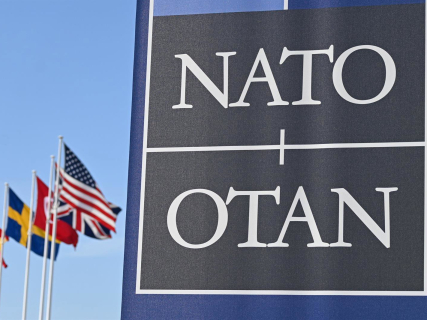

Representatives of the United States, France, Germany, the United Kingdom and NATO have met this Thursday in Brussels to move forward on the security guarantees Ukraine would receive within a possible peace agreement with Russia. This is the second diplomatic meeting in the Belgian capital in just 48 hours, and it takes place on the doorstep of negotiations between Kyiv and Moscow scheduled for next week in Abu Dhabi, under the mediation of Washington.
The head of Ukraine’s Foreign Intelligence services, Rustem Umerov, has confirmed the holding of the meeting and detailed that the priority was to discuss how the security guarantees offered by the United States, European countries and other international partners should be structured, as well as to move forward on a new European security strategy.
"The main focus of today’s meetings in Brussels has been security guarantees for Ukraine," Umerov said in a message on social media, emphasizing that for Kyiv it is essential that "security guarantees are not merely a political statement, but a system that works in practice."
On the other hand, NATO spokesperson Allison Hart explained to the media that the meeting served to provide continuity to the diplomatic contacts held recently in Miami and Oslo "to discuss the next steps toward a just and sustainable end to the war in Ukraine."
Sources from the Atlantic Alliance subsequently clarified that it was a "working-level" meeting and noted that NATO also took part in the meeting organized on Wednesday by the European Commission, which was attended by delegations from Ukraine, the United States, France, Germany, the United Kingdom and the World Bank.
Second round of contacts in Brussels before Abu Dhabi
In this way, Brussels has been the scene, for the second consecutive day, of contacts between Washington and its European partners within the diplomatic efforts aimed at bringing an end to the war, although each appointment has had a different focus.
While the meeting this Thursday at NATO headquarters was focused on security guarantees for Ukraine, the meeting the day before at the European Commission focused on analyzing different mechanisms to finance the country’s reconstruction after the conflict and attract international investment to support its economic recovery.
Conversations in the community capital are entered into the so-called “prosperity framework,” jointly designed by Kiev and Washington at the beginning of this year, and take place a few days before the technical negotiations between Ukraine and Russia scheduled for the next 10 and 11 November in Abu Dhabi, United Arab Emirates, under the mediation of the United States, as the U.S. special envoy Steve Witkoff announced this week.
As sources from the European External Action Service (SEAE) have indicated, the European Union will not participate in these conversations, which will take place in a “trilateral” format with the presence of Ukraine, Russia and the United States.
Discontent over the lack of a single European voice
The succession of diplomatic meetings has drawn criticism from Italian Prime Minister Giorgia Meloni, who this Thursday sent a letter to the president of the European Council, António Costa, to denounce the absence of real coordination among the Twenty-Seven and to demand that the EU appoint “once and for all” a representative with a defined mandate to intervene in the peace negotiations on behalf of the entire bloc.
Meloni has specifically questioned the proliferation of contacts in different formats, some without the presence of all member states, and has expressly referred to the technical meetings held these days in Brussels, in which representatives of the European Commission and a limited group of European countries participated, including two member states such as France and Germany.
“What I continue to ask for is that it be decided once and for all who sits at the negotiating table representing the European Union, and with what mandate,” the Italian leader has stressed, warning that the image of a Europe that moves “in a scattered way” weakens the bloc’s credibility and benefits those who want the war to be prolonged.