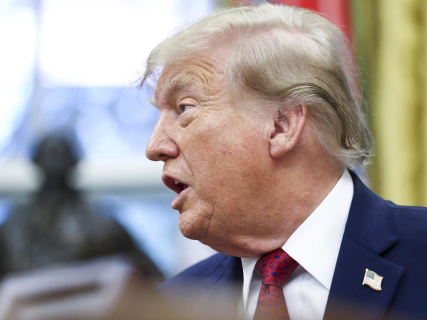

The President of the United States, Donald Trump, has said that Iran will need 25 years to “rebuild” the country after the offensive launched in February by the United States and Israel against the Asian state. He has also stressed that “soon” he will decide whether to “destroy the rest of the country,” in a context marked by speculation about a possible relaunch of the military campaign.
“I think it will take them 25 years to rebuild the country,” Trump said from the White House. “I would prefer not to destroy the rest of the country, if it’s possible, but maybe I’ll have to. You’ll know soon,” he added, before specifying that at this time Washington must “make a decision and see if it’s wanted to go further.”
Along these lines, he described the current situation as “virtually an occupation” of Iran by the United States, considering that its forces “have total control” of the Strait of Hormuz. He also emphasized that they have achieved “a tremendous success” with the blockade of Iranian ports to stop the oil exports from Tehran.
Trump also stressed that Iran’s military capabilities have been diminished by the joint operation of the United States and Israel and put the focus on that “nobody has died (in the U.S. ranks) in six or seven months.” Even so, he lamented the death of 18 servicemen in the course of the conflict, although he countered this figure with the casualties recorded in wars such as Vietnam or Afghanistan.
For this reason, he defended that the current strategy “is working” and insisted that the United States “is getting more oil now than before the war started” thanks to its control of the Strait of Hormuz. At the same time, he underlined that Iranian authorities “are not doing anything without approval” from Washington and reiterated that Tehran “is not going to have nuclear weapons.”
Trump himself already said last week that he considers the ceasefire agreed within the framework of the memorandum of understanding signed in June in Pakistan “a waste of time.” These remarks come amid a back-and-forth of accusations between Tehran and Washington over the lack of progress in the negotiations, together with the latest threats from Israel’s prime minister, Benjamin Netanyahu, and the warnings from the occupant of the White House about a possible return to large-scale attacks.