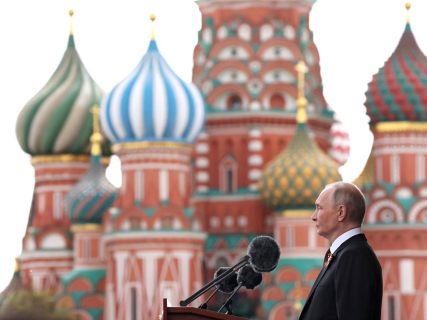

The warning from Russia that it could resort to its nuclear arsenal in the event of a NATO attempt to isolate Kaliningrad has once again placed one of the most serious scenarios contemplated by the Alliance on the table: a nuclear attack against the territory of one of its members. Moscow has communicated in writing to the organization that it could employ all means at its disposal, including nuclear weapons, if it considers the Russian enclave located between Poland and Lithuania to be threatened.
If Russia were to use a nuclear weapon against a NATO country, the attack would fall under the scope of Article 5 of the North Atlantic Treaty, which establishes that an armed aggression against one or several allies in Europe or North America will be considered an attack against all. This would obligate the other members to provide assistance to the attacked country, although the treaty does not determine in advance how that response should be.
The consequence, therefore, would not automatically be a nuclear response from NATO. Each ally must adopt the measures it deems necessary to restore and maintain the security of the Alliance, and those actions may include the use of armed force, but they do not have to do so necessarily.
Article 5 and a Russian nuclear attack
Article 5 constitutes the core of NATO's collective defense. Its members commit to considering an attack against one of them as an aggression against the entire organization and to assist the affected ally.
The text, however, leaves room for each State to decide what measures to adopt. The North Atlantic Treaty speaks of the actions that each country "considers necessary," among which it expressly includes the possibility of using armed force.
A Russian nuclear attack against Poland, Finland, Estonia, Latvia, Lithuania, or any other member located within the territorial scope protected by the treaty would constitute an armed aggression of a magnitude far greater than the only situation in which NATO has invoked Article 5 so far: the attacks of September 11, 2001, against the United States.
Would NATO also respond with nuclear weapons?
There is no rule that establishes a automatic nuclear response. NATO's deterrence policy deliberately maintains ambiguity regarding the specific circumstances under which it could resort to nuclear weapons.
The Alliance itself maintains that any use of nuclear weapons against NATO "would fundamentally alter the nature of a conflict". It also states that the circumstances under which it could be forced to resort to its own nuclear weapons are "extremely remote".
NATO has a defense strategy based on a combination of nuclear capabilities, conventional forces, and missile defense, currently complemented by space and cyber capabilities. The response to an aggression would therefore depend on the characteristics of the attack and the decisions made by the allies.
United States, United Kingdom, and France
Three NATO members have their own nuclear weapons: United States, United Kingdom, and France. The U.S. strategic forces constitute the main nuclear guarantee of the Alliance, while the independent British and French arsenals contribute to its overall deterrence capability.
The organization also has the Nuclear Planning Group, its main body for addressing policy and planning related to nuclear deterrence. All allies participate except France, which keeps its nuclear force outside this structure.
In June 2026, the defense ministers participating in this group redefined strategic nuclear forces as the supreme guarantee of the security of the allies and agreed to continue strengthening the planning capacity and the nuclear deterrence mission of the organization.
The Russian warning about Kaliningrad
The scenario has regained relevance after Russia sent NATO a document warning that an attempt to isolate Kaliningrad could lead Moscow to use its entire military arsenal, including nuclear weapons.
NATO has responded by rejecting the threat and reiterating that it is defensive in nature. Its Secretary General, Mark Rutte, pointed out this Wednesday that the allied assessment currently does not detect an imminent threat of a Russian attack against the organization's territory.
The Russian warning does not imply, therefore, that there is currently an imminent nuclear attack. It does, however, bring back to the forefront the mechanism designed by NATO to address the scenario it seeks to prevent through its deterrence policy: that an adversarial power concludes it can attack one of its members without exposing itself to a response from the entire Alliance.