
The Film Law advances among more than 460 amendments and keeps its main fronts open.

The presentation resumes the negotiation of the project without yet closing the main points of friction: aids, screen quota, exhibition windows, and the fit of the co-official languages.

4 minutes

EuropaPress 7776120 ministro cultura ernest urtasun atiende medios comunicacion fundacion

EuropaPress 7776120 ministro cultura ernest urtasun atiende medios comunicacion fundacion

Add DEMÓCRATA to Google

Ask FREN

Published

4 minutes

Most read

The new Film Law continues advancing in the Congress, but still has a substantive negotiation ahead. As DEMÓCRATA reported, the working group intended to resume negotiations after the summer, and that has been the case. This Wednesday, it met to address the amendments from the parliamentary groups and confirm that there is still much work ahead: on the table are more than 460 proposals for modification to the articles and the groups expect to continue working in upcoming sessions.

The volume of changes largely explains the pace of the processing. The parliamentary record includes 463 amendments to the project, which aims to replace the current Film Law of 2007 and expand its scope to also incorporate the concept of audiovisual culture. The text, which surpassed the total debate in June, now faces one of the decisive phases: turning that broad catalog of proposals into a text that can gather the necessary support in Congress.
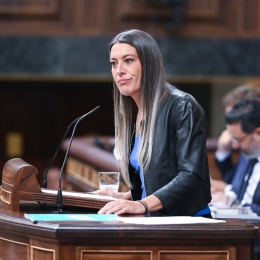
The meeting this Wednesday has not yet resulted in a definitive agreement on the main issues that separate the groups. The PSOE has continued working, according to parliamentary sources, to incorporate demands from the sector and move towards a consensus text. There is, for now, no new fixed date for the working group, although the intention is to reconvene it in the coming weeks. And it is precisely in that negotiation where some of the issues that can define the Spanish film model for the coming years are found.
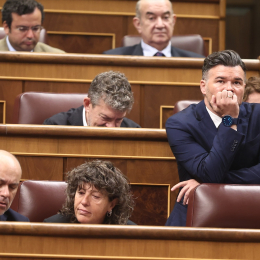
The box office enters the debate on aid

One of the issues that has generated the most interest is the PP's proposal for the commercial performance of a film to be taken into account when granting certain public aids. The amendment does not establish that a good box office will automatically become a condition for receiving subsidies, but it does open the door to evaluating the results obtained by films in previous years.

The approach thus introduces a substantive debate about what film policy should reward: the economic performance of a production, its ability to attract viewers, or also other criteria linked to diversity, cultural creation, and the protection of projects with greater difficulties in accessing the market.

It is not the only front. The future law will also have to find a balance between production, distribution, and exhibition at a time when the ways of consuming cinema have changed radically since the approval of the current regulation.

The screen quota, another of the major knots

The screen quota is another of the points that can complicate the negotiation. Current legislation requires theaters to reserve at least 25% of their sessions for cinematographic works from member states of the European Union, with certain reinforced computation mechanisms.

The project proposes to modify that scheme, while several amendments seek to raise the percentage and expand the weight of European and Ibero-American productions. Among them, some proposals suggest raising the quota to 40% and reinforcing the presence of films in co-official languages.

The discussion directly affects exhibition halls, which must fit these obligations into a market conditioned by public demand, competition from platforms, and box office behavior.

How long a film should remain in theaters

The other major debate lies in the so-called exhibition window: the period that must elapse between the release of a film in theaters and its arrival on platforms or other distribution channels.

The registered proposals show very different positions. ERC proposes setting a minimum of four months, while other amendments place that period at 50 or 60 days.

This is not a minor issue. The duration of that window conditions the business model of theaters, but also the distribution and financing strategies of films. A longer window protects cinematic exploitation for a longer time; a shorter one allows platforms to incorporate titles earlier and adapt to current consumption habits.

The law will have to decide to what extent the legislator should intervene in that balance.

A law that wants to encompass the entire audiovisual ecosystem

The project goes beyond updating film subsidies. It also introduces changes in the institutional structure of the sector and expands the concept of audiovisual culture. Among the registered amendments, there are proposals related to the ICAA, the Spanish Film Archive, financing, tax incentives, the rights of professionals, artificial intelligence, or the representation of different sectors in decision-making bodies.

Precisely, artificial intelligence has become one of the new areas of discussion. Some amendments propose to limit access to certain public benefits of works generated totally or partially by AI, while others seek to introduce guarantees for professionals and creators in the face of the advance of these technologies.

There are also proposals related to equality, the prevention of sexual violence in filming, and the reservation of certain lines of aid for projects directed by women, young people, or produced in co-official languages.

The result is a regulation much broader than a simple update of the 2007 Film Law. And also a considerably more complex negotiation.

The challenge now: to turn 463 amendments into a law

The meeting of the working group leaves, therefore, a double message. The processing is still alive and the groups continue negotiating, but the text is still far from being considered closed. The more than 460 registered amendments are proof of the number of interests that converge in a regulation that aims to organize practically the entire audiovisual ecosystem.

The next session will be the one that allows us to see if the conversations begin to translate into concrete agreements. Until then, the main questions remain open: what weight will box office have in the aids, how much cinema must be programmed in the theaters, how long will the films remain in them before jumping to the platforms, and how will the legislation respond to technological changes and the linguistic reality of the sector.

The law is advancing, but it still has to pass the most complicated test: finding a balance between an industry that demands economic muscle, theaters that need an audience, and a cultural policy model that aims to ensure that Spanish and European cinema continues to have space in a market increasingly dominated by platforms.

More key points, information and questions with FREN

AI-GENERATED CONTENT

What is the current parliamentary stage of the Film Law and what are the next steps planned for its final approval?

According to official records and the most recent information available, the so-called “Film Law” is the Film and Audiovisual Culture Bill (file 121/000026, of governmental origin). As of today, 10/01/2026, the text is still being processed in the Congress of Deputies, in the phase of committee and Culture Commission, after having passed the totality debate in the Plenary. It has not yet reached the Senate.

Current parliamentary stage

According to the processing reconstructed by the Congress and official press releases:

  • The project was approved by the Council of Ministers and sent to the Cortes in June 2024; it was registered in the Congress on June 14, 2024, admitted for processing on June 18, and the text was published on June 21, 2024.
  • A long period for submitting amendments was opened, with numerous deadline extensions, until its closure in 2026.
  • On June 18, 2026, the Plenary of the Congress rejected the return amendments from PP and Vox (172 votes in favor and 175 against), so the project passed the totality debate and continued its processing (see the official note from the Congress: press release of 06/18/2026).
  • That same day the Plenary approved the referral to Plenary, that is, it decided that the final vote on the project would not close in the Culture Commission but would return to the Plenary of the Congress before being sent to the Senate.
  • On July 10, 2026, the amendments to the articles were published, confirming that the amendment phase is closed and the text is in the internal stage of committee and debate in the Culture Commission.
  • The official agenda of the Congress includes a meeting of the committee on the Film and Audiovisual Culture Bill on 09/30/2026, which fits with an advanced phase of technical work in the Culture Commission.

In summary, the “Film Law” is alive, still in the Congress and without a final vote: work is being done on the text and amendments in committee and commission, with the already agreed obligation that the report then passes through the Plenary.

Next steps until final approval

From this situation, the path foreseen by the ordinary legislative procedure (adapted to the referral agreement) is as follows:

  • 1. Work of the committee (Congress)
    The rapporteurs appointed in the Culture Commission study the amendments to the articles, negotiate compromises, and prepare a committee report with an integrated text.
  • 2. Opinion of the Culture Commission (Congress)
    Based on the committee report, the Commission debates and votes on the opinion of the project. Although the Commission has full legislative competence, in this case the Chamber has already agreed that the resulting text will be elevated to the Plenary.
  • 3. Debate and final vote in the Plenary of the Congress
    The opinion reaches the Plenary, where group amendments (if any) are debated and a final overall vote is held. If approved, the project is considered approved by the Congress.
  • 4. Referral to the Senate
    The approved text is sent to the Senate, which opens its own amendment period, appoints a committee and rapporteur, and finally holds debate and vote in Plenary. Three scenarios may occur there:
    • No changes or veto: the Senate endorses the text as is; the law would be ready for promulgation.
    • With amendments: the Senate introduces modifications; the project returns to the Congress, which decides whether to accept or reject them, voting on each amendment or on blocks.
    • With veto: the Senate approves a veto proposal; the Congress can override it with the required majority (absolute in a first vote or, after two months, simple).
  • 5. Promulgation and publication in the Official State Gazette (BOE)
    Once the Congress–Senate exchange is concluded and the final text is approved, the law proceeds to sanction and promulgation by the King and is published in the Official State Gazette. Only then will the “Film Law” be fully in force.

Schedule and debates that may affect the pace

Neither the Congress nor the Government have yet set a fixed Plenary date for the final vote. Public references point to the political goal of closing the law before the end of 2026, but that schedule remains indicative and depends on:

  • The ability to reach agreements in committee and commission on especially contentious points: screen quota in theaters, relationship with platforms (exhibition window), definition and protection of independent production, treatment of co-official languages, and the balance of subsidies.
  • The position of key groups such as Junts and other investiture majority partners, who have already conditioned their support on specific adjustments in these areas.
  • The subsequent negotiation in the Senate, which may introduce changes and require an additional return to the Congress.

In conclusion, the Film Law is at an advanced but still not definitive stage: it is in the committee and Culture Commission phase of the Congress, pending report, its passage through the Plenary, and later the entire processing in the Senate before reaching the BOE.

What are the competencies and functions of the ICAA (Institute of Cinematography and Audiovisual Arts) within the Spanish audiovisual sector?

The Institute of Cinematography and Audiovisual Arts (ICAA) is the autonomous body of the Ministry of Culture responsible for planning and executing the state policy supporting cinema and the audiovisual sector in Spain. Its competencies combine promotion, regulation, economic management, and protection of cinematographic heritage functions, with direct impact on the entire value chain: production, distribution, and exhibition.

General framework and institutional role

According to official information from the Ministry of Culture itself and the regulations that develop its structure, the ICAA:

  • Acts as a specialized State body in cinema and audiovisual matters, designing and applying public policies for the sector.
  • Organizes and coordinates Spanish cinematographic and audiovisual activities in its three main areas: production, distribution, and exhibition.
  • Is closely linked to festivals, markets, and international promotion programs (for example, under the brand Cinema from Spain), giving visibility to the Spanish industry at forums such as Cannes, Berlin, and other international markets.

Economic promotion: aids and subsidies

One of the core functions of the ICAA is managing the public aid system for cinema and audiovisual:

  • It prepares each year a budget for aids for creation, production, distribution, exhibition, and promotion of cinematographic works and other audiovisual works, with special attention to the independent sector and works of cultural interest.
  • Calls and manages subsidy lines (for example, general and selective aids for feature films) following objective criteria such as economic viability, socioeconomic impact, diversity, gender equality, or environmental sustainability.
  • Can make contributions to international organizations and programs linked to audiovisual, reinforcing the insertion of the Spanish sector in European and global networks.
  • Administers part of the Film Protection Fund, from which resources destined both to cinema in co-official languages and to territorial promotion of audiovisual depend.

Regulatory and control competencies

Beyond economic promotion, the ICAA exercises regulatory and supervisory functions:

  • Applies and ensures compliance with the state cinematographic and audiovisual legislation (Film Law and its regulatory development), in coordination with other administrations.
  • Manages the rating and age classification of films and audiovisual works, a key requirement for their distribution and exhibition.
  • Intervenes in the determination of Spanish nationality of works and in the recognition of international coproductions, which affects access to aids and tax incentives.
  • Maintains an administrative registry of cinematographic and audiovisual companies, which serves as a reference for aid processing and sector organization.

Cultural promotion, heritage, and cooperation

The ICAA also fulfills a long-term cultural and heritage function:

  • Through the Spanish Film Archive – integrated as a general subdirectorate – it is responsible for the recovery, preservation, restoration, documentation, and cataloging of the Spanish cinematographic heritage, as well as its custody and dissemination through cycles, sessions, and other activities.
  • Promotes Spanish cinema inside and outside the country, supporting festivals, professional markets, showcases, and training programs, and facilitating the presence of Spanish companies and works at major international events.
  • Develops collaboration agreements with public televisions, museums, autonomous communities, film schools, and other entities to strengthen the dissemination of cinematographic culture, accessibility to cinema, and the training of new professionals.
  • Cooperates with autonomous communities and international organizations in defining support policies for the sector, seeking to harmonize state competencies with regional ones.

Overall, the ICAA acts as the central piece of public policy for cinema and audiovisual in Spain: it allocates resources, sets basic rules of the game, protects heritage, and projects the Spanish industry internationally, in constant dialogue with the sector and other administrations.

What legal requirements must films meet to access public aid according to current legislation?

In Spain, the requirements for a film to access state public aid are mainly established in the Law 55/2007, of Cinema, its development by Royal Decree 1084/2015, and in the regulatory base orders of ICAA aids, especially Order CUD/582/2020 (production of feature and short films), Order CUD/508/2021 (distribution), and Order ECD/2784/2015 (recognition of film cost), modified by later regulations such as Order CLT/641/2025. Based on this, the requirements are grouped into several blocks.

1. Spanish nationality and cultural character
  • To access most state aids for production and distribution, the work must be a Spanish film or audiovisual work or be in a position to obtain such nationality. Law 55/2007 and RD 1084/2015 regulate the Spanish nationality certificate and the cultural certificate, which are the gateway to aids.
  • The nationality certificate requires, among other aspects, minimum percentages of:
    • creative and technical personnel with nationality or residence in Spain, the EU, or the European Economic Area;
    • artistic cast that meets the same requirements;
    • making the original version preferably in official languages of Spain or statutorily recognized co-official languages.
    These criteria are detailed in the regulatory development and in the aid regulatory bases themselves.
  • Additionally, the work must prove a cultural character, through a cultural certificate, according to Law 55/2007 and RD 1084/2015, complying with the European Commission Communication on state aids to cinematographic works.
2. Production, territory, and language requirements
  • In general and selective production aids (Order CUD/582/2020), it is required that a significant percentage of the project's expenditure be carried out in Spain or other EU/EEA States, both in shooting and post-production.
  • To access the full amount of some aids, it is required that the original version be made in official Spanish languages or co-official languages; certain aid lines value or condition support on this linguistic choice.
  • Order ECD/2784/2015 defines what is considered the cost of a film (expenses up to the standard copy or digital master, plus certain promotion and preservation expenses) and establishes limits on concepts such as executive production, financial interests, general expenses, or advertising. Only that recognized cost is the basis for calculating aids.
3. Accessibility, equality, and disability obligations
  • The production bases (CUD/582/2020, modified) and distribution (CUD/508/2021) have turned into access requirements elements that were previously only evaluation criteria:
    • having special subtitling and audio description for people with sensory disabilities in feature films applying for general and selective aids, and in many distribution aids;
    • proving compliance with the employment reserve quota for people with disabilities when applicable, through a responsible declaration.
  • Gender equality requirements are also imposed, both as evaluation criteria (percentage of women in directing, script, and other creative and technical positions) and through credit reservations for projects made by female directors or for works considered “difficult” (for example, certain films of cultural interest).
4. Beneficiary requirements and aid limits
  • The applicant company must:
    • have residence or establishment in Spain when receiving the aid;
    • be active in cinematographic production, distribution, or exhibition or related activities;
    • comply with the general requirements of the General Subsidies Law (not be in prohibition causes, be up to date with Tax and Social Security, etc.);
    • prove that it has fulfilled its obligations with personnel and technical industries in previous productions supported with public funds.
  • aid intensity limits aligned with EU Law are applied: in general, aids cannot exceed a maximum percentage of the recognized cost of the film, with higher caps for so-called “difficult works.”
  • Each base order also regulates specific requirements (closed minimum financing, release deadlines, number of theaters, registration in the Administrative Registry of Cinematographic and Audiovisual Companies, etc.).

In parallel, a new Film and Audiovisual Culture Law is being processed in the Cortes, which is not yet in force but is expected to adjust and reorganize part of this framework of requirements and exclusions to access aids.

Play

Test your knowledge with FREN!

How much do you know about this topic? Answer the following 3 questions.

What is the minimum percentage of sessions that cinemas must currently reserve for cinematographic works from European Union Member States according to current legislation?

Question 1 of 3

What is one of the main debates regarding the granting of public aid in the future Film Law?

Question 2 of 3

How many amendments have been registered to the draft of the new Film and Audiovisual Culture Law?

Question 3 of 3