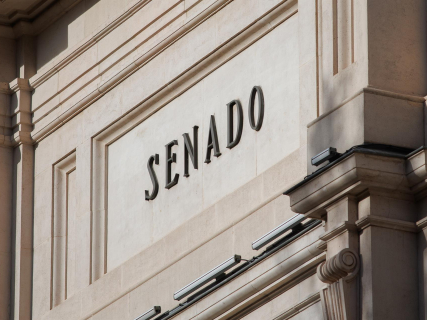

The president of the Senate, Pedro Rollán, has sent three letters to the ministers of Interior, Defense and Foreign Affairs to formally communicate the dates agreed upon by the Senate Table for their appearances regarding the crisis in Ceuta.
The writings are addressed to the Minister of the Interior, Fernando Grande-Marlaska; to the Minister of Defense, Margarita Robles; and to the Minister of Foreign Affairs, European Union and Cooperation, José Manuel Albares. In them, Rollán recalls that on August 6, 2026, a document was registered, with the number 90,049, in which the absolute majority of senators requested to enable the month of August to hold extraordinary sessions of the Interior, Defense and Foreign Affairs committees.
The objective of these sessions is for the heads of the three departments to inform about the situation arising from the recent events that occurred in Ceuta.
Interior, Defense and Foreign Affairs, summoned in August
The Senate Table, meeting on August 7, agreed to enable the month of August and authorize the holding of these extraordinary sessions. According to the letters, the committees were convened for the days 12, 13 and 17 of August, respectively.
Specifically, the letter sent to Grande-Marlaska sets his appearance before the Interior Committee for August 12. The one sent to Margarita Robles indicates the Defense Committee for August 13. And the one addressed to José Manuel Albares points to the Foreign Affairs Committee for August 17.
The Senate maintains that these dates were communicated to the Government and the ministries with due advance notice, without a reasonable justification being communicated that would make the attendance of the summoned ministers impossible.
Rollán rejects that Congress replaces the Senate
The political and legal core of the letters is in Rollán's warning about the role of the Senate in overseeing the Government. The president of the Upper House points out that he became aware of the ministers' intention to request their appearance, at their own request, before the Congress of Deputies to inform about the same matter at the end of August.
Given that possibility, Rollán recalls that parliamentary control does not correspond only to Congress, but to the General Courts as a whole. He cites article 66.2 of the Constitution, which assigns to the General Courts the function of controlling the action of the Government, and article 110, which expressly recognizes the authority of the Chambers and their committees to demand the presence of members of the Executive.
“There is no prevalence” between Congress and Senate
The president of the Senate maintains that the constitutional framework clearly indicates that, once a Chamber requests the appearance of a member of the Government, they are obliged to attend the summons. In this case, he emphasizes, the obligation arises before the Senate.
Rollán also recalls that the Spanish constitutional order does not establish a position of prevalence between the Congress of Deputies and the Senate in the exercise of the function of controlling the Government. To reinforce this thesis, he invokes the ruling of the Constitutional Court 124/2018, of November 14, which stated that both Chambers participate in this function within the bicameral model designed by the Constitution.
Ministers “cannot choose” the Chamber
The letters warn that a subsequent appearance of ministers before Congress cannot be understood as a substitute for the duty to appear before the Senate when the Upper Chamber has previously agreed to require their presence.
According to Rollán, accepting that interpretation would mean leaving it to the Government's discretion to choose the Chamber before which parliamentary control is exercised. In his opinion, this would deprive the constitutional powers of the Senate of effectiveness and alter the institutional balance guaranteed by the Constitution.
The president of the Senate summarizes this position with a central idea: both Congress and the Senate exercise the function of controlling the Government on equal terms and ministers cannot freely choose before which Chamber to appear.
Warning of responsibilities if they do not attend
The writings also include an express warning. Rollán points out that failure to appear on the date and time indicated by the Senate Table, without duly justified cause communicated through official channels, may lead to the adoption of appropriate measures by the organs of the Chamber and the demand for corresponding responsibilities in law.
In that case, the citation and its notification will be considered as carried out and fully effective for legal purposes. Furthermore, it will be recorded in the file and will be forwarded to the Senate Table and, if applicable, to the Board of Spokespersons, so that they can make the corresponding decisions.
The Senate opens the door to the presence of deputies
Rollán closes the letters with an appeal to institutional loyalty. He states that full respect for the constitutional competencies of both Chambers is an inherent requirement for the proper functioning of the constitutional State.
The president of the Senate also adds that the Upper Chamber is open to the presence of deputies during the appearances of the ministers, but maintains the dates agreed upon by the Senate Table. With this formula, he tries to deactivate the argument that the Government may prefer to inform in Congress and, at the same time, reaffirms the Senate's own competence to demand explanations regarding the crisis in Ceuta.
A new institutional clash over Ceuta
The letters from Rollán open a new institutional front between the Senate and the Government amid the crisis in Ceuta. The Upper Chamber, where the PP has an absolute majority, wants the ministers to appear in August and before the appearances that may take place in Congress at the end of the month.
The standoff is not limited to the calendar. The Senate raises a substantive issue: whether the Government can attempt to order its political explanations by first choosing Congress or if it must promptly attend to the request of the Chamber that has already formally activated its control function. For Rollán, the answer is clear: the Executive must go to the Senate because the Constitution does not allow for establishing a hierarchy between the two Chambers in this matter.