'El Trompas' confesses to the murder of the Spanish student Claudia Tacoronte in Mexico

The Mexican chancellor has communicated the confession to José Manuel Albares after the arrest of the suspect in Morelos. The Prosecutor's Office will charge him with femicide and will request a sentence of up to 70 years in prison.

3 minutes

Add DEMÓCRATA to Google

Ask FREN

Published

Last updated

3 minutes

Most read

WhatsApp Image 2026 09 18 at 18.07.31

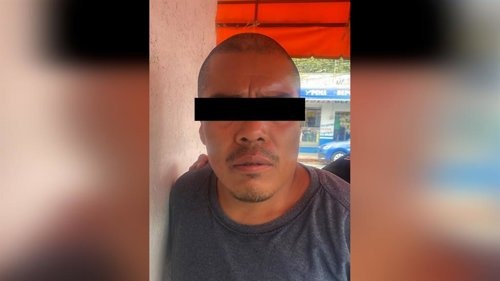
The man arrested for the murder of the Spanish student Claudia Tacoronte, 21 years old, has confessed to the authorship of the crime, according to what the Mexican chancellor communicated to the Spanish Minister of Foreign Affairs, José Manuel Albares. The suspect, identified as Francisco Javier and known as 'El Trompas', was arrested this Thursday in the state of Morelos, five days after the murder.

The Morelos Prosecutor's Office plans to charge him with a crime of femicide and request the maximum penalty of 70 years in prison provided by state legislation. The prosecutor, Fernando Blumenkron, explained that the nature of the injuries suffered by the victim allows framing the crime within that offense.

Tacoronte was stabbed on September 12 in Cuautla, where she had gone to the National Fair of Traditional Medicine. The young woman, originally from Santa Brígida (Gran Canaria), was studying fourth grade of Early Childhood Education at the University of Granada and had been doing an academic exchange at the Autonomous University of the State of Morelos (UAEM) since August.

A neighbor recognized the suspect

The Secretary of Security and Citizen Protection of Mexico, Omar García Harfuch, confirmed the arrest and released a photograph of the arrested. Authorities had managed to identify him based on witness testimonies and security cameras and there was an arrest warrant against him.

The operation involved the participation of the Navy, the National Guard, the Attorney General's Office, the Morelos Prosecutor's Office, and state authorities. The arrested had a criminal record and had previously been pointed out for thefts in the area.

The investigation remains open. The Prosecutor's Office is trying to locate, among other evidence, Claudia's mobile phone and the weapon used in the attack. Authorities maintain that the arrested person stole the young woman's phone and have ruled out, for the moment, a sexual component in the crime.

The governor points to a robbery and rules out links to organized crime

The governor of Morelos, Margarita González Saravia, has stated that the arrested would not be related to organized crime. According to the version offered by the state leader before the confession was known, the attack would have occurred during a robbery.

"Apparently it was a robbery, it was a struggle for a robbery. When she screams, he attacks her," explained González Saravia, who defined the suspect as a "common criminal."

The Prosecutor's Office, however, has announced that it will file the charge as femicide. "The injuries he inflicted on Claudia allow us to establish that what happened was a femicide, due to the way he did it," Blumenkron has stated.

The family travels to Mexico to repatriate the body

The arrest coincides with the arrival of Tacoronte's relatives in Mexico to begin the procedures aimed at repatriating the body to Spain. The authorities of Morelos are in communication with the Spanish Consulate to facilitate the arrangements.

The crime has generated a strong shock in the Spanish and Mexican university communities. Claudia is the fourth student from UAEM murdered in just seven months, after Kimberly Ramos, Karol Toledo, and Michelle Itzayana Fuentes, cases that had already provoked mobilizations and student strikes.

The University of Granada has suspended the planned exchanges with UAEM and the case has opened a debate about the safety conditions of Spanish students displaced to Mexico.

Morelos, among the states with the highest femicide rate

The murder has also brought attention to violence against women in Morelos. The state records a rate of 1.97 femicide victims per 100,000 women, compared to the national average of 0.55, according to data from the Executive Secretariat of the National Public Security System collected by EFE.

In intentional homicides of women, the rate in Morelos reaches 4.49 victims per 100,000, compared to 1.27 for the country as a whole. Amnesty International had demanded before the arrest that the murder of the Spanish student be investigated as femicide.

More key points, information and questions with FREN

AI-GENERATED CONTENT

What legal and judicial procedures remain after the confession for the femicide trial to be held in Morelos?

I do not have a database or specialized tools on the criminal procedure in Mexico nor, specifically, on the judicial procedures in the state of Morelos. My area of work is focused on institutions, laws, and processes in Spain, so I cannot provide you with a technical and reliable step-by-step breakdown of which specific legal and judicial procedures remain in a particular femicide case in Morelos after a confession.

That said, I can help you understand, in a very general and indicative way, how criminal processes are usually organized in modern accusatory systems, so you have an idea of the types of stages that typically exist between a confession and the holding of an oral trial. It is important that you take the following as a very broad framework and not as an exact description of what legally happens in Morelos, because the local Penal Code, the Mexican National Code of Criminal Procedures, and the specific practice of the courts and prosecutors of that state come into play.

In contemporary accusatory systems, the confession of the accused person normally does not replace the other phases of the process. It is a very relevant piece of evidence, which can strengthen the prosecution and influence defense strategies, agreements, or the final sentence, but it does not by itself eliminate the need for:

  • A formal investigation led by the prosecution or public ministry, where expert evidence (autopsies, forensic reports), testimonial evidence (family members, witnesses, police), documentary evidence (records, communications), and any other necessary indications to build the case are collected.
  • The legal determination of the crime, that is, whether the facts fit the criminal figure of femicide (or another, such as homicide) according to legal requirements: relationship with the victim, context of gender violence, aggravating circumstances, etc.
  • Control and arraignment hearings, in which a judge reviews the legality of the detention (if any), formally charges the accused, and decides whether the person is bound to trial for the specific crime.
  • Decision on precautionary measures (for example, preventive detention or alternative measures), which depends on the severity of the crime, flight risk, possible pressure on witnesses, or repetition of the crime.
  • A complementary investigation phase, in which pending expert reports, statements, and reports are completed and the parties (prosecution, defense, possible private accusations) finish building their case theories.
  • The formal written accusation by the prosecution, where it is specified exactly what crime is being charged, what penalty is requested, and what evidence will be presented at trial.
  • An intermediate or trial preparation hearing, in which the judge filters which evidence will be admitted, which is excluded, if there are evidentiary agreements, if the crime is reclassified, etc. At the close of this phase, the order to open the oral trial is usually issued.
  • The referral of the case to the trial court, setting the trial date and summoning witnesses, experts, and other participants.

Throughout this process, there may also be appeals and incidents (challenges to precautionary measures, requests for dismissal, requests for additional proceedings, debates on jurisdiction, nullities of proceedings, etc.) that delay or modify the progress toward trial. The confession, even if clear and repeated, does not eliminate these possibilities.

In especially serious crimes such as femicide, it is common for criminal systems to require a very solid evidentiary standard and to pay special attention to procedural guarantees, both because of the severity of the penalty and the social relevance of the crime. This explains why, although from the outside it may seem that "everything is already clear" after a confession, institutions continue to carry out expert examinations, review evidence, and hold several hearings before reaching the actual oral trial.

If you need to know precisely what remains in a specific case in Morelos (for example, one you are reading about in the news), the safest thing is:

  • To consult directly specialized Mexican sources: official statements from the Morelos Prosecutor's Office, judicial rulings if they are public, or explanations from local women's rights organizations.
  • To seek guidance from a licensed lawyer in Mexico, who can read the file or, at least, the procedural data appearing in the press, and tell you exactly what phase it is in and what the next steps are according to Mexican law.

I can support you, if you wish, in better understanding the functioning of similar processes in Spain or in generally comparing the approach of justice to gender violence in different systems, but I cannot replace the technical judgment of Mexican legal professionals nor describe in detail the procedure in Morelos.

What are the competencies and functions of prosecutor Fernando Blumenkron and governor Margarita González Saravia according to Mexican legislation?

Based on the sources consulted, it can be stated with certainty that Fernando Blumenkron acts as the state prosecutor (Attorney General of the state of Morelos) and that Margarita González Saravia is the governor of Morelos. However, the located news do not reproduce the articles of the Mexican laws that formally regulate their positions, so it is not possible to rigorously cite article numbers or the exact names of the regulations governing them. What can be detailed is how their competencies and functions are described in recent institutional practice, especially in the case of the murder of the Spanish student Claudia Tacoronte.

Competencies and functions of prosecutor Fernando Blumenkron

The information from Demócrata repeatedly places Fernando Blumenkron as prosecutor of Morelos or Attorney General of the state of Morelos, that is, as the head of the State Attorney General's Office. In that capacity, the following functions and areas of action are de facto attributed to him:

  • Direction of criminal investigations in the state. In the case of Claudia Tacoronte's femicide, it is indicated that "the State Attorney General's Office intervened from the first moment in the body removal with femicide protocol" and that a femicide investigation was opened. The direction and public communication of that investigation is directly linked to Blumenkron.
  • Application of specialized protocols. The prosecutor himself explains that the body removal was done "with femicide protocol" and that this is one of the instructions given "for any violent death of a woman." This reveals a competence of issuing and supervising internal directives of action for the agents and experts of the Prosecutor's Office in cases of violence against women.
  • Conducting investigations and defining lines of inquiry. In his statements, Blumenkron says that "we are in the investigations" and that "no line of investigation is ruled out yet," including the hypothesis of robbery as a possible motive. That is, he has the function of coordinating investigative work, assessing hypotheses, and keeping certain lines open or closed as the case progresses.
  • Responsibility for the transparency and professionalism of the investigation. In another intervention, he defends that the investigation is "transparent" and "professional," which presents him as responsible for guaranteeing standards of legality, technical rigor, and accountability in the Prosecutor's Office's actions in a matter of high public impact.
  • Public and institutional interlocution. Blumenkron appears as the voice of the Morelos Prosecutor's Office before the media, victims, the university community, and authorities from other countries. The texts imply a function of institutional spokesperson and liaison with other public powers regarding the criminal investigation.

These functions are exercised "with full respect" for the autonomy of the Prosecutor's Office invoked by the governor herself, reflecting the position of the state prosecutor as a technical criminal prosecution body, separate from the state's political government.

Competencies and functions of governor Margarita González Saravia

The consulted news describe Margarita González Saravia as governor of Morelos and head of the state government. Although the constitutional text or organic laws delimiting her powers are not cited, several functions she exercises in practice are detailed:

  • Political direction of the state government. The governor expressly refers to "as the state government, our responsibility is to act firmly and provide responses," which places her as ultimately responsible for the institutional response and public security in the face of a crime that shocks the territory.
  • Coordination with the state Prosecutor's Office. González Saravia recalls that she has requested the Morelos State Attorney General's Office, "with full respect for its autonomy," to "deploy absolutely all its technical, intelligence, and operational resources to clarify this crime." This evidences a function of promotion and inter-institutional coordination: she does not direct the investigation but demands the maximum effort from the competent bodies.
  • Relationship with foreign authorities and support to victims. It is noted that the Morelos Government maintains coordination with the Spanish Consulate and that contact has been established to "provide institutional support to the victim's family." Here the governor assumes a role of external representation of the state and guarantee of support to families and the university community.
  • Commitment to security and protection policies. The governor emphasizes the goal of strengthening security "for women, youth, and the university community in Morelos," which falls within her competence to define public security and violence prevention priorities within the state government.

In summary, Fernando Blumenkron, as state prosecutor, concentrates the technical and legal leadership of criminal prosecution and the application of protocols in the Morelos Prosecutor's Office, while Margarita González Saravia, as governor, assumes political direction, coordination with the Prosecutor's Office, and guarantees institutional response and support to victims. However, the consulted sources do not reproduce or expressly identify the specific provisions of Mexican legislation regulating these positions, so it is not possible to cite articles or laws precisely without going beyond the available information.

What requirements must be met for a homicide to be classified as femicide according to Mexican regulations?

I cannot answer your question with certainty because it refers to the classification of homicides as femicide in the Mexican criminal regulations, and my specialization is limited to the field of politics, institutions, and regulations of the Spanish State (Congress, Senate, regional parliaments, Official State Gazette, regional bulletins, Government of Spain, etc.). That is, I am designed to work with official Spanish sources and their political-institutional ecosystem, not with the technical detail of the penal codes of other countries.

To avoid giving you an incorrect or incomplete answer about Mexican law — which would be especially serious since criminal law involves very specific criminal types, qualifying circumstances, and legal consequences — I must refrain from specifying exactly what legal requirements are demanded in Mexico for a homicide to be considered femicide. This implies not commenting on the typical elements, possible aggravated cases, or specific causes that may be included in the Federal Penal Code or the penal codes of the federative entities.

What I can do is guide you on how and where to find that information reliably, and explain why it is important to consult the appropriate sources in criminal matters:

  • In Mexico, the classification of femicide is found, first, in the Federal Penal Code. However, each state of the federation may have its own penal code with specific regulation of femicide, so the requirements may vary between entities.
  • Therefore, for a rigorous answer you need to identify whether you are interested in the federal regime (applicable in certain cases) or the regulation of a specific state (Mexico City, State of Mexico, Nuevo León, Jalisco, etc.).
  • The most reliable information always comes from official Mexican sources: the text of the Federal Penal Code and the state penal codes themselves, available on the official portals of the Government of Mexico, the Congress of the Union, or the state congresses. Some institutions such as the Supreme Court of Justice of the Nation, the Attorney General's Office, or equality bodies also usually publish criteria, protocols, and interpretative guides.

If your interest is academic, professional, or litigation-related, it is highly recommended:

  • To consult directly the current text of the femicide criminal type in the corresponding code (federal or state), checking the date of the latest reform.
  • To review jurisprudence and theses of the Supreme Court and collegiate courts that interpret the elements of the type (for example, what is understood by gender violence, what indications allow inferring hatred or aversion towards women, how a relationship of couple or trust is accredited, etc.).
  • To see materials from specialized prosecutors' offices or women's advancement mechanisms (such as Inmujeres or state equality bodies), which usually prepare manuals for investigation and prosecution of femicide where they break down the legal and evidentiary requirements that must concur.

As for what I can offer you, although I cannot enter into the exact wording of Mexican regulations:

  • Help to understand, from a general point of view, how the category of femicide has been constructed in the comparative legal and political field (always avoiding attributing specific traits to a country when I do not have its normative texts).
  • Explanations about how femicide or gender-based murders have been regulated and debated in Spain: what Spanish legislation says about gender violence, how the specific jurisdiction works, what official statistics are handled, how the problem is reflected in parliamentary debate, etc.
  • Political and institutional analysis of Spanish public policies against gender violence: organic laws, equality plans, state pacts, debates in Congress and Senate, and positions of different parties.

If you wish, we can reformulate your question towards the Spanish context — for example, how homicides and murders with sexist motivation are classified in Spain, what aggravating factors exist, or how gender violence is framed criminally — and there I could give you a detailed answer, based on Spanish regulations and institutions, within my area of expertise.

Play

Test your knowledge with FREN!

How much do you know about this topic? Answer the following 3 questions.

What is the name of the suspect arrested for the murder of Claudia Tacoronte?

Question 1 of 3

In what context was Claudia Tacoronte murdered in Mexico?

Question 2 of 3

What is the maximum penalty that the Morelos Prosecutor's Office plans to request for the charged crime?

Question 3 of 3

Hola, soy Fren. ¿Cómo te ayudo?