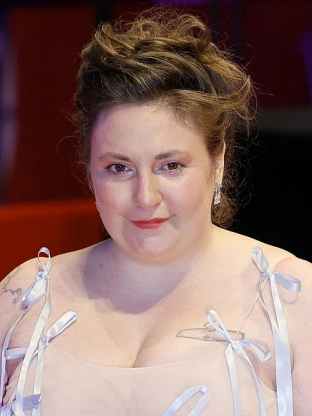
Lena Dunham becomes a mother through surrogacy and social media compares her to 'The Handmaid's Tale'

Lena Dunham explains in 'Vogue' how she experienced surrogacy and the birth of her daughter

2 minutes

lena dunham gestacion subrogada

lena dunham gestacion subrogada

Add DEMÓCRATA to Google

Ask FREN

Published

Last updated

2 minutes

Most read

For many people, it will have been the fall of a myth. Lena Dunham, creator, screenwriter, and star of Girls, has announced that she has become a mother through surrogacy. The American actress, who has become one of the faces associated with contemporary feminism due to her role as Hannah Horvath and the discourse developed over the years around women and their bodies, has shared the process in the first person in Vogue.

Dunham and her husband, musician Luis Felber, have welcomed a girl whose name they have not made public. In the article published by the magazine, the actress explains how she experienced the journey to motherhood and the bond she established with the woman who carried her daughter. The account, far from being limited to announcing the birth, goes into details about the pregnancy, the relationship with the surrogate, and the moment of delivery.

The actress recounts that, after her fertility issues, she met the woman who would end up being the surrogate for her daughter. Dunham shares that she expected to experience feelings of jealousy upon seeing her make possible what she could not do herself, but she assures that those feelings did not arise and that she developed a relationship of admiration and affection towards her.

The text dedicates a good part of its narrative to the wait for the birth and the preparations to welcome the girl. Dunham also describes the moment of delivery and her first encounter with her daughter, presented as the culmination of a process that the writer had lived with uncertainty and expectation.

Precisely that way of narrating the experience is one of the elements that has provoked criticism. The harshest reactions question whether a woman who has been identified for years with feminist positions can present surrogacy from such a positive perspective.

Social media turns to 'The Handmaid's Tale'

One of the public figures who has criticized the decision has been director Chloe Wallace, who has publicly expressed her "deep sadness" and "total disagreement" with Dunham's decision. Her criticism raises the question of whether surrogacy can be considered compatible with certain conceptions of feminism, especially when it involves another woman carrying the pregnancy for the future parents.

Among the reactions that the announcement has provoked, there is also a reference to The Handmaid's Tale, the novel by Margaret Atwood and its subsequent television adaptation. Some users on X have used the dystopia as a comparison to question Dunham's account of surrogacy.

One of the criticisms spread on social media precisely points out that the text published by Dunham could be confused with a scene from Atwood's fiction, before emphasizing that it is a real account written by the actress herself. The comparison has thus become one of the most repeated elements of the negative reactions to the announcement.

More key points, information and questions with FREN

AI-GENERATED CONTENT

What is the legal framework for surrogacy in the United States and Spain?

Surrogacy (or gestational surrogacy) presents very different legal frameworks in Spain and the United States. In Spain, there is a clear prohibition of surrogacy contracts, reinforced in recent years both by regulations and case law. In the United States, however, the information available from the sources consulted only allows us to state with certainty that the practice is permitted in some states and that there is no uniform treatment throughout the country.

Spain: prohibition of the contract and residual filiation routes

The basic pillar of the Spanish regime is the Law 14/2006, of May 26, on assisted human reproduction techniques. Its article 10, as recalled by the Instruction of April 28, 2025, from the Directorate General of Legal Security and Public Faith (BOE), establishes that:

  • The contract by which gestation is agreed upon, with or without payment, by a woman who renounces maternal filiation in favor of the contracting party or a third party, is null and void.
  • The filiation of children born by surrogacy is determined by birth (the legal mother is the woman who gestates).
  • The action to claim paternity of the biological father is reserved according to general rules.

On this basis, surrogacy is not a crime in itself, but any contract that attempts to organize it lacks legal validity. The practice is also normatively treated as a form of violation of women's rights: the 2025 Instruction cites Organic Law 1/2023, which considers surrogacy a form of violence against women, and European resolutions along the same lines.

Registration in the Civil Registry of minors born abroad

Despite the nullity of the contract, in practice many Spanish people resort to countries where surrogacy is legal. The central problem then shifts to the registration of minors. The new Instruction of April 28, 2025 repeals and tightens the regime established by the 2010 and 2019 instructions:

  • The previous instructions that allowed, in certain cases, the registration in Spain of filiation derived from foreign surrogacy judgments are rendered ineffective.
  • It is ordered that under no circumstances shall the following be accepted as valid titles to register birth and filiation: foreign registry certification, simple declaration with medical birth certificate, or foreign court judgment recognizing filiation derived from the surrogacy contract.
  • Pending applications at the date of the Instruction will not be processed; minors may travel to Spain with local documentation, but filiation must be determined through ordinary Spanish legal channels (biological filiation of the Spanish parent and subsequent adoption, or foster care).

This solution follows the line set by the Supreme Court Judgment 1626/2024, cited in the Instruction, which denies recognition of effects to a foreign surrogacy judgment, emphasizing that:

  • The best interests of the child cannot be based on the surrogacy contract nor on filiation in favor of the intended parents provided for in foreign legislation.
  • The protection of the child must be articulated through ordinary filiation routes (determination of biological paternity, adoption, foster care), not through validation of the null contract.

At the same time, case law recognizes the possibility of attributing biological paternity. An example is the resolution of the Superior Court of Justice of Murcia commented by Demócrata (link), which confirms the paternity of the Spanish parent of a child born by surrogacy outside Spain, ordering its registration in the Civil Registry, but without legitimizing the surrogacy contract or the foreign contractual filiation.

United States: partial authorizations and strong heterogeneity

The sources accessible from Spain do not provide an exhaustive legal map of surrogacy in the United States, but do offer some relevant elements:

  • Various international reports (for example, about the German politician Jens Spahn case) indicate that surrogacy is permitted in some states in the United States, which creates tensions with European countries where it is prohibited and yet must recognize family situations created abroad (Demócrata).
  • Spanish press analyzing surrogacy globally highlights that Americans and Canadians are among the usual destinations for European citizens who resort to this route, precisely because there are legal frameworks that allow and commercially structure the sector in part of the territory.

However, the consulted databases do not offer a systematic summary of:

  • Which states have detailed laws for compensated gestational surrogacy.
  • Which states allow it only altruistically or under limited conditions.
  • Which jurisdictions prohibit or sanction surrogacy contracts.
  • How judicial filiation orders or typical contract contents are generally configured in states that recognize them.

Given this limitation of available sources, it can only be documented that:

  • There is no uniform approach in the United States: the practice is legal and used in certain states, while in others the situation is much more restrictive or outright prohibitive, which drives so-called “reproductive tourism.”
  • This diversity clashes with systems like the Spanish one, where contracts are considered null and void and the route of registry recognition has been closed to foreign rulings that validate them, channeling child protection through ordinary routes (biological filiation, adoption, foster care).

For a detailed analysis of the U.S. framework (categories of states, types of filiation orders, and contractual structure), it would be necessary to consult specialized reports from organizations such as the American Bar Association or detailed state compilations, which do not appear in the consulted databases.

What powers do health authorities have regarding the regulation of surrogacy?

In Spain, surrogacy is not recognized as a permitted assisted human reproduction technique and is practically integrated into the realm of civil contracts contrary to public order. However, health authorities do have very relevant powers over the environment in which these practices might be attempted: assisted reproduction clinics and assisted human reproduction techniques regulated by Law 14/2006 and its regulatory development.

The basic framework is given, first, by Law 14/2006, of May 26, on assisted human reproduction techniques (text in the BOE), which determines which techniques are lawful and under what conditions they may be applied. This is supplemented by:

  • Royal Decree 413/1996, of March 1, which sets the technical and functional requirements for the authorization and accreditation of assisted reproduction centers and health services (link).
  • Royal Decree 1030/2006, of September 15, which establishes the common service portfolio of the National Health System and its update procedure (link).
  • Subsequent regulations creating support bodies, such as Royal Decree 42/2010, which regulates the National Commission of Assisted Human Reproduction (link).

State Competences (Ministry of Health)

In this area, the Ministry of Health basically exercises general planning functions and sets the basic regulations:

  • Define the common service portfolio of the SNS: according to Royal Decree 1030/2006, the Ministry proposes and the Government approves, after agreement of the Interterritorial Council, which techniques, technologies, or procedures are included or excluded from the portfolio. This effectively allows determining that surrogacy is not part of the public system's services.
  • Evaluate new techniques: new techniques and procedures must undergo evaluation by the Ministry before being integrated into the portfolio, considering criteria of safety, efficacy, cost, and utility. This establishes an entry control for assisted reproduction techniques that currently acts as a filter against practices like surrogacy.
  • Issue basic regulation of centers and techniques: through royal decrees such as 413/1996 and general health service organization rules, minimum requirements are established for structure, equipment, personnel, health controls, and traceability in gamete banks, artificial insemination units, and in vitro fertilization centers.
  • State advisory commissions: the National Commission of Assisted Human Reproduction issues scientific-technical and ethical reports and recommendations that guide the interpretation and development of regulations, including criteria on how permitted techniques should fit in relation to practices not admitted in Spain.

Competences of the Autonomous Communities

Within this basic state framework, health execution and daily control fall to the autonomous health authorities, who play a key practical role:

  • Authorization of centers and services: Law 14/2006 itself provides that assisted reproduction techniques may only be performed in centers or health services duly authorized by the corresponding health authority. Royal Decree 413/1996 adds that, “in accordance with the competences of the Autonomous Communities, the responsible health authority shall authorize” centers that meet the requirements.
  • Accreditation and certification: the communities specify and verify, in their administrative procedures, that centers meet personnel, facilities, equipment, quality, and safety standards required by basic regulations.
  • Inspection and control: it is the responsibility of autonomous health authorities to periodically inspect assisted reproduction centers, verify compliance with donor and user study protocols (regulated at the state level), health controls over samples, and proper management of clinical histories and sensitive data.
  • Sanctioning power: when a center deviates from permitted techniques, fails to meet technical requirements, or violates health legislation, communities may impose sanctions (fines, suspension or withdrawal of authorization, closure of the center), applying their general health regulations.
  • Development of protocols and guidelines: within the limits of basic regulations, autonomous health services may approve instructions, clinical protocols, and referral criteria that regulate how assisted reproduction techniques are applied in practice in the public network and in contracted private centers.

Specific scope regarding surrogacy

Since surrogacy is not admitted as a permitted technique in Spain, health authorities cannot authorize surrogacy programs nor finance them as a health service. Their competences are rather focused on:

  • Preventing the offering or practice of surrogacy in authorized centers, using their inspection and sanction powers when these clinics, under the cover of lawful assisted reproduction techniques, might be organizing or facilitating practices contrary to the legal system.
  • Demanding transparency and truthfulness in health information and advertising, avoiding presenting as “treatments” what would actually be surrogacy agreements not legally recognized.
  • Raising to ethical committees and the National Commission of Assisted Human Reproduction the borderline issues between permitted techniques and non-admitted practices, to set criteria for professional conduct and admissibility of certain procedures.

In summary, health authorities do not have competence to “regulate” surrogacy as such (which lies outside the catalog of permitted techniques), but they do have broad normative, authorization, inspection, and sanction powers over clinics and assisted reproduction techniques, which allow them to prevent and pursue the development or concealment of surrogacy practices prohibited by Spanish law within the health sector.

What have been the main milestones in Lena Dunham's professional career?

I cannot rigorously produce a detailed and updated chronology of Lena Dunham's professional career because my area of expertise and the sources I am connected to are focused on Spanish politics and institutions, not on international entertainment or the careers of cultural figures outside that framework. To properly answer your request, I would need systematic access to biographical, filmographic, and press databases of the U.S. audiovisual industry, which are not part of the information ecosystem I primarily work with. For that reason, if I tried to reconstruct today “the main milestones” of her career, I would be forced to speculate or rely on unverified memories, which would go against the reliability I must maintain.

My design is oriented towards deep, verified, and contrasted research on the Spanish political and public space: laws, parliamentary initiatives, debates in the General Courts and regional parliaments, government and administration activity, as well as the role of parties, senior officials, organizations, and other relevant actors in the public sphere. I can also connect these elements with media coverage in the press and other open sources, as long as there is a clear political, institutional, or regulatory dimension. That is, if a person, company, sector, or organization enters the public debate in Spain, is linked to a law, or participates in political processes, then I am prepared to track and explain what has happened, with what context and implications.

In the specific case of Lena Dunham, she is a creator and actress mainly linked to the U.S. audiovisual industry. Although her works may have a political or social component and have sparked cultural debates, her career is not directly inserted into the Spanish institutional circuit (Congress, Senate, regional governments, BOE, legislation, etc.), which is precisely the core of information I handle most precisely. Any biographical summary I tried to offer would resemble more what you could obtain in a generalist encyclopedia or a standard film database, but without guarantees of updating or accuracy in dates, awards, executive production, contracts, or recent controversies.

Since my priority is to avoid detail errors — for example, attributing a project that was not produced, omitting a relevant work, confusing the release year of a series, or the type of agreement with a platform — it is preferable to be transparent: I am not the ideal tool to reconstruct a professional biography in the international entertainment field when there is no clear anchor with Spanish politics. For that purpose, you will find it more useful to turn to specialized databases (such as professional filmographies), extensive interviews, profiles in cultural media, or official pages of festivals, production companies, and networks with which she has worked.

Where I can be useful is, for example, in tasks such as the following:

  • Analyzing professional careers of Spanish political actors: deputies, senators, ministers, regional presidents, senior administration officials, or party leaders, including their main parliamentary milestones, positions held, government responsibilities, and participation in bills or public policies.
  • Explaining the regulatory and parliamentary impact of public figures who participate in political debate in Spain, whether artists, athletes, activists, or other celebrities, as long as their activity is linked to legislative initiatives, hearings, or public campaigns that have institutional reflection.
  • Contextualizing cultural debates when connected to Spanish laws or policies, such as controversies about censorship, freedom of expression, gender equality, audiovisual platform regulation, labor rights in the cultural sector, or public funding of culture.
  • Helping you understand and follow the careers of cultural officials in Spain: Ministers of Culture, regional counselors, directors of public cultural bodies, etc., detailing their main decisions, policies promoted, budgets, and parliamentary debates in which they have participated.

If you are interested in something along those lines — for example, the career of a Minister of Culture in Spain, or how institutional support for the audiovisual sector has been articulated in recent years — I can prepare a structured summary, with the most relevant milestones and key normative and parliamentary references. I can also help you compare political careers, analyze how a certain profile has accumulated responsibilities, and explain how those milestones are reflected in the BOE, session diaries, or Spanish political press.

If you want, reformulate your question towards an actor or topic with a clear connection to Spanish politics or institutions and I will be able to develop a detailed and useful response within that framework, always maintaining the same level of depth and length you are seeking for your content.

Play

Test your knowledge with FREN!

How much do you know about this topic? Answer the following 3 questions.

How has Lena Dunham become a mother according to the public announcement?

Question 1 of 3

What reaction has Lena Dunham's announcement about her motherhood sparked on social media?

Question 2 of 3

What feeling did Lena Dunham expect to experience towards the gestational carrier but ultimately did not feel?

Question 3 of 3

Hola, soy Fren. ¿Cómo te ayudo?