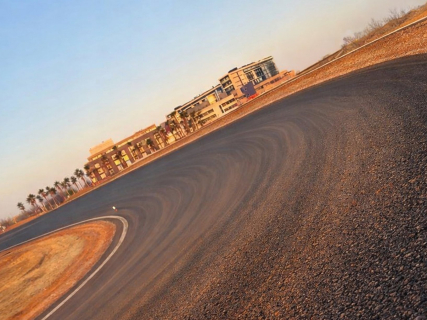
How to get to the F1 in Madrid: Metro, access and traffic cuts

How to get to the F1 in Madrid will depend on the stand indicated on each ticket. Madring is divided into two areas without internal communication and private vehicles will not be able to access the immediate surroundings of the circuit, where there will be cuts and controls between September 10 and September 14.

Add DEMÓCRATA to Google

Ask FREN

Published

Last updated

3 minutes

Most read

Elecciones 29N · Encuestas

La media de las encuestas

Media a 11 de noviembre de 2026 · 15 institutos

  • PP31,5 %
  • PSOE26,8 %
  • Vox19,1 %
  • Frente Amplio6,2 %
  • ERC2,5 %
01020304050ene 2024jul 2024ene 2025jul 2025ene 2026jul 2026

Media del último estudio de cada instituto en 30 días y su evolución semanal desde el 23J. Partidos con al menos un 2 %.

Todas las encuestas

Elecciones generales del 29 de noviembre · Demócrata

The circuit Madring is divided into a north zone and a south zone that operate independently. Therefore, the first thing to do before choosing between Metro, Cercanías, or bus to attend the F1 Grand Prix of Madrid is to check in which sector our ticket is located. It is not possible to move from one zone to another once inside the venue. Each ticket has assigned a specific access and a specific gate, and after leaving the corresponding zone, re-entry will not be allowed.

The Spanish Grand Prix takes place from Friday, September 11, to Sunday, September 13, in the area of Ifema and Valdebebas. The City Council estimates that around 345,000 people will pass through the venue during the three days.

Feria de Madrid for the south zone and Valdebebas for the north

The organization recommends using the Feria de Madrid Metro station, on line 8, to access Madring Sur. This area includes sections 1A, 1, 2, 2A, 3, 3A, 4, and 5.

For Madring Norte, where sections 6, 6A, 7, 8, 8A, 9, 9A, 10, 10A, 11, 12, 13, 14, 15, 15A, 16, and 17 are located, the main option is the Valdebebas Cercanías station, belonging to line C-1.

These are the recommended connections:

Zone or access Recommended transport Main station Alternatives
Madring Sur Metro Feria de Madrid, line 8 Mar de Cristal, lines 4 and 8
Madring Norte Cercanías Valdebebas, line C-1 San Lorenzo or Canillas, Metro line 4
Access from the center Metro Nuevos Ministerios and line 8 Transfer at Mar de Cristal
Access by private vehicle Car plus shuttle Reserved parking at the Metropolitano Assigned spaces at the Real Madrid Sports City


From Canillas, it is about a 20-minute walk to the circuit. The estimated route from Mar de Cristal is 18 minutes and from San Lorenzo, another 20 minutes. Feria de Madrid is located next to the accesses of the south zone.

To arrive by Cercanías from Atocha, Recoletos, or Nuevos Ministerios, you will need to connect with C-1 by transferring at Chamartín-Clara Campoamor.

Buses and shuttles to get to Madring

The ordinary offer of buses includes lines 120, 122, 104, 171, T11, 87, 172SF, 125, and 172 for the south zone. The north zone and its fan zone are connected by lines 171, 174, and N28.

The main entrance of Ifema is served by lines 73, SE709, 122, 828, and 112. The device also includes shuttles from Plaza de Castilla, Canillejas, Avenida de América, and the Metropolitano stadium.

Metro, Cercanías, and EMT will reinforce their services. The City Council recommends checking for possible incidents and last-minute changes before starting the journey.

There will be no free parking near the circuit

The general public will not be able to approach the circuit by car to look for parking. Access to the inner crown will be restricted and parking will also not be allowed on the streets near Ifema.

The organization has enabled complementary parking at the Metropolitano Stadium and the Real Madrid Sports City. Spaces must be reserved in advance and will be connected to Madring via shuttles.

The municipal plan includes 4,320 spaces for the general public and another 150 for people with reduced mobility. The announced schedule for these parking areas is from 7:00 to 22:00 during the three days of the event.

There will also be specific areas for taxis and VTC, but these vehicles will not be able to circulate freely around the perimeter. The pick-up and drop-off of passengers must be done at authorized points.

Traffic cuts from September 10 to 14

The cuts mainly affect Ribera del Sena, Vía de Dublín, Francisco Umbral and several roundabouts located around the venue. Alejandro de la Sota will have only one lane open, provisionally enabled in both directions.

Affected road Main restriction
Ribera del Sena Cut between the Luxembourg roundabout, the Edinburgh roundabout, and the M-40
Vía de Dublín Cuts between Edinburgh, Ariadna, and the Sintra roundabout
Francisco Umbral Cuts and limitations between Vía de Dublín and the nearby roundabouts
Alejandro de la Sota One lane closed; the remaining one will operate in both directions
M-40, M-11, and M-12 Possible preventive cuts at access points if saturation occurs


Between September 11 and 13, a controlled access inner crown will be active. Private vehicles without accreditation, cars looking for parking, unauthorized workers, ordinary delivery vehicles, and taxis and VTC outside the permitted routes will not be allowed to enter.

If congestion problems occur, the Municipal Police may close entries from kilometers 5, 6, and 7 of the M-40, exits 5 and 7 of the M-11, and the connection of the M-12 with the service road of the M-11.

Residents of Las Cárcavas will need accreditation

The Cárcavas will have a special protection area to prevent the vehicles of attendees from occupying its streets. The Municipal Police will control the access points and residents must show the accreditation distributed by the organization.

Vehicles of accredited neighbors, emergency services, home assistance, and authorized suppliers will be allowed to enter. Taxis and VTC will only have access when transporting residents who can prove they live in the area.

More key points, information and questions with FREN

AI-GENERATED CONTENT

What is the current status of the processing of special mobility measures for major sporting events in Madrid and what are the next legislative steps?

As of today, there is no “Law on special mobility measures for major sporting events in Madrid” either in the Community of Madrid or in the City Council, as an advanced monographic project in processing. Mobility management relies on existing regulations (mainly ordinances and decrees) and specific plans approved on a case-by-case basis. There is a regional bill on major events that includes a mobility article, still in a very early phase.

1. What regulation is actually in process

In the Assembly of Madrid, the following bill has been registered:

  • PROP.L-11/2026, from the Más Madrid Parliamentary Group, on the protection of public resources, neighborhood welfare, and sustainability in the face of major events with tourist and sporting impact in the Community of Madrid (chamber: Assembly of Madrid; type: bill).

It was qualified and admitted for processing on 06/12/2026, remaining in the state of admitted initiative and pending ordinary parliamentary processing. The text, available on the Assembly's website (PROP.L-11/2026 file), broadly regulates major events (financing, noise, social return, sanctions, etc.).

Regarding strictly mobility matters, article 6 sets limits on closures of public roads and livestock routes, requires guaranteeing access to neighborhoods and basic services, and prohibits occupations of public roads that “clog” districts during long periods of setup or dismantling. That is, it is not a mobility law in the strict sense, but it does introduce specific mobility and access restrictions associated with major events.

Therefore, the “processing” of special mobility measures as such is concretized, at the legislative level, in this general bill on major events, still in the initial phase of its course in the Assembly.

2. Expected next legislative steps

Since PROP.L-11/2026 has already been admitted for processing, the expected next parliamentary steps in the Assembly of Madrid are:

  • Publication in the Chamber's Bulletin of the bill with its explanatory statement and full articles.
  • Opening of the amendment period:
    • Overall amendments (if any group wants to return or replace the text).
    • Amendments to the articles, including article 6 on mobility and access.
  • Committee debate (likely the committee competent in transport, infrastructure, or interior), with:
    • Defense of the text by the proposing group.
    • Defense and voting on amendments.
    • Drafting of a committee report.
  • Debate and vote in the Plenary of the Assembly on the report, with the possibility of particular votes from groups that disagree with the final wording.
  • If approved, promulgation by the Presidency of the Community and publication in the BOCM, from which point the law would come into force according to its final provision (with possible deferred terms for some articles, such as the canon or social return).
  • Afterwards, it would be up to the regional Government to approve the regulatory development (decrees or orders) that detail, for example, technical criteria for road closures, coordination with municipalities, or evaluation parameters for mobility plans.

3. What is already in force and operational

While this initiative is processed, the special mobility measures for major sporting events in Madrid are mainly managed through:

  • The Madrid Sustainable Mobility Ordinance, which requires promoters of major events to submit a mobility plan approved by the Directorate General for Traffic Management and Surveillance, as the City Council reminds (note on the Mobility Management Center).
  • Specific special mobility plans for each event, approved by the Plenary or the Governing Board, such as the plan for the Formula 1 Grand Prix (F1 mobility plan) or the arrangements for the NFL at the Bernabéu or Pride events.
  • Arrangements by the Regional Transport Consortium and Metro de Madrid (reinforcements of up to 250% on Metro for the F1: Consortium note) and free special EMT services for grand prix and other events.

In summary, today the mobility measures for major sporting events in Madrid are applied through this already existing regulatory and operational framework, while the bill PROP.L-11/2026, still in its first processing phase, would aim to establish a broader regional framework — including rules on road closures and neighborhood access — if it finally passes the parliamentary debate and is approved.

What are the competencies of the Madrid City Council regarding traffic and mobility regulation during international events?

The Madrid City Council has broad powers to regulate traffic and urban mobility during international events (summits, major sporting competitions, visits by heads of state, etc.), always within the framework of state traffic legislation and its own Sustainable Mobility Ordinance. These powers allow it to approve special mobility plans, close and pedestrianize streets, create restricted access zones, coordinate municipal public transport, and sanction infractions occurring in the city.

Basic legal framework: State and municipality

The Constitution assigns exclusive competence over motor vehicle traffic and circulation to the State. In development of this, the consolidated text of the Law on Traffic, Motor Vehicle Circulation, and Road Safety (Royal Legislative Decree 6/2015) establishes, in its article 7, municipal powers. That provision, cited in a BOE resolution related to a traffic agreement, recalls that municipalities are responsible, among other functions, for:

  • Regulation, ordering, management, surveillance, and discipline of traffic on urban roads under their ownership, including reporting infractions and imposing sanctions when not attributed to another administration.
  • Closure of urban roads when necessary.
  • Restriction of circulation to certain vehicles on urban roads for environmental reasons.

These generic powers are those the City Council deploys and specifies, in Madrid, through its own mobility regulations (Sustainable Mobility Ordinance and its amendments) and specific operational arrangements for major events.

Sustainable Mobility Ordinance and mobility plans

The Madrid City Council has established a Sustainable Mobility Ordinance, updated in 2026, which articulates measures such as low emission zones, restrictions on more polluting traffic, and specific mechanisms for major events and emergencies. According to an official municipal note, since the approval of this ordinance, the following has been introduced:

  • A mobility plan mechanism for large-scale mass events: promoters of major events must submit a mobility plan, which must be approved by the Directorate General for Traffic Management and Surveillance of the City Council.
  • The obligation to coordinate in that plan the different modes of transport (urban bus, metro, taxi, VTC, accessibility for people with reduced mobility, etc.) and to provide sufficient resources for attendees.
  • Supervision of these plans by the Mobility Management Center (CGM), which operates 24 hours a day and coordinates mobility agents, Municipal Police, and other urban services, and is specifically used as a key tool in “security arrangements (international summits, visits by heads of state, etc.)”.

This ordinance is also the basis for low emission zones and access restrictions to certain vehicles, applied both ordinarily and, in a reinforced or adapted manner, during certain events of special impact.

Operational competencies in major events and international milestones

In practice, during international events (Pope's visit, global sports celebrations, major congresses or events like Formula 1 at IFEMA Madrid), the City Council exercises its powers as follows:

  • Approval of specific mobility plans: the Governing Board is informed and the Urbanism, Environment, and Mobility area approves the plan regulating access, exits, parking, reinforced public transport, and security arrangements. A detailed example is the mobility plan for the Formula 1 Grand Prix at IFEMA, described in an official note from the Madrid City Council (municipal note).
  • Road cuts and closures: the City Council can close to ordinary traffic wide urban perimeters for several days, establishing mobility rings (filtered or restricted access zones) to protect the immediate surroundings of venues, guarantee emergency routes, and maintain the safety of attendees and residents.
  • Access and accreditation management: conditions are set for access to certain zones (for example, “inner ring” with traffic restricted to accredited vehicles, essential services, residents, or authorized logistics) and entry of vehicles without accreditation or operational reason is prohibited.
  • Parking regulation: the City Council reallocates parking spaces, reserves spots for certain uses (buses, trucks, motorcycles, organization vehicles), closes municipal parking lots, or limits surface parking in affected neighborhoods.
  • Traffic light management and telematic control: through the CGM, the City Council adaptively regulates the traffic light network, monitors traffic with cameras and sensors, and mobilizes Mobility Agents and Municipal Police to intervene on-site in case of incidents or congestion.
  • Coordination of municipal public transport: special EMT shuttles, line reinforcements, and route modifications are designed and implemented to channel the massive arrival of attendees and reduce private vehicle use.
  • Sanctioning powers: within the framework of the Traffic Law and municipal ordinance, the City Council can report and sanction infractions related to breaches of restrictions, unauthorized access to limited traffic zones, or violation of parking regulations.

Inter-administrative coordination and limits

Although the City Council has a central role in urban traffic management, its actions during international events are integrated into a network of shared competencies:

  • With the DGT, which maintains competence over interurban roads and city access, coordinating on punctual closures on access highways or outer ring roads.
  • With the Community of Madrid and the Regional Transport Consortium, responsible for Metro and Cercanías and for regional transport reinforcements to venues.
  • With the Government Delegation, regarding public security, state police arrangements, and special measures linked to the protection of foreign authorities or heads of state.

In summary, during international events the Madrid City Council fully deploys its legal powers for urban traffic and mobility management, relying on its sustainable mobility ordinance, the Mobility Management Center, and specific mobility plans, always in coordination with other administrations responsible for security and transport.

What legal requirements must residents of Las Cárcavas meet to obtain access accreditation during the F1 Grand Prix?

The official documents available to date do not detail, step by step, what specific papers a resident of the Las Cárcavas housing estate must submit to obtain access accreditation during the F1 Grand Prix in Madrid. However, they clearly establish the general framework: the City Council has established an “inner ring” of restricted traffic around IFEMA–Valdebebas and foresees an access system through specific accreditations for residents and certain users, whose distribution and management is handled by the event organizers.

The key reference is the municipal press release about the Grand Prix mobility plan, dated September 3, 2026, titled “The City Council gives the green light to the mobility plan for the Formula 1 Grand Prix”. That document establishes that:

  • The IFEMA–Valdebebas area is divided into two “mobility rings.” The inner ring functions as a restricted traffic and controlled access zone during September 11, 12, and 13.
  • Private vehicles without accreditation, general public, transit vehicles, ordinary deliveries without pass, and workers without accreditation cannot access this inner ring.
  • A specific arrangement is planned to guarantee access to the Las Cárcavas neighborhood, preserving accessibility, parking, and the tranquility of the residential area.
  • For this, “an entry system to the zone by means of accreditations for residents’ vehicles has been designed,” and it is specified that the distribution of accreditations to residents will be carried out by the event organizers.

Based on this framework, the usual legal and documentary requirements for this type of accreditation in residential areas generally revolve around three elements:

  • Prove residency in Las Cárcavas. It is common to require being registered or able to demonstrate effective residence in a home in the neighborhood. The typical means is a certificate or registration certificate, although in other municipal procedures rental contracts or property deeds are also accepted as complementary proof.
  • Identify the applicant. Presentation of the applicant’s ID card or NIE is usually required to link the accreditation to a specific person and prevent transfers or misuse.
  • Identify the authorized vehicle. It is usual to provide the license plate and basic vehicle data (car, motorcycle, etc.), so that the Municipal Police can verify at access points that the vehicle entering the inner ring corresponds to a resident accreditation. In many similar events, the number of authorized vehicles per household is limited.

It is important to emphasize that the City Council’s note does not detail the accreditation format (physical card, windshield sticker, digital code), nor whether the procedure will be online, in person, or door-to-door distribution. It expressly states that distribution is the responsibility of the Grand Prix organizers (IFEMA Madrid / Madring circuit organizer), in coordination with the City Council.

Legally speaking, residents of Las Cárcavas:

  • Do not lose the right of access to their home, but such access may be conditioned on carrying a visible accreditation on the vehicle during the event days, according to mobility ordinances and the specific resolution supporting the traffic arrangement.
  • Must comply with the general restrictions of the mobility plan (parking prohibitions on certain roads, possible detours, Municipal Police instructions), even if they have accreditation to enter the zone.

In the absence of a more detailed municipal instruction or neighborhood guide published openly, the available information allows us to state the following: to obtain vehicle access accreditation to Las Cárcavas during the F1 Grand Prix, it will be essential to prove residence in the neighborhood and that the vehicle to be used is linked to that resident, through the documentation required by the organizers (likely registration or equivalent document, ID/NIE, and vehicle data).

To know precisely the formal requirements (deadlines, application channel, exact accepted documentation, limit of accreditations per household or activity), it is recommended that residents consult the specific communications sent by the event organization and verify updated information on the municipal website and the official Grand Prix page, where operational instructions directed at Las Cárcavas residents should be published.

Play

Test your knowledge with FREN!

How much do you know about this topic? Answer the following 3 questions.

On what dates will the Formula 1 Grand Prix be held in Madrid?

Question 1 of 3

What is the recommended Metro station to access the southern area of the Madring circuit?

Question 2 of 3

What must residents of Las Cárcavas present to access their neighborhood by vehicle during the event?

Question 3 of 3