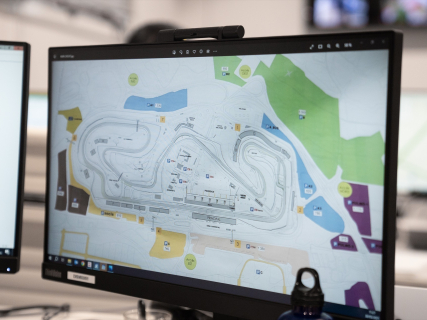
Why Spain has two Formula 1 Grand Prix in 2026 and what will happen with Barcelona

The premiere in Madrid has not meant the goodbye of Montmeló. Barcelona has celebrated its race in June and will return in 2028, 2030, and 2032, while Madrid has secured an annual Grand Prix until 2035.

4 minutes

EuropaPress 6762108 ordenador dispositivo mossos gp f1 30 mayo 2025 montmelo barcelona

EuropaPress 6762108 ordenador dispositivo mossos gp f1 30 mayo 2025 montmelo barcelona

Add DEMÓCRATA to Google

Ask FREN

Published

Last updated

4 minutes

Most read

Spain has this year an exceptional situation in the calendar of Formula 1: two grand prix in the same season. Barcelona hosted its race between June 12 and June 14 and Madrid debuts this weekend Madring, the new circuit built around Ifema.

Coexistence does not mean, however, that Madrid has definitively replaced Barcelona. The future of the two events is already defined for a good part of the next decade: Madrid has a contract until 2035 and Barcelona will continue, although intermittently, at least until 2032.

The change is also noticeable in the names. The Montmeló event has stopped being officially called the Grand Prix of Spain and this year it was renamed Grand Prix of Barcelona-Catalunya. Madrid has been the venue for the Grand Prix of Spain since 2026.
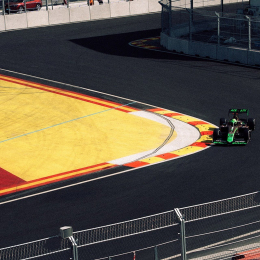
Why are there two grand prix in Spain in 2026?

The explanation lies in the overlap of two contracts. When Formula 1 announced in January 2024 its arrival in Madrid, it signed an agreement with Ifema Madrid to hold the Grand Prix of Spain from 2026 to 2035.

Barcelona, however, then had a contract in force that guaranteed the holding of its race until 2026 inclusive. The arrival of Madrid, therefore, did not annul the last year of the Montmeló agreement.

The result is the calendar for this season: Barcelona held its race in June and Madrid will do so in September. The FIA officially included both events in the 2026 World Championship.

It is not unprecedented for the same country to host more than one Formula 1 race. The current calendar itself contains several grand prix in the United States, for example. What is unique in Spain is that the coincidence occurs just in the year of Madrid's arrival and when the future of Barcelona was pending a renewal.

Barcelona does not disappear: it returns in 2028

For months, 2026 appeared as the date that could mark the end of the long relationship between Formula 1 and Montmeló. Ultimately, it will not be so. Formula 1 announced on February 16, 2026 a new agreement with the Circuit de Barcelona-Catalunya. The contract guarantees races in 2028, 2030, and 2032.

Barcelona, therefore, will remain linked to the World Championship at least until 2032, but will no longer have a race every year. The agreement introduces a rotation system with Spa-Francorchamps, in Belgium. Barcelona has secured the editions of 2028, 2030, and 2032, while Spa will hold those of 2027, 2029, and 2031.

The Formula 1 has thus opted to maintain two historic circuits within a calendar in which the availability of slots has become one of the major constraints.

Will there be Formula 1 in Barcelona in 2027?

With the agreements currently announced, no. After the race held this June, the next guaranteed date in Montmeló is for 2028. After that, there will be those for 2030 and 2032. This means that the situation of 2026, with Madrid and Barcelona sharing the season, will not automatically repeat every year.

Madrid does have an annual agreement. Its contract includes ten seasons, from 2026 to 2035, while Barcelona is integrated into an alternate model. Therefore, it is important to distinguish between two concepts: Spain will continue to have Madrid every season during the contracted period and, in certain years, will also add the race in Barcelona.

If the contracts currently announced are maintained, 2028, 2030, and 2032 will again be seasons with two grand prix held in Spain.

Madrid has secured a decade

The position of Madrid is different. The agreement announced by the Formula 1 with Ifema establishes that the Spanish Grand Prix will be held in the capital from 2026 to 2035.

Madring thus becomes the long-term bet of the competition in Spain. The circuit combines urban sections with sectors specifically built for the competition in the surroundings of Ifema and Valdebebas.
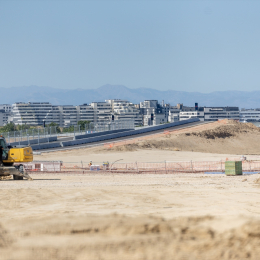
When the agreement was presented, Formula 1 estimated that the venue could initially receive more than 110,000 spectators daily, with plans to later increase that capacity to 140,000.

The arrival of Madrid also explains the name change of Montmeló. From 2026, the Catalan race will officially be called Barcelona-Catalunya Grand Prix, while Madrid has inherited the name of Spanish Grand Prix.

The new Formula 1 of the rotating circuits

The future of Barcelona also reflects a change in the championship's strategy. Formula 1 has a high demand from cities and circuits interested in joining the World Championship, but the number of available weekends is limited. One of the solutions it is using to maintain established events while simultaneously leaving space for other destinations is rotation contracts.

Barcelona and Spa are one of the examples. Formula 1 has explained that the extension allows Montmeló to continue being part of the championship after 2026 while alternating its presence with the Belgian circuit.

In the Catalan case, the renewal also came after the investments made in recent years in the Circuit de Barcelona-Catalunya and the changes in its management.

The circuit assures that Formula 1 generates a economic impact of over 300 million euros per edition in Catalonia. This is an estimate disseminated by the organization itself and the Catalan authorities, not direct revenues from the circuit.

From a single venue to two distinct models

Barcelona has been a permanent presence on the calendar for decades. The Circuit de Barcelona-Catalunya, inaugurated in 1991, has hosted 35 editions of Formula 1 since its opening before this season's race.

Madrid now opens a different stage. The capital is guaranteed an annual race until 2035, while Barcelona has managed to maintain its link with the competition through an alternating calendar.

So 2026 is not simply the year in which Formula 1 changes Barcelona for Madrid. It is the beginning of a model in which both cities will coexist differently: Madrid as the annual venue for the Spanish Grand Prix and Barcelona with races guaranteed every two years until 2032.

This weekend will be the first time that this new map is seen complete. Barcelona already held its race in June. Now it's Madrid's turn to debut Madring.

More key points, information and questions with FREN

AI-GENERATED CONTENT

What is the parliamentary procedure for approving contracts for major international sporting events in Spain?

In Spain, there is no "specific parliamentary procedure" to approve each contract for a major international sporting event (Olympic Games, UEFA finals, World Cups, etc.). The contracts are signed by the Government or the competent Administrations following public procurement legislation; Parliament mainly intervenes through laws that enable the legal, financial, and fiscal framework, and through ordinary political control instruments.

1. Constitutional framework and distribution of powers

The Constitution grants the State exclusive competence over international relations and, through this, international sports representation. Commitments with the IOC, FIFA, UEFA, or international federations are assumed by the Government (and, where applicable, autonomous communities and local entities) through agreements and administrative contracts.

Parliament does not approve these contracts one by one, but it does:

  • Approve the laws that set the general framework (for example, sports laws, tax benefits for "events of exceptional public interest").
  • Authorize or control public spending through the Budget Law and, if applicable, extraordinary credits.
  • Validate the royal decree-laws that the Government often uses to declare sports programs and major events as of exceptional public interest, including finals of major competitions or major internationally referenced events.

2. Legal and fiscal enabling of major events

In practice, when Spain takes on a major event, the key piece is usually a specific law or royal decree-law that declares that event as an "event of exceptional public interest" and associates it with tax benefits and a support program.

Recent examples drawn from parliamentary activity and the Official State Gazette (BOE):

  • Royal Decree-law 8/2025, which declares various initiatives and programs as events of exceptional public interest (including programs like "Inclusive Sport III", "2030 Plan to Support Grassroots Sport II", events like the "Ironman Calella-Barcelona" or major prizes and rallies). It was approved by the Government, published in the BOE, and then validated by the Congress; furthermore, the Cortes agreed to process it as a bill (121/000066), opening a period for amendments.
  • Royal Decree-law 12/2026, also on events of exceptional public interest, which includes the final of the 2027 UEFA Men's Champions League. The explanatory statement explains that guarantees are needed in security, mobility, taxation, and customs; the Congress validates it and processes it as a bill (121/000099), where groups can modify the tax regime and conditions.

In these cases, the "contract" with the organizer (UEFA, etc.) is supported by a framework of rules approved or validated by the Cortes, which set maximum tax benefits, create managing bodies, and condition the capacity to sign economic commitments.

3. Budget authorization and subsidies

The second pillar is the budget. Expenses for infrastructure, security, promotion, or subsidies to sports federations and the Olympic or Paralympic Committee are usually included in:

  • The General State Budget Law.
  • Royal decrees or royal decree-laws of direct subsidies to the COE, CPE, or federations, which often follow a public consultation and a Council of Ministers agreement (for example, Royal Decree 637/2026 on subsidies to federations and the COE/CPE for 2026, or various royal decrees of subsidies for sports-relevant actions).

Although these decisions originate from the Government, the underlying financing is conditioned by what the Cortes have approved in Budgets and by the validation of any decree-laws.

4. Parliamentary political control

Beyond legal and budgetary enabling, the Cortes exercise continuous control over major events through classic instruments:

  • Oral and written questions to the Government about costs, economic returns, contract clauses, labor conditions, urban impacts, etc.
  • Appearances of ministers and officials from the Higher Sports Council to explain bids, assumed guarantees, or progress of works.
  • Interpellations and motions in Plenary or committee, which can urge the Government to support or not certain bids or to review conditions.
  • Non-legislative motions that express political support for specific projects (for example, a PNL to support the Basque Country's bid for the U20 Rugby World Cup or to declare certain programs or cities as of exceptional sports interest).

5. Summary scheme of the procedure

  • Before the contract: the Government negotiates with the international entity; in parallel, it promotes rules (law or royal decree-law of events of exceptional public interest, royal decrees of subsidies) and budget items that pass through the Cortes.
  • During preparation: parliamentary committees on Sport and the Plenary follow the project through questions, appearances, and PNLs. They can introduce adjustments in laws affecting the tax or subsidy regime of the event.
  • After or during execution: Parliament can evaluate results, eventually create investigative commissions if there are controversies, and, as a last resort, use political responsibility instruments (interpellations, motions, even a possible motion of censure if the conflict were of enormous scale).

In summary, specific contracts are signed within the governmental and administrative scope, but their legal, financial, and fiscal viability depends on a set of parliamentary decisions (laws, validated decree-laws, budgets, and political control) that form the true "parliamentary procedure" around major international sporting events.

What are the competencies of autonomous governments in organizing Formula 1 Grand Prix events?

Organizing a Formula 1 Grand Prix in Spain is a complex matter involving state, autonomous, and municipal competencies. Autonomous governments play a central role because many of the involved areas — sports, tourism, urban planning, environment, or economic promotion — are assumed by the autonomous communities in their statutes and by virtue of the constitutional distribution of powers.

First, in the field of sports, the Constitution reserves to the State the bases and general coordination of sports activity but allows autonomous communities to develop and execute sports policy in their territory. This implies that the autonomous government:

  • Can sign agreements with championship promoters and with the company holding the rights (FOM/Formula One Management).
  • Approves and finances, if applicable, support programs for the event as an event of exceptional public interest.
  • Coordinates with autonomous federations and the Spanish federation the sports aspects and licenses, within the state and international framework (FIA).

In matters of tourism and economic promotion, autonomous communities usually have practically full competence. Therefore, they:

  • Design and finance tourism promotion campaigns linked to the Grand Prix (regional brand, city or coast destination, etc.).
  • Promote specific plans for the hotel, restaurant, and commerce sectors during the event.
  • Can declare the Grand Prix as an "event of tourist interest" or a similar figure provided in their autonomous legislation.

A very relevant block is urban planning, infrastructure, and environment, where competencies are essentially autonomous and municipal, with state bases. The autonomous government:

  • Approves or supervises, through its regulations, territorial planning figures that allow the location or expansion of the circuit.
  • Intervenes in environmental impact assessment, authorizing or conditioning works and the event itself (noise emissions, protection of natural spaces, waste management, water, etc.).
  • Can require corrective measures (noise barriers, time restrictions, environmental restoration plans) and their monitoring.

In public order and security, functions are shared. The State maintains exclusive competence in public security and state-level security forces and bodies, but autonomous communities:

  • Exercise operational direction of their own autonomous police forces, when they exist, and coordinate their actions with the National Police and Civil Guard.
  • Approve civil protection and emergency plans for major events, including health devices, evacuation, and risk management.
  • Regulate aspects such as capacities, facility conditions, and organizers' self-protection plans.

In traffic and mobility, the distribution is also mixed. The State retains competence over basic traffic and road safety regulations and, in many communities, management of the DGT. However, autonomous governments:

  • When they have assumed traffic competencies, directly manage its regulation on interurban roads and coordinate special devices during the Grand Prix.
  • Promote, together with municipalities and transport operators, specific mobility plans (reinforcement of trains, shuttle buses, park-and-ride lots).
  • Finance or co-finance road infrastructures accessing the circuit and improvements in public transport.

Regarding public aid and sponsorships, autonomous communities have the capacity to grant subsidies and institutional sponsorship contracts, always respecting state and European regulations on State aid and public procurement. This includes:

  • Sponsorship contracts so that the community's brand appears in the official name of the Grand Prix or on advertising media.
  • Subsidies to the circuit managing entity or the organizing company, justified by economic and tourist impact.
  • Shareholding participation in public or mixed companies created to manage the circuit or the event.

Finally, municipalities intervene in matters closest to the territory: urban and activity licenses for the circuit, noise and schedule ordinances, urban traffic regulation, cleaning, local police, and urban services during the race weekend. The autonomous government usually coordinates and complements this municipal action, ensuring that the entire device is aligned with F1's international requirements and applicable state regulations.

In summary, the State sets the basic rules (public security, traffic, bases of economic and sports regulation), but the autonomous community is the one who, in practice, leads the institutional organization of the Grand Prix, assuming planning, financing, and territorial coordination, in close cooperation with the affected municipalities and state authorities.

What legal requirements must circuits meet to be homologated by the FIA in Spain?

In Spain, there is no royal decree or state regulation published in the BOE that lists the specific dimensions (track width, runoff length, types of barriers, etc.) a circuit must meet to be homologated by the FIA. That detailed regulation is essentially sporting and is contained in the FIA International Sporting Code (ISC) and its circuit regulations, which the Royal Spanish Automobile Federation (RFEDA) applies as the national sporting authority; on this basis, compliance with general Spanish regulations (sports, traffic, insurance, industrial safety, environment, urban planning, and civil protection) is superimposed.

1. Sporting framework: FIA, RFEDA, and types of license

The RFEDA Statutes, published by Resolution of September 19, 2018, and subsequent amendments in the BOE, establish that the federation:

  • Promotes and organizes statewide and international motorsport "in collaboration with the FIA."
  • Must comply with "the Regulations and rules governing motor sport issued by the FIA (International Sporting Code) and by RFEDA itself."
  • Is the only national sporting authority in Spain by delegation of the FIA and the only one competent to organize or commit international competitions registered on the FIA calendar.

In practice, this means that:

  • FIA circuit homologation (the famous circuit licenses "Grade 1, 2, 3…" and equivalents) is granted according to the FIA technical regulations for circuits, not a specific Spanish rule.
  • RFEDA processes and channels, as ASN, the application of those regulations in Spain, verifying that the layout and facilities meet the standards required by the competition category to be hosted.
  • For an event to appear as an official FIA international competition in Spanish territory, it must be held on a circuit with the appropriate homologation and license and be registered on the FIA calendar through RFEDA.
2. Material content of FIA requirements (broadly)

Although the located texts do not reproduce the FIA circuit regulations, the general structure of their requirements is clear:

  • Geometric design of the layout: total length, minimum track width, curve radii, banking, visibility at curve exits, absence of obstacles in the field of view, etc.
  • Runoff areas and protections: configuration and depth of gravel or asphalt runoffs, safety barriers (types and arrangement), concrete or metal walls, and deformable elements at critical points.
  • Pit lane and paddock area: pit lane design, separation from the track, maximum speed in pits, emergency accesses, refueling or recharging facilities (in the case of Formula E, for example), and fire prevention measures.
  • Stewarding and control infrastructure: marshal posts, flags and light systems, cameras, race control tower, and redundant communications.
  • Medical and rescue device: medical center at the circuit, medicalized ambulances, on-track rescue teams, and evacuation procedures, all calibrated to the type of events held.

These parameters are included in technical annexes of the ISC and specific FIA circuit guides; knowledge of them is essential for any design or renovation project of a layout aspiring to a license of a certain grade.

3. Fit with Spanish regulations

Beyond the FIA–RFEDA layer, a circuit in Spain must comply with a set of public rules that condition sporting homologation and effective use authorization:

  • State sports law: RFEDA is governed by the Sports Law and by Law 39/2022 in its scope, and its Statutes make clear that state and international competitions require federation licenses and authorization from the Higher Sports Council (CSD) in the case of major events or international competitions.
  • Mandatory insurance and civil liability: the consolidated text of the Law on civil liability and insurance in motor vehicle circulation and its regulatory development (for example, Royal Decree 1507/2008, partially amended) require civil liability coverage for damages caused with vehicles; in the federation scope, RFEDA Statutes also refer to specific insurance for state and international events.
  • Traffic and access regulation: the General Traffic Regulations and resolutions of the Directorate General of Traffic regulate special traffic devices at circuit accesses for grand prix events (as seen in press releases from the DGT and the Ministry of the Interior about Jarama, Jerez, or MotorLand), with signage plans, parking, shuttle transport, and flow control.
  • Industrial safety and noise: rules such as Royal Decree 212/2002 on outdoor machine noise emissions and autonomous community industrial safety regulations (for example, Decree 192/2023 in Catalonia) apply to technical installations, protection systems, and circuit equipment, as well as to noise pollution.
  • Urban planning, environment, and civil protection: circuits must have urban and environmental licenses, impact studies, and self-protection and civil protection plans approved by the autonomous community and/or municipality. Examples of circuits like Barcelona-Catalunya show how, besides complying with general environmental regulations, they seek FIA accreditations (such as the "FIA 3-Star Environmental Accreditation") and ISO certifications.
4. In practice: dual sporting and administrative path

In summary, for a circuit located in Spain to be "homologated by the FIA" and be able to host official competitions:

  • It must be designed, built, and maintained according to the FIA circuit regulations and the ISC, obtaining the grade license corresponding to the desired competition category, a process articulated through RFEDA.
  • At the same time, the promoter must obtain all Spanish administrative authorizations (construction, activity, environmental, self-protection plans, traffic devices, insurance), coordinating with the autonomous community, municipality, DGT, security forces, and CSD.

Only when the FIA's technical and safety requirements and the Spanish legal-administrative framework are simultaneously satisfied can the circuit be considered fully homologated and authorized to host official motor competitions in Spain.

Play

Test your knowledge with FREN!

How much do you know about this topic? Answer the following 3 questions.

Why are there two Formula 1 Grand Prix races in Spain in 2026?

Question 1 of 3

What is the new name of the Montmeló race from 2026?

Question 2 of 3

Until what year does Madrid have an assured annual Formula 1 Grand Prix according to the announced contract?

Question 3 of 3

Hola, soy Fren. ¿Cómo te ayudo?