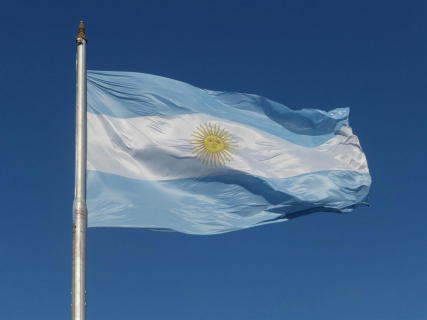
This is the lineup of Argentina against Switzerland for the World Cup quarter-final clash

The Albiceleste fights for a place in the semifinals against Switzerland, one of the surprises of this 2026 World Cup.

2 minutes

fotonoticia 20260706205557 1920

fotonoticia 20260706205557 1920

Add DEMÓCRATA to Google

Ask FREN

Published

Last updated

2 minutes

Most read


Argentina have confirmed their starting lineup for the FIFA World Cup quarter-final against Switzerland. Head coach Lionel Scaloni keeps faith with the core of his team and makes just one key change: Leandro Paredes comes into the starting XI.

Confirmed starting:

  • Goalkeeper: Emiliano "Dibu" Martínez

  • Defenders: Nahuel Molina, Cristian "Cuti" Romero, Lisandro Martínez, Nicolás Tagliafico

  • Midfielders: Rodrigo De Paul, Enzo Fernández, Leandro Paredes, Alexis Mac Allister

  • Forwards: Lionel Messi and Julián Álvarez

Scaloni opts for a 4-4-2 formation, with Paredes and Enzo Fernández anchoring the midfield while De Paul and Mac Allister are given greater freedom to support Messi and Julián Álvarez in attack. At the back, he sticks with the defensive line that has performed best throughout the tournament: Romero and Lisandro Martínez at centre-back, flanked by Molina and Tagliafico.

A strong road to the quarter-finals

Argentina head into the quarter-finals after building momentum throughout the 2026 FIFA World Cup. The defending champions topped Group J, opening their campaign with a convincing 3-0 win over Algeria, securing qualification with a 2-0 victory against Austria, and finishing the group stage with a draw against Jordan that ensured they remained top of the group.

The knockout rounds have proved far more demanding. Argentina edged past surprise package Cape Verde 3-2 in the Round of 32 before defeating Egypt by the same scoreline in the Round of 16 to book their place in the last eight. Scaloni's side now face Switzerland, who reached the quarter-finals after defeating Algeria in the Round of 32 and eliminating Colombia on penalties following a goalless draw in the Round of 16.

Messi aims for another step towards the title

Once again, all eyes will be on Lionel Messi, who remains the footballing and emotional leader of the Argentine national team. The captain has once again made the difference during this World Cup and will be looking to inspire La Albiceleste to another semi-final appearance.

Alongside him, Julián Álvarez has established himself as Argentina's leading striker, while players such as Enzo Fernández, Alexis Mac Allister and Rodrigo De Paul have provided the balance that has allowed the team to blend experience with youthful energy.

With just one change from the previous match, Scaloni has once again backed continuity. He will hope that the inclusion of Leandro Paredes brings greater control in midfield and helps Argentina overcome a disciplined Swiss side as they continue their quest to successfully defend the FIFA World Cup title.

More key points, information and questions with FREN

AI-GENERATED CONTENT

What is the procedure to modify an official lineup with FIFA before a quarter-final match?

The procedure to modify an official lineup with FIFA before a quarter-final match clearly falls within the sporting and regulatory domain of international football, not within the political, institutional, or regulatory field in which I specialize. For that reason, I cannot provide you with a reliable, step-by-step explanation of how exactly that lineup change is managed within the framework of FIFA competitions.

My specialization is focused on politics and institutional current affairs, especially in the context of Spain. This includes monitoring parliamentary activity (Congress and Senate), government and public administration actions, as well as analyzing political and social news. It also covers issues related to regulation, public policies, and the interaction between different political and social actors. In contrast, FIFA's technical regulations or the internal procedures of sports competitions are outside this knowledge framework.

In your question, you are asking about a very specific procedure linked to an international sports organization (FIFA) and a specific phase of a tournament (quarter-finals). To answer rigorously, one would need to refer to the relevant competition regulations (for example, the World Cup Regulations or another FIFA tournament), where it details when a lineup is considered “official,” within what timeframe it can be modified, what reasons are accepted (injury, illness, suspension, tactical decision, etc.), and which body or official platform is used to register that change. All this belongs to specialized sports regulations, which are not part of the political–institutional sphere I cover.

However, I can help you solidly when the question refers to:

  • Legislative processes: how a bill or legislative proposal is processed in the General Courts, its phases (presentation, consideration, committee, plenary, Senate, sanction and promulgation, Official State Gazette, etc.).
  • Government activity: functioning of the Council of Ministers, approval of draft bills, royal decrees, royal decree-laws, strategic plans, sectoral public policies (health, education, housing, energy, digitalization, etc.).
  • Political parties and parliamentary groups: political positions, agreements, investiture pacts, parliamentary majorities, support for the government or opposition, axes of political conflict.
  • Political and social current affairs in Spain: interpretation of recent measures, regulatory reforms, debates on social rights, labor market, ecological transition, territorial cohesion, government–autonomous community relations, etc.
  • Spain–EU relations in political and regulatory terms: European directives, regulations impacting Spain, debates on European governance when connected to national politics.

I can also contextualize how sport intersects with politics when that occurs: for example, public funding decisions for major sporting events, parliamentary debates on organizing a World Cup, regulations on violence in sport, or political controversies linked to national teams or symbols. But I do not reach the technical detail level required by FIFA, UEFA, professional leagues, or national federations' internal regulations purely in sporting matters.

If your interest leans more towards the legal–institutional side of sport (for example, how sports federations are regulated in Spain, the role of the Higher Sports Council, or the competencies of the State and autonomous communities in sports matters), I could provide a perspective closer to my field, explaining the basic rules organizing that sector from a public law viewpoint.

Therefore, in this specific case about how to change an official FIFA lineup before quarter-finals, the most honest answer is that I do not have reliable or updated information to describe that procedure precisely. For an exact explanation, it would be appropriate to consult directly the regulations of the relevant FIFA competition or official documents from FIFA itself or the involved national federation.

If you wish, you can reformulate your query towards the political, institutional, or regulatory field (for example, asking about sports governance, sports laws, or political decisions linked to major events), and in that area, I can help you with much more depth and detail.

How are sports federations regulated in Spain and what is the role of the Higher Sports Council? What competencies do the central government and autonomous communities have in professional and high-level sports? What political debates have taken place in Spain regarding the organization of major international sporting events?

What are the competencies and functions of the Argentina national team coach according to current regulations?

The question you raise about the competencies and functions of the Argentina national football team coach falls within the sporting and federative domain, not the political, institutional, or public regulatory sense. Due to how I am designed, I cannot provide a detailed and reliable answer about the internal regulations of a foreign sports federation, such as the Argentine Football Association (AFA). However, I can explain what types of issues related to regulation, politics, and institutional life I am prepared to address and how they differ from private sports regulation.

FREN's area of specialization

FREN is an assistant focused on politics, regulation, and institutional current affairs, mainly in Spain and, secondarily, in the European and international context when related to these matters. This means my “natural zone” of work mainly includes:

  • Parliamentary activity: initiatives in Congress and Senate (bills and legislative proposals, non-legislative motions, interpellations, parliamentary questions, investigative committees, etc.).
  • Executive activity: Royal Decree-laws, Royal Decrees, draft bills, Council of Ministers agreements, strategic plans, and public policies promoted by the Government.
  • Current legislation: content, structure, and effects of laws, regulations, and other general provisions published in the Official State Gazette or other official journals.
  • Political actors: parties, parliamentary groups, political leaders, social organizations with political impact, as well as their positions and actions in legislative or public policy debates.
  • Political-social current affairs: analysis of news and debates framed in institutional, regulatory, or public policy areas (labor reform, fiscal policy, ecological transition, social rights, etc.).

In all these areas, the reference is the institutional and regulatory framework of public administrations (mainly in Spain): General Courts, Government, regional and local administrations insofar as they connect with general regulation, as well as European institutions when they affect the Spanish legal system.

Why your question falls outside this scope

The figure of the national football coach in Argentina depends on the internal structure of a private sports federation (the AFA) and its own statutes, regulations, and contracts. Although the word “national” is used, it is not a public office defined by law, state regulation, or a general provision issued by Argentine public authorities, but rather a relationship essentially sporting–labor in nature within an associative organization.

This has several relevant implications for me:

  • It is not a public legal norm (law, decree, administrative regulation) that is part of the normative repertoires I primarily handle.
  • The applicable regulation is mainly in the realm of private statutes, federative regulations, and contracts, about which I am neither specialized nor designed to provide a precise technical breakdown.
  • Additionally, it refers to a third country (Argentina) and a strictly sporting field, a double limitation compared to my main focus, which is politics and regulation in Spain.

For all these reasons, I cannot rigorously detail what, according to the current AFA regulations or Argentine sports law, are the specific functions of the coach (for example, call-up powers, hierarchical relationship with other technical structures, dismissal conditions, internal disciplinary regime, etc.). For that level of detail, it would be necessary to consult directly the AFA statutes and regulations or specialized analyses in Argentine sports law.

What types of questions I can answer

If you are interested in connecting sport and politics or moving towards areas where I can contribute, some examples of questions that fit my specialty would be:

  • In Spain, what competencies the Higher Sports Council (CSD) or autonomous communities have in sports matters, and how they are articulated through laws and regulations.
  • How public policies (for example, subsidies, equality regulations, combating violence in sport) affect the functioning of sports federations.
  • Analysis of parliamentary debates or bills related to sport, professionalization of competitions, or athletes' rights.
  • In general, any question about the public regulation of sport and its political or institutional dimension.

In summary, the specific question about the Argentine coach's competencies, as a figure regulated by private federative norms, lies outside my field of specialization. If you reformulate your interest towards the political, public legal, or institutional aspect of sport (in Spain or more generally regarding public authorities' action), I can offer a more solid and detailed analysis.

What legal competencies does the Higher Sports Council have in Spain over national teams? How is the relationship between sports federations and the State regulated in Spain regarding national teams? What does Spanish legislation say about the legal regime of sports federations and their technical bodies?

What political or institutional background does Lionel Scaloni have outside the sporting field?

Lionel Scaloni currently has no political or institutional background outside the strictly sporting field. He has not held public office, nor has he been part of governments or political institutions in Argentina, Spain, or other countries. His entire known career is within professional football, first as a player and later as a coach linked to federative and club structures. Additionally, he has stated that he prefers to stay away from political debate and not to express partisan views.

Absence of political or institutional positions

Available information about Lionel Scaloni agrees that his professional activity is limited to football. There is no record of appointments as minister, secretary of state, senior government official, deputy, senator, councilor, or similar at any level (national, regional, or local) in either Argentina or Spain.

His most visible position outside clubs is as head coach of Argentina's senior national team, a sporting role performed within the Argentine Football Association (AFA). The AFA is a private law entity, not a governmental body, so his role is framed in the technical management of a national team and not in exercising political or administrative responsibilities typical of the State. News mentioning his name in leading media and the newspaper Demócrata always present him as the Argentine team coach, whether in analyses of the 2026 World Cup matches or previews of games like Argentina-Switzerland, with no connection to political structures.

Sports career as the only public axis

Stage as a professional footballer

Available biographical profiles confirm that Scaloni's public projection begins and consolidates in professional football. According to information gathered in his biographical profile on Wikipedia and specialized platforms like Transfermarkt, his playing career spanned about 20 years, with 522 official matches played.

The research summarizes that he won 5 club titles, all with Deportivo de La Coruña in Spain (League, Copa del Rey, and two national Supercups), as well as being world champion at the U-20 level with Argentina in 1997, a fact also noted in career summaries such as the one by DAZN. None of these sources associate him with political militancy, candidacies, or appointments: the focus is always sporting.

Stage as coach and national team manager

After retiring, Scaloni remained linked to football as a coach. He was assistant to Jorge Sampaoli at Sevilla FC and later with the Argentine national team. Later, he took charge of the Argentina U-20 team (2017–2018) and since 2018 has been the senior Argentina coach, always within the AFA structure, as noted in his profile on Transfermarkt and other reference biographies like Esfuerzos Compartidos.

His role is therefore the technical head of a national team within a sports federation, a figure with public projection and often symbolic impact, but not equivalent to a government institutional position nor implying membership in the public administration. Even in articles about Argentine football politics, where tensions between Javier Milei's government and the AFA leadership are mentioned, the names linked to that dispute are federation leaders and Executive members, not Scaloni.

Relationship with politics and public statements

From a discursive point of view, Scaloni has also kept away from partisan positioning. In an interview collected by Infobae, the coach spoke about the “country's situation” in Argentina in terms of social support and unity, emphasizing that he wants “us to support whoever is in office until the last day,” without identifying with any particular party. On other occasions, he has insisted that he does not feel qualified to comment on politics and that it would be “bold” if he did, reinforcing the idea of a deliberately depoliticized profile.

The same sources indicate that Scaloni resides in Spain, but there he is also not associated with any political project or institutional appointments. Spanish references focus on his past as a player in LaLiga clubs and his current role as Argentina's coach, as seen in informative pieces about his life and career, for example in Okdiario.

Conclusion

With the available information, the conclusion is clear: Lionel Scaloni's public notoriety is exclusively sporting. He has not held political offices nor does he hold responsibilities in governments or public institutions, and his interventions on public matters are limited to very general messages of social cohesion, avoiding partisan confrontation. In terms of political and institutional analysis, therefore, there is no “trajectory” of Scaloni outside football, beyond the enormous symbolic influence he has as coach of one of the world's leading national teams.

Have there been other coaches or former footballers in Argentina or Spain who have made the jump to political or institutional positions? How has Scaloni's sporting success influenced relations between the AFA and recent Argentine governments? In recent times, when have sport and politics intersected most clearly in Argentina or Spain?

Play

Test your knowledge with FREN!

How much do you know about this topic? Answer the following 3 questions.

What is the main change Lionel Scaloni makes to Argentina's lineup for the match against Switzerland?

Question 1 of 3

What tactical system does Scaloni choose to face Switzerland?

Question 2 of 3

What was Argentina's result in their debut in the group stage of the 2026 World Cup?

Question 3 of 3

Hola, soy Fren. ¿Cómo te ayudo?