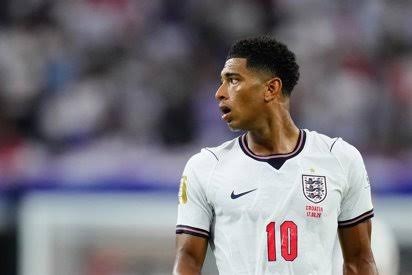
England awaits the winner of Argentina-Switzerland in the semifinals: schedule and where to watch the World Cup

Thomas Tuchel's selection has defeated Norway 2-1 in the quarterfinals and became the third semifinalist of the tournament

1 minute

Add DEMÓCRATA to Google

Ask FREN

Published

1 minute

Most read

WhatsApp Image 2026 07 12 at 02.25.41

England has already secured its ticket to the 2026 World Cup semifinals. Thomas Tuchel's team defeated Norway 2-1 in the quarterfinals and became the third semifinalist of the tournament, where Spain and France were also waiting. 

Now, only their opponent remains to be known. The last spot in the semifinals will come from the match between Argentina and Switzerland, a duel that pits the current world champion against one of the great revelations of the championship.

The winner will face England on July 15 in Atlanta, in search of a place in the 2026 World Cup grand final.

Argentina wants to continue defending the title

Lionel Scaloni's Albiceleste arrives at the event after a demanding journey. After finishing as leader of Group J, they eliminated Cape Verde 3-2 in the round of 32 and once again won by the same score against Egypt in the round of 16, in a match resolved with suffering. Lionel Messi is once again the great reference of a team that seeks to revalidate the title won in Qatar 2022.

Switzerland seeks a historic semifinal

The Swiss team, for its part, wants to continue making history. After overcoming the group stage, they eliminated Algeria in the round of 32 and knocked out Colombia on penalties after a goalless draw in the round of 16. The team led by Murat Yakin relies on Granit Xhaka's leadership and Manuel Akanji's defensive solidity to surprise one of the favorites for the title. 

Argentina - Switzerland match schedule

The match between Argentina and Switzerland is played at the Arrowhead Stadium in Kansas City.

In Spain, the match will begin at 03:00 AM on Sunday, July 12 (peninsular time) and can be followed live on Movistar Plus+ and DAZN, which are broadcasting the 2026 World Cup.
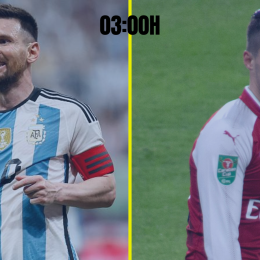
One step away from the final

The winner will complete the semifinal bracket, which will be configured as follows:

  • Spain - France (July 14, 21:00 hours)

  • England - Winner of Argentina - Switzerland (July 15, 21:00 hours)


More key points, information and questions with FREN

AI-GENERATED CONTENT

What is the status of the processing of the regulations governing the broadcasting of international sporting events in Spain?

At this moment, the key regulation on the broadcasting of sporting events – including international ones broadcast in Spain – is not undergoing specific reform in the Spanish Parliament: the main framework is already in force (mainly Law 13/2022, General Audiovisual Communication Law and Royal Decree-Law 5/2015 on audiovisual rights of football). There are some initiatives in process that affect sport in its international dimension or the audiovisual sector in general, but none expressly aimed at changing the regime for broadcasting international sporting events. The current regulations do contain specific rules for events of general interest (Olympic Games, World Championships, major competitions) and for the access of radio and television broadcasters when the organizer is not established in Spain.

Current framework on broadcasting sporting events (including international ones)

Law 13/2022, of July 7, General Audiovisual Communication Law

The basic piece today is the Law 13/2022, General Audiovisual Communication Law. This law:

  • Regulates the exclusive rights contracting for broadcasting audiovisual content, "specifically, sporting events" (Title VII).
  • Sets limits on advertising in sports broadcasts: broadcasts may only be interrupted with isolated commercial communications when the event is stopped and always allowing the continuation of its development; it also regulates overlays and virtual advertising within matches.
  • Recognizes the right of television stations to broadcast brief news summaries of sporting events of general interest, without compensation when the summary lasts less than 90 seconds and is broadcast in news programs.
  • Recognizes free access for radios to stadiums and venues to broadcast sporting events live, in exchange for compensation limited to costs, and foresees that if the event organizer is not established in Spain, the access obligation falls on the holder of the exclusive rights who assumes the live broadcast. This expressly covers many international events played outside Spain.
  • Foresees the preparation, by Agreement of the Council of Ministers, of a catalog of events of general interest to society that must be broadcast free-to-air. Among them are included:
    • Olympic and Paralympic Games.
    • Official matches of the Spanish national team (football, basketball, etc.).
    • Semifinals and finals of the European Championship and Football World Cup, World and European Championships in various sports, major prizes held in Spain, the Vuelta, etc.
    These may be competitions organized outside Spain, but the legislator guarantees their free-to-air access to the Spanish public when classified as of general interest.
Royal Decree-Law 5/2015 on audiovisual rights of professional football

The Royal Decree-Law 5/2015 regulates the commercialization of exploitation rights of audiovisual content of professional football competitions (First Division, Second Division, Copa del Rey, Supercup). Its main points are:

  • Joint sale of rights by the League and the Royal Spanish Football Federation.
  • Criteria for revenue distribution among clubs, including components linked to sporting results and audience/social reach.
  • Compensation funds and solidarity policies, managed with intervention from the Higher Sports Council.

Although it focuses on Spanish professional competitions, the text emphasizes the international impact of La Liga and the relevance of the foreign market when exploiting broadcasting rights.

Access of radios and catalog of events of general interest

The issue of radio access to stadiums and venues to broadcast sporting events was originally addressed through the reform of the former Law 7/2010 via Royal Decree-Law 15/2012, and has been consolidated in Law 13/2022. The Constitutional Court confirmed the constitutionality of the economic compensation regime in Judgment 7/2023.

Additionally, Royal Decree 991/1998 created the Council for Sports Broadcasts and Retransmissions, responsible, among other functions, for approving the catalog of competitions or sporting events of general interest, in connection with Law 21/1997. No further information is available in the consulted sources about recent changes in this scheme.

What is currently in process?

Initiatives directly related to sport and internationalization

In the strictly sporting field, the only legislative initiative with an international dimension located in process is the Bill to guarantee the international representation of Spanish sports federations, originating from the Senate and processed in the Congress as initiative 124/000036. According to the Congress file, the amendment deadline is extended until September 2, 2026 and it is processed in the Education, Vocational Training and Sports Commission. The text seeks to adjust Law 39/2022, on Sport, to reinforce that international representation falls on Spanish federations of state scope, but it does not detail broadcasting rights.

Therefore, it affects who represents Spain in international competitions, but does not modify the audiovisual regime of broadcasts and retransmissions.

General audiovisual regulations in process

In parallel, the Film and Audiovisual Culture Bill (121/000026) is underway in Congress. According to the latest publication, the amendment deadline closed on June 24, 2026 and on July 10, 2026 total amendments were published. It is a sectoral regulation on film and audiovisual culture, relevant to the media ecosystem, but the consulted sources do not show a specific impact on the regulation of international sports broadcasts.

Additionally, the Government is processing a Royal Decree draft on the obligation to promote European audiovisual works and linguistic diversity, which has undergone a state public hearing and notification to the EU TRIS system. Again, it affects the general framework of European content and quotas, not specifically the regime of sporting events.

Conclusion on the status of processing

With the available information, the regulations currently governing the broadcasting of sporting events, including international ones broadcast in Spain, are basically consolidated in Law 13/2022 and Royal Decree-Law 5/2015, along with complementary rules. There is no bill or legislative proposal in the Spanish Parliament focused on directly reforming this regime. The ongoing initiatives are aimed at:

  • Adjusting the international representation of Spanish federations (bill in Commission).
  • Reforming the general audiovisual framework (Film Law and Royal Decree on European works).

In summary, the specific regulation of international sports broadcasts reaching the Spanish public today rests on already approved and in-force rules, without a specific sectoral reform in parliamentary processing on this point.

What specific obligations does Law 13/2022 impose on television stations that acquire exclusive rights to major international sporting events? How does Royal Decree-Law 5/2015 relate to La Liga's commercial agreements for the sale of rights in international markets? How could the Bill on international representation of sports federations affect Spanish sport if finally approved?

What are the functions and competencies of the England national team coach according to the regulations of the English Football Association?

The position of England national team coach is a relevant issue in the sporting field, but it is not part of the subjects for which I am designed. I do not have access to or specific systematization of the internal regulations of the English Football Association (The FA), so I cannot detail with legal rigor exactly what the functions and competencies of the national coach are according to their official regulations. My area of expertise focuses on politics, public institutions, parliamentary and executive activity, and social news, mainly in Spain.

That said, it is important to clarify the limit: sports federations, such as the English Football Association, are private entities (although with functions of general interest) that approve their own statutes, disciplinary regulations, codes of conduct, and internal manuals. These documents usually define, in great detail, functions such as player selection, supervision of the technical staff, relationship with the federation, and contractual commitments. However, that documentation is not part of the governmental, parliamentary, or regulatory normative repertoires on which I am specifically trained.

In the context for which I am designed, I mainly work with:

  • Laws and public regulations: bills and legislative proposals, royal decree-laws, regulations, and other norms approved by the Government of Spain or the Spanish Parliament, as well as their counterparts in the European sphere when relevant.
  • Parliamentary activity: initiatives registered in the Congress of Deputies and the Senate (questions, interpellations, non-legislative proposals, appearances, motions), plenary and committee debates, and voting results.
  • Executive activity: Council of Ministers agreements, prior public consultations, hearing and public information procedures of draft regulations, as well as publications in the Official State Gazette (BOE).
  • Political and social news: news related to parties, political leaders, unions, employers' associations, civil society organizations, and public interest debates in Spain, relying on media such as the Demócrata newspaper and other information sources.

In contrast, the detail of competencies of a national football coach according to the internal regulations of a foreign federation falls into a different area, closer to international private sports law, and is not part of the content I handle. Any precise answer on that point should be based directly on the following documents, accessible through the channels of the English Football Association itself:

  • The FA statutes: where the federation's governance structure is determined and, if applicable, the coach's assignment to a specific body (for example, to the football director, the technical committee, or the board of directors).
  • The general and technical regulations: which may contain specific provisions on the player call-up process, relationship with clubs, integrity obligations, media relations, etc.
  • The coach's employment or commercial contract: which is an individual agreement, usually confidential, specifying objectives, powers, limits, termination causes, and applicable disciplinary regime, beyond what is provided in general rules.

If what interests you is the political or institutional dimension of national teams, I could provide context from my field. For example, in Spain there is a recurring debate about the relationship between the Higher Sports Council (CSD), the Royal Spanish Football Federation (RFEF), and the Government, especially when it comes to:

  • Public funding of high-level sport and national teams.
  • Government control and supervision mechanisms over federations when irregularities or governance crises are detected.
  • The political and social impact of the football team as a national symbol, which often transcends the strictly sporting plane.

In these areas, I could analyze, for example, how the Spanish Government intervenes or not in the appointment of coaches, what margin of autonomy the RFEF has, or how sports federations are regulated in the Sports Law and its development regulations. But transferring that specific analysis to the English Football Association's regulations and the exact competencies of its coach would require specialized information beyond my reach and, above all, outside the political-institutional scope for which I am designed.

If you wish to continue delving within my field, I can help you, for example, to understand how sports federations are regulated in Spain, what role the Government has in their supervision, or what recent parliamentary debates there have been about sport, federations, and governance.

How are sports federations regulated in Spain and what role does the Higher Sports Council have over them? What powers does the Spanish Government have to intervene in the Royal Spanish Football Federation in case of institutional crisis? What recent parliamentary debates have there been in Spain about football governance and sports federations?

What electoral results did Lionel Scaloni's party obtain in the last federative elections of the Argentine Football Association?

Given the way the question is posed, it is not possible to provide a factual answer about "what electoral results Lionel Scaloni's party obtained" in "federative elections of the Argentine Football Association (AFA)", because two problems converge: on the one hand, my specialization focuses on Spanish politics and institutional news (and, to a lesser extent, European), not on the internal politics of Argentine football; and, on the other hand, in the available information there is no record of any "party" politically associated with Lionel Scaloni that has run in formal elections within the AFA.

Clarification on the scope of what I can answer

I am specifically designed to address issues of:

  • Spanish politics: central government, Congress of Deputies, Senate, regional governments insofar as they connect with national politics, and main actors (PSOE, PP, Vox, Sumar, PNV, EH Bildu, Junts, ERC, etc.).
  • Parliamentary and regulatory activity in Spain: bills and legislative proposals, royal decree-laws, legislative processing, votes, Council of Ministers agreements, public consultations, hearings, and normative initiatives.
  • Spanish social and economic news insofar as it relates to decisions of public powers, legal reforms, public policies, or major political-social debates.
  • European and international politics only complementarily, when connected with Spain (for example, Spain's position in the EU Council, impact of European Commission decisions on Spanish regulations, etc.).

The internal dynamics of a foreign sports federation, such as the AFA, is outside that focus. Although it may have an institutional and associative component, it is not part of the areas I handle with sufficient precision and updating to provide you with rigorous data on specific electoral results (number of votes, candidacies in play, power balance, etc.).

About Lionel Scaloni and the context of your question

In the information I have access to, Lionel Scaloni appears as coach of the Argentine national football team, a purely sporting figure, not as a leader of a political party or formal candidacy in an AFA election. It is possible that in Argentine public debate there is informal talk of "sectors," "lines," or "spaces" that more or less support his continuity, or that he is associated with certain leaders within the federation, but this does not translate into official data of "electoral results" linked to his name that I can consult and detail.

Your question may also figuratively allude to Scaloni's influence on the power balance within the AFA (for example, how sporting successes reinforce certain leaders or lists in internal elections). But that type of analysis requires specialized monitoring of Argentine sports politics, which is beyond the scope for which I am configured.

Why I cannot invent or approximate results

To answer "what electoral results were obtained" by a candidacy, it would be essential to have:

  • Date and specific type of AFA federative election (assembly, presidency, executive committee positions, etc.).
  • Official name of the list or candidacy, number of supports, and vote distribution.
  • Clear relationship between that candidacy and Lionel Scaloni (leadership, public support, membership, etc.).

Not having those data in a verifiable way and, moreover, being outside the framework of Spanish politics and institutionalism, I cannot even offer an approximation without falling into speculation. A central requirement is not to invent list names, vote figures, or internal organizational structures of foreign organizations that are not clearly recorded in the sources I handle.

What kind of questions I can answer in detail

If you wish, I can help you with similar profile questions but in the field for which I am prepared, for example:

  • Electoral results of parties in Spanish general elections (Congress and Senate) or in relevant regional processes connected with national politics.
  • Composition and power balance in the Congress of Deputies and the Senate, including investitures, motions of no confidence, votes of confidence, and key law votes.
  • Details on the approval of laws and royal decree-laws in Spain, with explanation of parliamentary process and support and rejection by each group.
  • Analysis of how certain legal reforms or decisions of the Spanish Government impact sport in Spain (for example, regulations on professional sport, image rights, taxation of athletes, etc.).

If you reformulate your question towards any of these axes (for example, comparing the sports governance model in Argentina and Spain, or asking about the role of the Higher Sports Council and Spanish federations), I can offer you a more useful and detailed answer.

What results did the main Spanish parties (PSOE, PP, Vox, and Sumar) obtain in the last general elections? How is the board of the Royal Spanish Football Federation elected and what role do Spanish public institutions have in that process? What Spanish regulations currently govern professional sport and the governance of sports federations?

Play

Test your knowledge with FREN!

How much do you know about this topic? Answer the following 3 questions.

Who will be England's opponent in the 2026 World Cup semifinals?

Question 1 of 3

Where will the semifinal match between England and their opponent be played?

Question 2 of 3

Through which platforms will the match between Argentina and Switzerland be broadcast in Spain?

Question 3 of 3

Hola, soy Fren. ¿Cómo te ayudo?