
The Stop Industrial Livestock Coordinator has made public a document in which it accuses a pig macro-farm project in El Bohodón (Ávila) of having "evaded" the environmental assessment. According to the platform, the promoter has submitted an initiative for a farm with a capacity for 1,994 places, "just six places below the legal limit that requires an environmental impact assessment in Castilla y León," in a municipality whose drinking water network "has been continuously contaminated by nitrates since 2016."
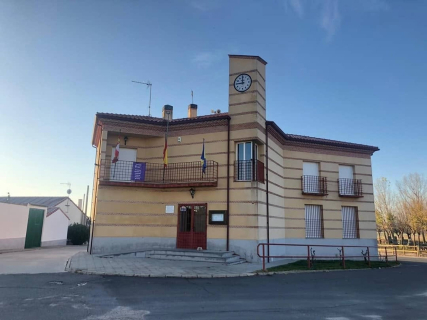
The City Council has opened a public information period of 20 days, which ends on September 2, for any interested person to submit objections to the project.
By setting the number of animals at 1,994, the processing is carried out through a municipal license, a more agile administrative channel with lower environmental control requirements, which, according to the Coordinator, allows "to avoid" the environmental impact declaration that the regional regulations establish for farms of 2,000 places or more.
According to the technical report, the farm will be located 1,950 meters from the urban area, will have an estimated production of 4,985 pigs per year in two and a half fattening cycles, and will generate around 4,287 cubic meters of slurry annually.
El Bohodón, with a current population of 104 inhabitants, already houses several macro-farms that total 8,840 pigs. The new facility would raise the total census above 100 pigs per neighbor and the combined production of slurries to 23,293 cubic meters per year in the municipality, as detailed by the platform in a statement.
The project argues that El Bohodón is not listed as a vulnerable area to nitrates, despite the fact that the Junta de Castilla y León included it in that category in June 2020.
On the other hand, official records from the National Drinking Water Information System (SINAC) show that the municipal supply network has "failed" since 2016 to meet the legal maximum value of nitrates, set at 50 milligrams per liter (mg/L). The latest analysis, corresponding to June 2026, records a concentration of 86 mg/L, with episodes that exceeded 110 mg/L in 2021 and 2022.
Given the health risk derived from the prolonged consumption of water with elevated levels of nitrates - related in various studies to a higher probability of suffering from certain types of cancer - the Coordinadora Stop Ganadería Industrial has urged the City Council to "deny" the license and has called on the population to submit objections before the deadline closes.