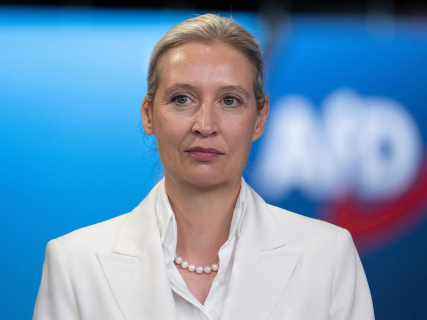

Alternative for Germany (AfD) appears as the first force in Mecklenburg-Western Pomerania in the poll at the close of the elections this Sunday, September 20. The estimate from Forschungsgruppe Wahlen for ZDF attributes it 38% of the votes, ahead of the 36.5% of the SPD of the Minister President Manuela Schwesig. A lead of 1.5 points that still needs to be contrasted with the counting. Source: ZDF.
The other major signal of the night affects the conservatives of Chancellor Friedrich Merz. ZDF places the CDU at 5%, right at the electoral threshold. The party would not only face a strong drop: it would also have to wait for the recount to ensure its proportional representation in the regional Parliament.
What the estimates from ZDF and ARD say
Behind AfD and SPD, ZDF places Die Linke at 6%, the Greens at 5.5%, and BSW at 4.8%. This last percentage would leave the formation of Sahra Wagenknecht below the threshold for seat distribution.
The estimate attributed to ARD and Infratest dimap also gives a 1.5 point lead to AfD, although with different percentages: 37% for the far right and 35.5% for the SPD.
In that second snapshot, Die Linke reaches 7.5%; CDU and Greens each obtain 5.5%; BSW reaches 5% and the FDP stays at 1.2%.
The differences are especially important at the bottom of the table. A few tenths can decide which parties enter and, with that, modify the possibilities of forming a Government.
The CDU faces a historic drop
The director of ARD warns of a possible historic setback for the conservatives and also places the Greens and BSW in an uncertain position regarding the electoral threshold. In 2021, the CDU had obtained 13.3%. Source: ARD.
The percentages from the polls would imply a loss of between 7.8 and 8.3 points for the Christian Democrats. For Merz, the scenario represents a political setback in a state where his party would be far from contesting the first position.
However, these elections choose the regional Parliament: their consequences for federal leadership are political, not an automatic change of the German Government.
AfD would more than double its result from 2021
Five years ago, the SPD won with 39.6%, while AfD obtained 16.7%. Die Linke reached 9.9%; the Greens, 6.3%, and the FDP, 5.8%. Since then, Schwesig has governed in coalition with Die Linke.
The comparison points to a profound change: AfD would more than double its percentage, while the social democrats would retreat in a much more limited way. The turnaround would not only respond to the wear of the SPD but to a much greater expansion of the far right.
Can Schwesig continue to govern if she comes in second?
The first position and the ability to gather a majority are distinct issues. The AfD candidate for the head of government, Leif-Erik Holm, would need sufficient parliamentary support; Schwesig would also not have the continuity of her current coalition guaranteed.
With several parties around 5%, any calculation of agreements is still provisional. First, it must be known which parties gain representation and how many deputies each one obtains.
That is why the election night has two inseparable focuses: who finishes first and what majority can be built afterward. The polls place AfD ahead, but they still do not determine who will govern Mecklenburg-Western Pomerania.