
The poll at the close of the polls places Elif Eralp's party six points ahead of the conservatives. The SPD would be fifth and the formation of Government will depend on the distribution of seats and the agreements.
Die Linke is heading towards a victory in the Berlin elections. The estimate from Forschungsgruppe Wahlen for ZDF, published at 18:00 this Sunday, September 20, places the left-wing party at 26%, compared to 20% for the CDU. These are data from the poll at the close of the polls, still not definitive results. F
The difference would place Die Linke's candidate, Elif Eralp, in a prominent position to try to lead the next government of the German capital. However, coming in first does not equate to securing the government: the next battle will be to gather a parliamentary majority.
What the Berlin elections poll says
ZDF attributes 15.5% to the Greens, 13.5% to Alternative for Germany (AfD), and 12% to the SPD. BSW appears with 5%, a particularly sensitive figure due to its proximity to the entry threshold in Parliament.
The other estimate released by ARD and Infratest dimap also places Die Linke in the lead, although with 24.5%. In that picture, the CDU gets 20%; AfD, 16%; the Greens, 15%; the SPD, 12%; and BSW, 5%.
Both snapshots point to the same winner, but they disagree on the strength of AfD and on who would occupy the third position.
A turnaround compared to the 2023 elections
The reference to measure the change is the repeat election held in February 2023. At that time, the CDU won with 28.2%, while Die Linke obtained 12.2%. SPD and Greens each reached 18.4%, and AfD, 9.1%.
If the figures were confirmed, Die Linke would have more than doubled its percentage of votes. The CDU would lose 8.2 points and the SPD, 6.4. AfD would grow compared to 2023, although that advance would not allow it to contest the first position.
The main change would not therefore be solely the conservative decline. The balance of power within the left would also be altered: Die Linke would occupy a clearly dominant position over social democrats and ecologists.
Housing at the center of the Berlin vote
The election comes after a campaign marked by access to housing. Reuters has documented how the increase in rents and the scarcity of apartments have placed this issue ahead of other national debates. Die Linke has advocated for greater rent controls and more social housing.
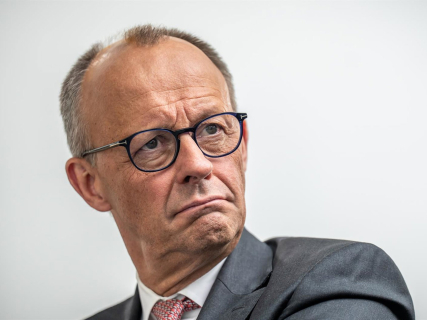
The result, if confirmed, would also be a political setback for the party of Chancellor Friedrich Merz. But the Berlin ballots elect a regional Parliament, not the federal Government: they do not themselves provoke a change of chancellor.
The night remains pending the count, the first estimates based on actual votes, and the distribution of deputies. Only then can it be specified which coalitions have a sufficient majority to govern.
| Party | ZDF: verified in its live | ARD: according to capture from Electomanía |
|---|---|---|
| Die Linke | 26.0% | 24.5% |
| CDU | 20.0% | 20.0% |
| The Greens | 15.5% | 15.0% |
| AfD | 13.5% | 16.0% |
| SPD | 12.0% | 12.0% |
| BSW | 5.0% | 5.0% |