Fires today in Spain: Niebla, Tírig, and Segovia remain open on a Sunday of maximum vigilance

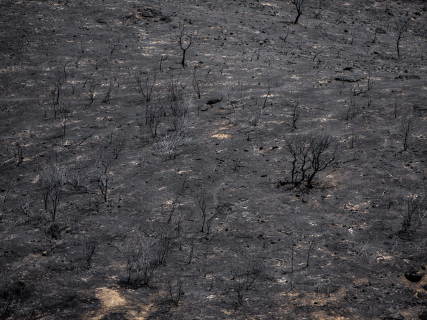
Spain enters this Sunday, August 9, with several recent fires still under surveillance and a meteorological scenario that forces to take extreme precautions. Fog, in Huelva; Tírig and other hotspots in Castellón; and Navas de San Antonio, in Segovia, concentrate attention after a day with evacuations, confinements, and large deployments of resources.

1 minute

incendios hectáreas quemadas

incendios hectáreas quemadas

Add DEMÓCRATA to Google

Ask FREN

Published

Last updated

1 minute

Most read

After a particularly complicated day in several points of the country, the firefighting teams now face hours in which storms, wind, and high temperatures can quickly change the situation again.

Niebla continues to be one of the main hotspots

The fire declared in Niebla, Huelva, has been one of the most serious in recent days.

The fire forced the evacuation of different areas and prompted the deployment of the Military Emergency Unit after the emergency plan was elevated.

The continuous changes in wind complicated the work and forced the mobilization of dozens of ground and air resources.

The evolution during this Sunday will determine when the roads and evacuated areas can be fully normalized.

Castellón continues monitoring Tírig and other hotspots

The province of Castellón has suffered several simultaneous fires.

Tírig reached emergency level 2 and the evolution of the fire led to sending ES-Alert messages to protect nearby municipalities.

Other hotspots also affected areas such as Sierra Engarcerán and Culla during the episode.

Thunderstorm activity is particularly relevant in Castellón because AEMET maintains the possibility of locally strong showers and storms in the northern interior of the province for this Sunday.

Navas de San Antonio opened another front in Segovia

Castilla y León activated the potential severity index 1 for the fire in Navas de San Antonio.

The declaration involved the deployment of air resources, ground crews, fire trucks, and heavy machinery due to the potential risk to the population or infrastructure.

The cause of the fire was still under investigation in the first official reports.

The risk does not end when the flames disappear

A stabilized fire does not equate to an extinguished fire.

The teams must continue securing perimeters, cooling hot spots and monitoring reignitions before declaring a fire controlled or extinguished.

That is why, during a day like this Sunday, the information must be updated several times.

The data that is sent throughout the day must always be the status communicated by the emergency service responsible for each autonomous community.

More key points, information and questions with FREN

AI-GENERATED CONTENT

What procedures and steps must be followed to declare emergency level 2 in a forest fire in Spain?

Emergency level or situation 2 in a forest fire is declared when the fire can seriously affect the population and non-forest assets and it is foreseeable that “extraordinary” State resources (for example, UME or other state resources) will be needed or that the emergency may escalate to national interest. The immediate authority to declare it corresponds to the body designated by each autonomous community in its special fire plan, which reclassifies the situation (0, 1, 2, or 3) according to the fire’s evolution. This declaration is almost always accompanied by a formal request for state support and the activation of enhanced coordination mechanisms with the General State Administration. From there, the integrated operational command is organized and the possible activation of the State Forest Fire Plan, if the magnitude requires it.

Basic regulatory framework

The general criteria for declaring emergency situations are set out in the Basic Guideline for Civil Protection Planning for Forest Fire Emergencies, approved by Royal Decree 893/2013, of November 15, which continues to be applied temporarily despite being partially repealed, according to the Basic Guideline on Forest Fires.

This guideline is developed through the State Civil Protection Plan for Forest Fire Emergencies, approved by the Council of Ministers Agreement of October 24, 2014 (State Forest Fire Plan), and is integrated into the General State Emergency Civil Protection Plan (PLEGEM), approved in 2020 (General State Emergency Plan).

The Basic Civil Protection Standard, updated by Royal Decree 524/2023 (Basic Civil Protection Standard), sets the general scheme of plans (state, regional, and local) but refers to the Guideline and the State Plan for details on forest fire risk.

What is emergency situation 2

The 2013 Guideline expressly defines:

  • Situation 1: fires that can seriously affect forest assets and only slightly affect the population and non-forest assets; they are addressed with regional resources and, if applicable, with state resources within their preferred zone.
  • Situation 2: emergency caused by one or more fires that, in their foreseeable evolution, can seriously affect the population and non-forest assets, require immediate protection and relief measures, and may require the incorporation of extraordinary resources at the request of the competent body of the autonomous community, or may escalate to national interest.
  • Situation 3: corresponding to the declaration of national interest emergency by the Minister of the Interior.

Extraordinary resources include, among others, the Armed Forces (including the UME), state resources outside their preferred area of operation, state resources not assigned to the regional plan, and international resources mobilized through the State Plan.

Procedures and process to declare situation 2

1. Technical assessment of the emergency

Based on the Guideline and regional plans, the procedure usually begins with:

  • Continuous evaluation of the fire by the extinction command and operational services (INFOCA, INFOCAT, INFOMA, etc.).
  • Determination of possible serious impact on population, infrastructure, urban centers, or strategic assets.
  • Identification that own resources (local and regional) may be insufficient or that extraordinary state support will be necessary.
2. Proposal to change situation

With these reports, the director of the regional plan (usually the head of Interior or Emergencies of the community) submits a proposal to move from situation 0/1 to situation 2. This figure and its exact rank are specified in each regional special plan, but all must comply with the state Guideline.

3. Formal declaration by the autonomous community

The Guideline establishes that the operational situation classification (0, 1, 2, or 3) is made by the competent body of the autonomous community, and that this classification may vary with the evolution of the emergency. The declaration of situation 2 typically involves:

  • Approval of the situation change by the regional authority established in the plan.
  • Enhanced activation of action groups (extinction, security, health, logistics, population information, evacuations, etc.).
  • Decision to formally request extraordinary resources from the State (UME, additional aerial resources, health or security resources, etc.).
4. Communication and coordination with the State

The autonomous community communicates the declaration of situation 2 and the request for extraordinary resources to the Directorate General of Civil Protection and Emergencies and, if applicable, to other competent state bodies. According to the Guideline and the State Fire Plan:

  • The General State Administration evaluates the request and mobilizes the appropriate extraordinary resources.
  • An Integrated Operational Command may be established at the Integrated Operational Coordination Center (CECOPI), where regional, state commanders, and, if acting, the UME sit.
  • If the emergency affects national interest, the Minister of the Interior could declare situation 3 and fully activate the state management mechanisms provided in the PLEGEM.

Essential differences with other levels

  • Level 0: minor fires, without significant impact on the population; managed with ordinary local/regional resources.
  • Level 1: main risk to forest assets and only slight to population; some state resources may be involved, but not as “extraordinary”.
  • Level 2: qualitative leap due to possible serious damage to population and non-forest assets and need for extraordinary resources and close coordination with the State.
  • Level 3: the State assumes command due to national interest; the PLEGEM is activated as the higher coordination framework.

The specific procedural details (exact body that signs, format of resolutions, etc.) are regulated in each regional special forest fire plan, but all must fit into this state scheme of situations 0‑1‑2‑3.

Which specific administration (department, general directorate) declares situation 2 in my autonomous community and how is it reflected in its special fire plan? What conditions are taken into account to request the intervention of the UME in a situation 2 forest fire? In what cases can the Minister of the Interior move from situation 2 to situation 3 and assume command due to national interest?

What are the competencies and powers of the Military Emergency Unit in the management of forest fires?

The Military Emergency Unit (UME) is a joint force of the Armed Forces whose mission is to intervene anywhere in the national territory (and abroad) in situations of serious risk, catastrophe, or calamity, including expressly forest fires. Its action is framed within the National Civil Protection System, where Law 17/2015 defines it as a public intervention service and the main collaboration structure of the Armed Forces with other administrations. In forest fires, the UME intervenes as an extraordinary reinforcement when the magnitude of the fire exceeds regional capacity or a national interest emergency is declared, assuming in the latter case operational command under the authority of the Ministry of the Interior. It does not replace regional fire extinction services but integrates into the civil protection command structure to provide specialized military capabilities and resources, particularly ground and aerial.

Basic legal framework

The competencies and powers of the UME are supported by a normative block highlighting:

  • UME creation agreement (2005), published by the Resolution of January 19, 2006, of the Undersecretariat (creation resolution), which assigns it the mission to intervene throughout the territory in cases of serious risk, catastrophe, or calamity.
  • UME operation agreement, disseminated by Order PRE/1776/2006 (operation order), which already mentions its role in the forest fire campaign.
  • Royal Decree 1097/2011, which approves the UME Intervention Protocol (intervention protocol), a key piece to define in which emergencies it acts and how it is activated.
  • Order DEF/160/2019, regulating the organization and functioning of the UME (organization and functioning), configuring it as the Armed Forces Emergency Command.
  • Law 17/2015, of the National Civil Protection System (Law 17/2015), integrating the UME into the system and assigning it operational command of national interest emergencies, under the Minister of the Interior.

UME competencies in emergencies and forest fires

The Intervention Protocol approved by Royal Decree 1097/2011 establishes that the UME’s mission is to intervene, together with State institutions and public administrations, “in cases of serious risk, catastrophe, calamity, or other public needs.” Within the closed list of emergencies justifying its intervention, the protocol expressly cites “forest fires” as one of the situations in which it can be activated.

The UME’s operational actions focus on measures to safeguard the life and integrity of people, their property, the environment, natural spaces and resources, as well as historical-artistic heritage. Materially, the royal decree regulates the assignment and use of aerial firefighting resources (hydroplanes of the 43rd Group): they are organically assigned to the Ministry of Defense and functionally to the Ministry of Environment, but when the UME participates in an emergency operation it can “require and order the immediate availability of these resources” and direct their operational use.

Role within the National Civil Protection System

Order DEF/160/2019 emphasizes that the UME is considered by Law 17/2015 as a public intervention and assistance service in emergencies and as the main collaboration structure of the Armed Forces with other Administrations in civil protection. In a national interest emergency, the UME General Chief assumes Operational Command acting under the direction of the Minister of the Interior.

For forest fires that do not reach national interest classification, the Intervention Protocol establishes a stepped procedure: competent autonomous communities request UME collaboration from the Ministry of the Interior; Interior, assessing the fire’s dimension and available resources, requests Defense’s intervention; and the Minister of Defense, by delegation of the President of the Government, orders activation. The UME must adjust its actions to the competency distribution in civil protection, always integrating one of its commanders into the operational coordination center directing the emergency.

Prevention, command, and coordination

Order DEF/160/2019 specifies that the UME “will only carry out the necessary prevention tasks to face a declared emergency,” although it can act in alert or pre-emergency situations to minimize fire severity or ensure the effectiveness of subsequent action. That is, its function is not structural forest prevention (forest planning, silviculture, etc.), which is the competence of other administrations, but operational response and support in the critical phase.

Regarding command, UME personnel always act framed and directed by their commanders, and when intervening in forest fires they integrate into civil protection coordination centers. In national interest emergencies, the UME Chief directs and coordinates operational actions in the affected area within civil protection; in other large fires, it coordinates with regional commanders. Its members also have the status of agents of authority during operational actions, which strengthens their capacity to order evacuations, road closures, or temporary use of public and private means necessary for extinction.

How is a national interest emergency declared in a forest fire and what changes then in command regarding the UME? What is the relationship between the UME and the aerial resources of the 43rd Group in the annual forest fire campaigns? What legal differences exist between the intervention of the UME and that of regional forest fire extinction services?

What legal requirements must be met to activate an ES-Alert in emergency situations?

In the consulted state legislation, there is no specific regulation that, under the name “ES-Alert” or “Spanish public warning system through mobile telephony,” exhaustively details the material and procedural requirements to activate an alert. What is identified is a general framework in telecommunications and civil protection from which it can be deduced who can order population warnings, in what types of emergencies, and under what principles. This framework is mainly provided by the General Telecommunications Law and state civil protection plans. From there, many operational details (for example, coordination with 112 or internal protocols) are configured in practice by technical instructions and regional plans not seen in the analyzed sources.

1. Basic telecommunications framework

The key reference norm is Law 11/2022, of June 28, General Telecommunications, which establishes the regime of electronic communications networks and services and enables their use for purposes of general interest, including civil protection. It is the law that incorporates European regulation in the matter and serves as a basis for the State and autonomous communities to use mobile networks for mass warnings to the population in emergencies. It can be consulted in the BOE at Law 11/2022 General Telecommunications.

Additionally, various infrastructure promotion regulations related to this mobile network and connectivity ecosystem are linked, which do not regulate alert activation but do support the technology on which ES-Alert relies, such as Order ETD/1054/2022 (backhaul fiber aid for mobile networks), Order ETD/507/2022, and Order ETD/1449/2021 on the National Frequency Allocation Table.

2. Civil protection framework and types of risks

In civil protection, the general reference is the General State Emergency Civil Protection Plan, approved by the Council of Ministers and published by Resolution of December 16, 2020. This plan sets the coordination structure between the General State Administration and autonomous communities in serious emergencies and foresees information and alerting the population as one of the system’s basic functions. Although it does not expressly mention “ES-Alert” in the consulted trace, it is the legal umbrella under which the different warning channels (sirens, media, mobile telephony, etc.) are integrated.

Alongside this general plan, there are specific state plans where population alerting is central, for example:

  • State Plan for Tsunami Risk, approved by Resolution of May 19, 2021, integrated into the General State Emergency Plan and regulating warning management in tsunamis.
  • The Space Alerts Protocol, approved by the National Security Council and published by Order PCM/1067/2022, establishing how alerts derived from space risks (space debris, solar phenomena, etc.) are managed.
  • The international agreement on data use for tsunami alert purposes, whose entry into force is published in the reference on the Tsunami Alert Agreement, reinforcing detection and early warning systems.

Also inscribed in this landscape, although more sectorally, are Order PCI/1381/2018 (Biological Alert Laboratory Network “Re-Lab”) or documents like Royal Decree 1180/2018 (air navigation rules) that address alert management in very specific contexts.

3. Competent authority and procedure (what can be deduced)

From this framework, and without a “real decree ES-Alert” with detailed articles appearing in the sources, some general conclusions can be drawn about who can order mass warnings and in what context:

  • The competent civil protection authority (state or regional, depending on the type and scope of the emergency) is the one who, within the framework of state and regional plans, decides to activate population warning mechanisms.
  • These systems are only foreseen for use in serious or imminent emergencies, typically those contemplated in state plans (tsunamis, major natural disasters, technological risks, etc.), not for ordinary incidents.
  • The territorial scope of the warning is defined according to the risk area delimited by the applicable plan (for example, specific coastal areas in the case of tsunamis), which is what is transmitted to mobile communication systems.
  • Coordination with 112 centers is carried out through the structure foreseen in the General State Emergency Plan and regional plans, but the consulted sources do not provide a specific detailed protocol for ES-Alert.

Regarding data protection, no specific provision regulating data processing in ES-Alert has been located beyond the general framework of Law 11/2022 and applicable data protection regulations. No further information on specific requirements (data minimization, activation records, etc.) associated with the use of the mobile telephony channel for these warnings is available in the consulted sources.

4. Other reviewed regulations without specific content on ES-Alert

During the review, numerous provisions appeared that do not regulate ES-Alert but are part of the general normative context, such as Royal Decree 532/2025, Resolution of July 22, 2021, Resolution of January 3, 2023, Resolution of November 2, 2022, Order on professional qualifications 2023, Resolution of April 10, 2023, Resolution of March 2, 2023, Resolution of February 3, 2023, or Resolution of December 1, 2022, among others (including sectoral regulations, rulings, and tax orders such as Order HAC/266/2024, Order HAC/56/2024, Order HFP/1286/2023, Order DSA/934/2023, Order HFP/94/2023, Royal Decree 888/2022, Resolution of April 20, 2022, Resolution of October 14, 2021, STC 183/2021, Resolution of April 11, 2024, Resolution of November 14, 2024, Resolution of April 25, 2024, Order CNU/462/2024, Cable Inglés Ordinance 2024, Order TMA/1126/2023, Order DSA/619/2023, Resolution on the Super 11 game, Order PCM/739/2021, Resolution of May 31, 2021, Royal Decree 264/2021, Order ETD/666/2020, Order TMA/702/2020, Resolution of June 10, 2020, Order TED/252/2020, Resolution of December 17, 2025, Order ECM/541/2024, Resolution of January 29, 2021, or Resolution of October 22, 2020). None of them provides, in the analyzed text, a direct development of the activation requirements of ES-Alert.

In summary, the ES-Alert system relies on the general telecommunications and civil protection framework described above, but in the reviewed sources no provision is found that details in a closed manner the specific legal requirements (concrete authority, listed emergency types, procedure, and data protection guarantees) for its activation.

In which law or royal decree is the ES-Alert system and its technical operation expressly defined? What exact competencies do the autonomous communities have versus the State in the decision to activate an ES-Alert? How is ES-Alert coordinated with other population warning mechanisms foreseen in civil protection plans, such as sirens or media?

Play

Test your knowledge with FREN!

How much do you know about this topic? Answer the following 3 questions.

Which unit was deployed in Niebla, Huelva, after the emergency plan was raised due to the fire?

Question 1 of 3

Which meteorological factor is considered especially relevant in the province of Castellón for this Sunday?

Question 2 of 3

What does it mean that a fire is stabilized according to the authorities?

Question 3 of 3

Hola, soy Fren. ¿Cómo te ayudo?