

The general strike this Wednesday has brought together thousands of people in demonstrations called in different Spanish cities, but it has failed to paralyze economic activity in most of the country, according to the reports provided by business organizations. CEOE and Cepyme place follow-up below 5% and describe the call as a "failure", as opposed to the "success" claimed by CCOO and UGT.
Electricity consumption data show a moderate reduction in demand during the afternoon, although it will be necessary to know the 24-hour report to determine its definitive scope. In any case, the gap between union and business estimates keeps open a war of figures about actual participation.
The call also has a singular political dimension. It is the first nationwide general strike in more than eight years during Pedro Sánchez's presidency, places housing among its main demands, and is accompanied by union criticism of opposition parties.
The Government, which has expressed its support for the demands of those calling the strike, has kept its public schedule practically empty. All of this happens on the eve of the electoral campaign on 29 November and barely 24 hours before the Standing Committee of the Congress votes two housing decrees that the Executive has once again approvedr after its previous versions were rejected by a parliamentary majority.

Featured story
They raise those detained to 16 and more than 200 identified for the riots of the strike in Euskadi
2 minutes
The war of figures: the unions talk about success and the employers about failure
The day has left two reports that are difficult to reconcile. The general secretaries of CCOO and UGT, Unai Sordo and Pepe Álvarez, have argued that the call has exceeded their expectations, especially in certain industrial sectors and territories. Both have also highlighted participation in the mobilizations called during the afternoon.
The unions have not offered a single, definitive percentage of national follow-up. Álvarez has rejected the idea of drawing up a state-wide average, considering that the differences between territories and sectors make such a calculation poorly representative. CCOO has announced that it will provide more information in the coming days.
For its part, CEOE and Cepyme have communicated that, according to the data received from their territorial, sectoral and associated organizations, the average follow-up has been below 5%. Business associations talk about historic minimums and assure that the activity has developed normally in most sectors and territories.
Both organizations acknowledge a higher incidence in certain large companies, especially industrial ones and with a high union presence. However, they consider that the stoppages have not caused a widespread interruption of production or services.
The figures come from different methodologies. The business estimates are based on the information provided by the companies and associations consulted, while unions use their own territorial and sectoral records. None of these summaries, on its own, constitutes a complete administrative count of the workers who followed the strike.

Featured story
UGT and CCOO raise strike monitoring to 75% in Andalusia and claim a resounding success
1 minute
The demonstrations: 55,000 people in Barcelona, according to the Guardia Urbana
The protests had a second expression during the afternoon, with demonstrations in Madrid, Barcelona, Valencia and other capitals. The conveners defended that attendance shows social support for their demands, while business organizations have focused their summary on the activity of workplaces.
In Barcelona, the Guardia Urbana has put the attendance at the main demonstration at 55,000 people, as opposed to the 400,000 demanded by the organizers. The difference between the two counts is considerable and forces the origin of the figures to be explicitly identified.
In Madrid, the demonstration went through the center of the capital under persistent rain. The protest brought together workers, tenant organizations and social groups, with a final figure, that of the Madrid Government Delegation, which calculated 120,000 people as the number of demonstrators, far below the 600,000 announced by the conveners.

Tourism, construction and SMEs record reduced follow-up
The breakdown provided by business organizations makes it possible to identify the activities in which the call has had a lower incidence.
In tourism, the Spanish Confederation of Hotels and Tourist Accommodations (CEHAT) has described monitoring as practically nonexistent. Hotel establishments have maintained, according to the employers’ association, their usual operations, without widespread alterations to services.
Hospitality in Spain has placed participation below 2% in most provinces. Travel agencies, represented by CEAV, have also reported low monitoring.
In the Canary Islands, hotel associations have provided regional figures. The Federation of Hospitality and Tourism Employers of Las Palmas has placed participation between 4% and 5%, while Ashotel has estimated it at 0.82% during the morning shift in Santa Cruz de Tenerife.
The National Confederation of Construction has likewise described an almost zero impact of the strike on the sector. According to its estimates, fewer than 1,000 workers would have joined the stoppage in an activity that exceeds one and a half million affiliates to Social Security.
In Castilla-La Mancha, the Regional Confederation of Employers, CECAM, has placed monitoring below 5% in the private sector, based on consultations carried out with more than 2,000 companies.

Featured story
The Government shows respect for the strike and censures the PP's position during the day
1 minute
Catalonia: 8% monitoring according to PIMEC
The Catalan employers’ association PIMEC has published one of the most detailed business breakdowns of the day. Its final estimate puts monitoring at 8%, based on a sample of 1,186 companies.
Retail records the highest percentage, at 15.5%, followed by construction, at 10.2%, and other services, at 8.9%. In the primary sector, participation reaches 8.2%; in hospitality and catering, 6.6%; in industry, 6.4%; and in transport and logistics, 1.5%.
PIMEC also introduces, moreover, a relevant distinction between the workers who joined the strike and the companies whose activity was affected. According to its report, 27.6% of the companies consulted recorded some reduction or interruption of activity, although 53.6% of the affected companies had no employees on strike.
Among the causes cited by the employers’ association are difficulties with mobility, incidents with suppliers and customers, and problems accessing certain workplaces. In transport and logistics, despite monitoring of 1.5%, half of the companies consulted have suffered some alteration to their activity.
In the Valencian Community, the Confederación Empresarial de la Comunitat Valenciana had communicated an initial follow-up of 2.57%, a provisional estimate that must not be confused with the final balance of the day.
Featured story
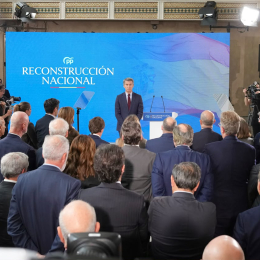
PIMEC supports Feijóo at the presentation of the PP program with 300 representatives of civil society
10 minutes
Electricity consumption reflects a limited impact, although uneven throughout the day
The evolution of electricity demand has been one of the indicators used to assess the economic impact of the strike. This is a common reference in this type of call, although it does not allow directly knowing the number of workers who have stopped going to their workplaces.
At the first hour of the morning, the drop in consumption compared with Tuesday was approaching 9.5%. The difference was reduced as the day went on, until it stood at 0.25% at 14:00, according to the records shared during the day.
At 17:00, CEOE and Cepyme reported a reduction in demand of 4.7% compared with Red Eléctrica’s forecast and of 2.5% compared with Tuesday. An hour later, consumption stood at 3.73% below what was expected and 2.42% below the previous day’s figures.
These percentages must be differentiated from accumulated consumption. Red Eléctrica had communicated that, at 11:00, there was an accumulated reduction of 7.46% compared with the demand forecast for that period, with a maximum hourly drop of 15.49% between 10:00 and 11:00.
The subsequent evolution shows that the impact was not uniform throughout the day. All of the difference also cannot be attributed to the strike without taking into account factors such as weather, industrial activity, usual consumption patterns, and electricity self-consumption.

Featured story
CCOO places the monitoring of the strike at 70% in Madrid and raises it to 84% in Catalonia
2 minutes
A strike for housing after eight years of socialist government
Housing has been one of the main demands of a strike held after more than eight years of Pedro Sánchez’s presidency. Since June 2018, the Executive has approved different measures regarding the real estate market, including theLaw for the Right to Housing of 2023 and subsequent extraordinary provisions regarding rent and evictions.
The call is also made after Congress rejected two housing decrees promoted by the Government. The unions have criticized the position of the parties that voted against the regulations, especially the PP and Vox, while tenant organizations have extended their reproaches to the policies developed by administrations of different political colors.
This circumstance has opened a controversy over the target of the strike. The Partido Popular argues that the mobilization has taken on an electoral character and that the trade union headquarters have directed their criticism against an opposition that has not yet accessed the Government. The conveners reject that interpretation and argue that their demands are aimed at all administrations with responsibilities in housing matters.
Feijóo questioned the call against the opposition
Alberto Núñez Feijóo had asked the unions to reconsider the strike, both because of its proximity to the elections and because of the situation created after the railway accidents in Adamuz and Urda.
At an information breakfast organized by Europa Press on November 3, the PP president defended the constitutional right to strike, but questioned that a mobilization be called with criticisms aimed at the opposition after eight years of socialist Government.
"Don't do it. They didn't do it in eight years of Government. Don't do it now, three weeks before being called to the polls. Don't do it or you'll link your image to Pedro Sánchez," the popular leader said then.
The PP has maintained this interpretation throughout the day. Its leaders consider that the call has an electoral component, while CCOO and UGT argue that the strike responds to social problems that affect workers regardless of their political preferences.
The contrast between these two positions comes at a time when housing occupies a prominent place in the electoral programs and proposals of the main parties.
The Government leaves its public agenda practically empty
The Executive has reduced its public institutional activity to the bare minimum during the strike day. Neither Pedro Sánchez nor most of his ministers have included official events in their schedules.
The exceptions have been the Minister of Foreign Affairs, José Manuel Albares, who has maintained international commitments in Brussels and Paris, and the Agriculture minister, Luis Planas, on official travel in Turkey.
Moncloa has explained that the decision responds to respect for the right to strike of workers in the ministerial departments, although it has specified that members of the Government have continued to carry out their duties in their offices.
The spokesperson for the Executive, Elma Saiz, has defended the legitimate nature of the mobilization and has called for respect for trade union organizations. The Minister of Social Rights, Pablo Bustinduy, has also expressed his support for the strike and has encouraged people to take part in it.
The Government maintains that the protest is not aimed at the Executive, but rather seeks to defend social rights. CEOE and Cepyme, for their part, have questioned whether Moncloa has supported the demands while highlighting the results of the Spanish economy.

The Government recovers two housing decrees rejected by Congress
The strike was held one day before the Congress Standing Committee examines two housing Royal Decree-Laws that the Executive has approved again after its earlier versions were rejected by parliamentary majority.
In that vote, PP, Vox, Junts and UPN added up 178 deputies opposed to the initiatives. The PNV and Coalición Canaria also rejected the second decree, relating to compensation to tenants.
After the early call for elections and the dissolution of the Cortes, the Government again approved both texts, introducing modifications. Their ratification now corresponds to the Standing Committee, which maintains certain parliamentary functions while Congress remains dissolved.
The first of the decrees brings together a broad set of measures on the housing market. Among them are the extension until 2030 of certain protections against evictions of vulnerable people without alternative housing, the extension of rental contracts until 2028, tax measures, and new conditions for property purchase operations by investment funds.
It also incorporates the "Tu Casa" mechanism, managed by the Instituto de Crédito Oficial, with loans of up to 50,000 euros for the purchase of a first home and an announced allocation of 10,000 million euros.
The second decree provides for compensation equivalent to one year of rent in certain cases in which the owner decides to end the contract once the initial legal period has elapsed.
The recovery of the rules takes place on the eve of the elections and after the Government lost its vote in the Plenary. The opposition has questioned the decision, while the Executive defends the need to maintain the measures in order to respond to the situation in the real estate market.

PNV allows the Government to dispense with Junts in the Permanent Commission
The main difference compared with the previous vote is the composition of the body that must rule on the decrees.
The Permanent Commission is made up of 69 deputies. The bloc formed by PSOE, Sumar, ERC, Bildu and Podemos brings together 34 representatives, while PP, Vox and Junts add another 34. The remaining seat corresponds to the PNV.
Basque nationalists have announced that they will support the first of the decrees and vote against the second. If the positions set out are maintained, the first rule could be ratified by 35 votes to 34, without needing Junts’ backing.
The second text, on the other hand, for now does not gather the necessary support to get past the vote.
The difference in composition between the Plenary and the Permanent Commission thus allows for a different parliamentary outcome from the one that occurred before the dissolution of the Cortes. The procedure falls within this body’s constitutional powers, although its use in these circumstances has sparked political criticism from the opposition.
The strike, on the eve of the start of the election campaign
The parliamentary vote will take place this Thursday, 12 November. Barely a few hours later, at 00.00 on Friday 13, the election campaign for the general elections of 29N will officially begin.
The coincidence places housing at the center of the political confrontation. The Government faces the start of the campaign with the possibility of ratifying one of the initiatives previously rejected by Congress, while the Partido Popular has turned Pedro Sánchez’s management in this area into one of the main arguments of its election programme.
The strike has also introduced a controversy about the relationship between union mobilization and the electoral calendar. The conveners argue that their demands are independent of the parties, while the PP considers that the protest has had the opposition as its political target.
The business balances known so far do not show a generalized paralysis of economic activity. The demonstrations, for their part, have allowed the conveners to take their demands to the streets. The electoral reach of both circumstances cannot be determined from the tracking figures for a strike.

Barcelona: damage to shops, police charges, and arrests
At the close of this edition, the day of strike concluded with serious incidents in Barcelona, where groups of hooded people smashed shop windows of commercial establishments in the city center, carried out graffiti, and threw pyrotechnic devices against the Mossos d'Esquadra. The altercations began around 7:00 p.m., in the Passeig de Gràcia and Gran Via area, and spread toward Plaça de Catalunya, where new clashes with the Catalan police were recorded. The officers deployed riot-control units and carried out charges to disperse the groups involved. The incidents occurred after the Sindicat de Llogateres said the main demonstration was over.
Public order problems had begun during the early hours of the morning and the morning, with burning tires, blockades of access to industrial estates, and road cutoffs. In Catalonia, interruptions were recorded on the AP-7, the A-2, the C-58 and the Ronda Litoral, as well as incidents in Mercabarna, the Zona Franca and the access routes to logistics facilities. Six Mossos agents were injured lightly during an intervention on the B-23, near Molins de Rei. The figures published during the night also reported arrests related to the disturbances in Barcelona. Across Spain, the Ministry of the Interior had tallied 919 incidents and at least 52 detainees up to 17.00 hours, figures that will have to be updated with the final report.

The disturbances in Barcelona add to incidents recorded in other parts of the country, especially at the access points to Mercamadrid, where clashes took place between pickets and police officers. CCOO and UGT have questioned some police actions and announced legal actions, while business organizations have denounced coercion and obstacles to access to certain workplaces. These episodes must be distinguished from the general development of the demonstrations, in which thousands of people exercised their right to strike and assembly peacefully.
In addition, the general strike has left numerous incidents in the Basque Country, with thirteen detainees, three being investigated, and 155 people identified, according to the report released by the Ertzaintza at 13.30 hours. The disturbances were recorded in Portugalete, Vitoria, San Sebastián, Zamudio and Agurain, among other towns. The regional police have reported damage to shops and urban street furniture, burning of dumpsters, and road cutoffs using barricades. Seven officers were injured and had to receive medical assistance.
In Barakaldo, the headquarters of the Partido Popular suffered the breaking of a window pane and two young people from Nuevas Generaciones reported having been attacked by a group of hooded figures. According to the PP complaint, at around six in the afternoon several individuals threw an electric water heater at the glass of the premises. When the two young people came out to check what had happened, they received blows and insults, including "fascists". The Ertzaintza went to the scene and those affected filed a complaint. The president of the PP in Bizkaia, Amaya Fernández, condemned the events and demanded that those responsible be identified.
The PP headquarters in Vitoria was also the target of graffiti and stickers during the passage of a demonstration. For its part, the PNV reported threats against two members of its youth organization, EGI, when they were removing posters and cleaning graffiti at a batzoki in the Donostiarra neighborhood of El Antiguo. The nationalist party also reported graffiti against its headquarters in Zumaia. These incidents occurred during a day on which peaceful demonstrations were also held in the Basque capitals.