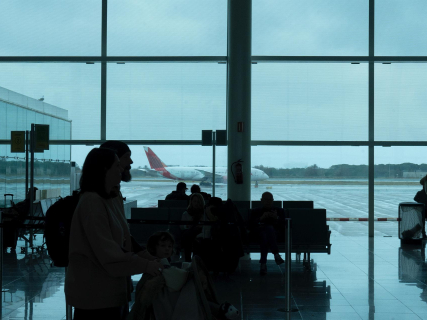
The strike at Barcelona airport continues this Saturday: affected flights at El Prat and what passengers need to know

The strike at Barcelona-El Prat airport continues this Saturday, August 8, and is not called off. The indefinite strike of Groundforce workers began on Tuesday and affects essential services for numerous airlines, such as check-in, boarding, baggage, and flight coordination, although minimum services are limiting its impact on the overall airport.

3 minutes

fotonoticia 20260625191439 1920

fotonoticia 20260625191439 1920

Add DEMÓCRATA to Google

Ask FREN

Published

Last updated

3 minutes

Most read

The strike at El Prat has not ended. The workers of Groundforce Barcelona maintain this Saturday, August 8, the indefinite call initiated last Tuesday, August 4, in the middle of the high season and with thousands of passengers using Barcelona airport daily.

The strike specifically affects Groundforce and, therefore, does not imply the general paralysis of the airport nor does it affect all flights arriving or departing from Barcelona in the same way.

During the first days, however, the conflict already caused cancellations and problems with luggage. In the first two days, at least 36 flights were canceled, according to the information published about the evolution of the protest.

What is happening today with the El Prat strike

The key for travelers is to distinguish between a general strike at the airport and what is really happening.

Groundforce provides handling services, that is, essential work that is carried out on the ground before and after each flight. These include check-in, boarding of passengers, luggage management, and operation coordination.

The call affects the 1,179 workers of Groundforce Barcelona and CGT reports problems related to occupational risk prevention, workload, staff rotation, and working conditions.

The union called the strike indefinitely, so there is no previously set date for its conclusion.

Which airlines may be affected

Groundforce works in Barcelona for a long list of companies. Among the airlines served are Air Europa, Lufthansa, Air France, KLM, Qatar Airways, United Airlines, Turkish Airlines, ITA Airways, Finnair, SAS, Etihad Airways, Air China, Saudia Airlines, LOT Polish Airlines, Croatia Airlines, Air Arabia, El Al, Asiana Airlines, Air Transat, and Luxair, among others.

This does not mean that all flights from these companies will experience incidents. The strike may translate, depending on each operation, into cancellations, delays, problems during check-in, or difficulties with luggage loading and delivery.

In the first days, there were also flights that operated without transporting all the expected luggage.

Should you go to Barcelona airport earlier this Saturday?

Passengers flying with a company served by Groundforce should check the specific status of their flight before traveling to El Prat and review the notices sent by the airline.

The existence of the strike does not in itself imply that the flight is canceled.

Security, immigration controls, and the rest of the airport services are not part of this CGT call. The conflict is localized in the ground services provided by Groundforce.

The most useful recommendation is to first check the flight directly with the airline and then consult the departure and arrival information from Aena.

The minimum services reach up to 80%

The Ministry of Transport established different minimum services depending on the route.

During August, they reach 80% for certain connections with non-peninsular territories, while in other routes the percentages are lower and can drop to 35%.

The existence of these minimum services explains that the airport can maintain a large part of its activity despite the strike.

Groundforce provides assistance to numerous international airlines and the conflict comes, moreover, at one of the busiest times of the year. Barcelona-El Prat recorded 28.3 million passengers during the first half of 2026, 4.4% more than during the same period of the previous year.

When does the El Prat strike end?

For now, there is no date.

The call initiated on August 4 is indefinite. Therefore, it will continue unless it is called off, suspended, or an agreement is reached that allows the conflict to end.

This is precisely the difference compared to a strike limited to certain days: travelers planning to use Barcelona-El Prat in the coming weeks should check the updated situation even if their flight does not leave this Saturday.

For passengers, the definitive reference before heading to the airport must always be the individual status of their flight communicated by the airline and the departure and arrival information from Aena.

More key points, information and questions with FREN

AI-GENERATED CONTENT

What is the parliamentary procedure for regulating minimum services during a strike at airports in Spain?

The general regulation of minimum services in the event of a strike at airports can be done through an ordinary law that establishes criteria and limits for the Government, and its approval follows the common legislative procedure in the Cortes Generales. For each specific strike, minimum services are not set by Parliament but by the Government through executive decisions (usually orders or resolutions) supported by regulations such as Royal Decree 776/1985. If the legal framework were to be changed (for example, to strengthen guarantees of the right to strike or to detail the criteria for minimum services), a legislative reform would have to be processed following that ordinary procedure and with a simple majority in the Congress.

Current legal framework of reference

In the airport and civil aviation field, there is specific regulation on essential services. Royal Decree 776/1985, of May 25, classifies civil aviation (airport aspect and air traffic control and management) as an essential public service and establishes that strikes by personnel of the Directorate General of Civil Aviation, national airports, and directly involved companies are conditioned on maintaining those essential services.

This royal decree also provides that the competent minister determines, “with strict criteria,” the personnel necessary to ensure the provision of essential services, and foresees a sanctioning regime for non-compliance. Therefore, today the scheme is: the legislator sets the framework (Constitution, strike regulations, public service and air navigation legislation) and the Government specifies the minimums through executive decisions supported by regulations such as Royal Decree 776/1985 and civil aviation organizational regulations (for example, Royal Decree 184/2008 on the State Agency for Air Safety, or Royal Decree 20/2014 on time slots).

Type of norm and parliamentary majority

If the intention is to “regulate minimum services” in the strict sense (criteria, limits, procedure, union guarantees, etc.), the usual approach is to use an ordinary law or reform existing laws (for example, strike legislation or air navigation law). The approval or reform of an ordinary law requires in Congress a simple majority: more votes in favor than against, excluding abstentions.

It is not necessary to follow the organic law regime unless it is intended to directly affect the essential content of fundamental rights in Title I of the Constitution. In that case, an absolute majority in the final overall vote would be required, but this must be expressly defined in the initiative as an organic law.

Initiation of the initiative

The procedure begins like any legislative reform:

  • Bill: presented by the Government, for example a text that reforms strike or civil aviation regulations to set criteria for minimum services at airports.
  • Private member's bill: presented by parliamentary groups, the Senate, or in certain cases, regional assemblies or popular legislative initiative.

In both cases, the Congress Board qualifies the initiative and admits it for processing. If it comes from the Government, it is accompanied by a statement of reasons and a justification report (including economic and social impact, relevant in a sector like aviation).

Processing in Congress

The main phases in Congress are:

  • Consideration (for private member's bills): the Plenary decides whether to debate the text.
  • Amendments to the whole: may propose returning the text to the Government or an alternative text.
  • Amendments to the articles: groups propose specific changes (definition of “minimum service,” percentage limits, union participation, etc.).
  • Committee report and commission: a report and commission opinion are prepared integrating accepted amendments.
  • Debate and vote in Plenary: the Congress Plenary debates the report and reserved amendments and votes on the whole. With a simple majority, the text is approved and sent to the Senate.

Senate intervention

The Senate may:

  • Introduce amendments to the text approved by Congress.
  • Approve a veto (return) by absolute majority.

If there are amendments, Congress decides whether to accept them (by simple majority). If there is a veto, Congress can override it by immediate absolute majority or, after two months, by simple majority. Thus, the final word on the regulation of minimum services always corresponds to Congress.

Sanction, promulgation, and entry into force

Once the same text is approved by both Chambers (or the Senate veto is lifted), the law proceeds to:

  • Sanction and promulgation by the King.
  • Publication in the BOE, from which moment the Government and civil aviation authorities must apply the criteria set therein when issuing minimum service resolutions supported, among others, by regulations such as Royal Decree-Law 8/2014 or Law 18/2014 regarding sector organization.

Urgency route: royal decree-law

In very urgent situations, the Government could approve a royal decree-law that immediately affects the regulation of minimum services at airports. In that case, the norm enters into force upon publication but must be ratified by Congress within a maximum of 30 days. Congress may ratify, repeal, or agree to process it as a bill to introduce amendments.

What margin does the Government have to set specific minimum services at an airport based on this legal framework? What has the Constitutional Court said about the proportionality of minimum services in air transport strikes? Could you explain in more detail the content of Royal Decree 776/1985 and how it is applied in an AENA strike?

What are the competencies of the Ministry of Transport in managing labor conflicts at airports?

The Ministry of Transport (today Ministry of Transport and Sustainable Mobility) does not negotiate collective agreements nor direct labor conflicts at airports — that is the labor competence of the Ministry of Labor and the parties involved — but it does have a key role in ensuring that air transport, as an essential service, continues to operate safely and continuously. Its competencies derive from its function of general regulation of air transport, oversight of AENA/ENAIRE, and specific regulations that allow it to set minimum personnel during strikes and coordinate civil aviation security. Below is a summary of these functions and their legal limits.

1. General framework: air transport regulation and limits

Royal Decree 645/2020, on the structure of the then Ministry of Transport, Mobility and Urban Agenda, was amended by Royal Decree 495/2021, whose preamble and article 1 specify that the Ministry is responsible for proposing and executing Government policy in:

  • State-competent air transport infrastructures.
  • Control, regulation, and administrative management of the corresponding transport services, “to guarantee safe and sustainable mobility.”

This is reflected in the amendment of articles 1 and 2 of Royal Decree 645/2020, according to the 2021 amendment. Legally, this places the Ministry as the regulatory and supervisory authority of the airport and air transport system, but “without prejudice to the competencies of other ministerial departments,” including Labor and Interior.

2. Guarantee of essential services during strikes

The central piece in labor conflicts at airports is Royal Decree 776/1985, on guaranteeing the provision of essential services in Civil Aviation, accessible in the 1985 regulation. This royal decree establishes that:

  • The movement of aircraft and airport, control, and air traffic services constitute an essential public service that cannot be paralyzed by a strike.
  • Strike situations affecting personnel of the Directorate General of Civil Aviation, dependent bodies of the then Ministry of Transport, and companies directly involved in those services “shall be understood as conditioned in all cases” to maintaining those essential services.
  • The Minister of Transport (in the text, “Transport, Tourism and Communications”) shall determine, “with strict criteria, the necessary personnel” to ensure the provision of essential services.

In practice, this means that, in the event of a strike at airports (AENA, ENAIRE, handling, etc.), the Ministry of Transport is the political authority responsible for setting the minimum necessary personnel to maintain the essential service, articulating the so-called “minimum services” (although that expression does not literally appear in the royal decree). Non-compliance with these obligations is considered a sanctionable infraction under labor and public service regulations.

3. Role over AENA, ENAIRE, and the airport network

The Ministry exercises oversight and regulation over the managers of the airport system:

  • ENAIRE: Royal Decree 160/2023 approves its statute and modifies that of the State Agency for Air Safety, reinforcing its role in air navigation and attachment to the Ministry, according to Royal Decree 160/2023.
  • AENA S.M.E., S.A.: its regime is integrated into Law 18/2014, which contains measures on the airport system of general interest; this law, still in force with amendments, can be consulted in Law 18/2014.
  • Economic regulation (tariffs, service quality) is articulated via the Airport Regulation Document (DORA), approved by Council of Ministers Agreement and published by the Directorate General of Civil Aviation, such as DORA 2022‑2026 included in the 2021 resolution, and through regulations like Royal Decree 162/2019 on AENA tariffs.

In a labor conflict, this position allows the Ministry to pressure or politically mediate with AENA or ENAIRE to ensure service continuity, but collective bargaining (for example, the II Agreement of the AENA Group or the III agreement of ENAIRE with controllers) is processed and registered within the Ministry of Labor’s scope.

4. Civil aviation security and coordination

Labor conflict management also has an operational security and protection (security) dimension. The National Security Program for Civil Aviation (PNSAC), updated by the Resolution of January 21, 2021 and later by the Resolution of 2022, defines the organization, methods, and procedures to protect passengers, crews, ground personnel, and airports against unlawful acts, “preserving the regularity and efficiency of air traffic.”

This program is approved by Council of Ministers Agreement and designates a competent Authority for civil aviation security and a National Civil Aviation Security Committee, according to the text itself and the royal decree cited therein. Within this framework:

  • The Ministry of Transport, through Civil Aviation and AESA (whose statute is in Royal Decree 184/2008), is responsible for ensuring that security measures are also complied with during strikes and conflicts.
  • Coordination with other departments (Interior, Defense, etc.) is articulated through this Program and the National Committee, although consulted sources do not detail the internal distribution of functions.

5. What the Ministry of Transport DOES NOT do

Analyzed sources clarify the competence distribution:

  • Negotiation of collective agreements (AENA, handling, ENAIRE, etc.) and registration/publication of agreements and rulings correspond to the Ministry of Labor, as shown by successive resolutions of the Directorate General of Labor on ground assistance agreements and the AENA group, for example the 2012 resolution on the V handling agreement, the ruling on the same (2023 resolution) or the modification of AENA agreements recorded in the 2019 resolution and earlier like the 2020 one.
  • Strictly labor aspects (right to strike, sanctions, interpretation of abusive minimum services) are subject to judicial control, as illustrated by the Constitutional Court Judgment 83/2016 on the state of alarm in 2010.

In summary, Transport acts as guarantor of the continuity of air service and civil aviation security, setting the essential personnel and modulating service provision conditions in coordination with Labor, Interior, and other actors, but does not replace labor bodies or courts in conflict resolution.

Could you detail how those minimum services or essential personnel are set in practice during an airport strike? What role did these competencies of the Ministry of Transport play in the air traffic controllers’ conflict that led to the 2010 state of alarm? How do the Ministry of Transport and the Ministry of Labor coordinate when a strike at AENA or handling threatens to paralyze airports?

What legal requirements must an indefinite strike call in the Spanish airport sector meet?

An indefinite strike in the Spanish airport sector must comply with the general framework of the right to strike and, additionally, with the specific requirements derived from the status of airports as an essential service for the community. In practice, this implies requirements of legitimacy of those calling the strike, deadlines and form of prior notice, minimum content of the call, communication to the company and labor authority, and acceptance of the minimum services set. Without meeting these elements, the strike risks being declared illegal or sanctions being imposed on the callers and participants. The following is a general, indicative guide on the main requirements.

Legitimacy to call and scope of the strike

In Spain, a strike call is not individual but collective. In the airport sector, the call usually corresponds to:

  • Representative unions in the sector (statewide, regional, or company-based).
  • Works councils or staff delegates of the affected companies (for example, handling, security, cleaning, catering, technical services companies).

The call must clearly specify the subjective scope (which companies, workplaces, categories, or groups are called) and the territorial scope (specific airports, entire network, autonomous community, national scope, etc.). In the case of an indefinite strike, it is especially relevant that the call is well defined to avoid interpretation conflicts and possible challenges.

Prior notice and formal communication

Strike regulations require a minimum prior notice before the strike begins. This prior notice must be communicated in writing, at least to:

  • The affected company or companies (for example, AENA, ENAIRE, concessionaires or subcontractors).
  • The competent labor authority, which will vary depending on the scope (regional or national).

The prior notice must be given with sufficient advance to allow both negotiation and organization of minimum services. The communication will indicate, among other elements, the date and time of start, the indefinite nature of the strike, its personal and territorial scope, and the reasons motivating it.

Minimum content of the call

For the call to be legally solid, the strike document usually includes:

  • Calling body (union, works council, etc.) and its representation.
  • Motivation of the strike: labor claims, working conditions, salaries, shifts, safety, etc.
  • Objective scope: which activities or services will be interrupted.
  • Subjective and territorial scope: to whom the call is addressed and in which centers or airports.
  • Duration: in this case, specifying that it is an indefinite strike until further notice or agreement.

A vague or imprecise wording about the objectives or scope of the strike facilitates its later challenge by the company or labor authority.

Essential services and minimum services at airports

Airports and air transport are considered essential services for the community. This implies that the strike is a legitimate right but must be exercised guaranteeing that a minimum level of service is maintained. Usually, the competent authority (at the national level, the Government or the corresponding ministry) sets by resolution the mandatory minimum services for the strike.

In the airport sector, these minimum services may affect:

  • Air traffic control, runway operations, and operational safety.
  • Security services and passenger control.
  • Assistance to passengers with reduced mobility and other vulnerable groups.
  • Certain flights (for example, medical, emergency, island connections, or minimum time slots).

Callers must accept that certain workers are designated to attend those minimum services. Abusive or excessive designations can be challenged, but direct non-compliance with minimum services can lead to sanctions and affect the legality of the strike.

Negotiation, strike development, and challenges

The strike call must be accompanied by a negotiating willingness by the callers. It is common to open or continue a mediation or arbitration process within the framework of autonomous labor conflict resolution systems.

During the strike, both the company and the labor authority may:

  • Challenge the legality of the call if they consider that regulations have been violated (lack of prior notice, unlegitimized caller, serious violation of essential services, etc.).
  • Require strict compliance with minimum services and act against possible breaches.

On their part, callers may challenge minimum service resolutions they consider disproportionate or that effectively empty the right to strike.

Practical recommendations

Since this is a very sensitive sector for the economy and the rights of third parties (passengers, goods, emergencies), the usual practice is to maximize legal rigor in the call: have specialized labor advice, properly document the prior notice and negotiation process, and maintain open communication channels with the labor authority. Any specific doubt about a particular call should be contrasted with current regulations and, if applicable, with labor law professionals.

What role does the central Government usually play in setting minimum services in an airport strike? How can a minimum service resolution be challenged if considered disproportionate? What legal difference is there between an indefinite strike and a strike of determined duration in the air transport sector?

Play

Test your knowledge with FREN!

How much do you know about this topic? Answer the following 3 questions.

Since what date has the indefinite strike of Groundforce at Barcelona-El Prat airport been underway?

Question 1 of 3

Which services at Barcelona-El Prat airport are affected by the Groundforce strike?

Question 2 of 3

What percentage of minimum services has the Ministry of Transport established for certain routes during the strike?

Question 3 of 3

Hola, soy Fren. ¿Cómo te ayudo?