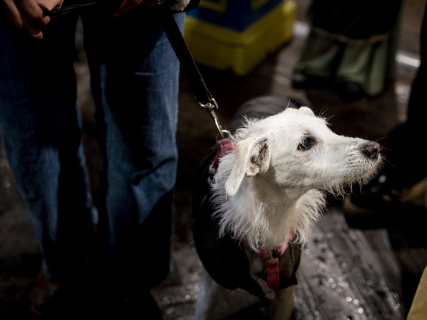

This Tuesday, July 21, the World Dog Day is celebrated, a date dedicated to recognizing the role of these animals in society and to raise awareness against abandonment and mistreatment. In Spain, their protection does not depend on a single norm: it is distributed among the Animal Welfare Law, the Penal Code, the Civil Code, the regulation on potentially dangerous dogs, and the autonomous laws and municipal ordinances.
The main state reference is Law 7/2023, on the protection of the rights and welfare of animals. It includes the penalties provided for mistreatment and abandonment, the recognition of animals as sentient beings, and the specific obligations applicable to certain dogs.
The Animal Welfare Law: the main protection norm
The Law 7/2023, of March 28 considers dogs as companion animals and recognizes their right to good treatment, respect, and protection derived from their condition as sentient beings.
The norm obliges responsible individuals to keep them in dignified living conditions, ensure they have food, water, veterinary care, and adequate housing, as well as adopt the necessary measures to prevent them from causing harm to other people, animals, or property.
It also establishes the obligation to identify dogs by microchip and register them in the Companion Animal Registry of the corresponding autonomous community.
Among the prohibitions included in the law are:
- Mistreating or physically assaulting a dog.
- Intentionally abandoning it.
- Keeping it permanently tied up or roaming without supervision.
- Habitually leaving it on terraces, balconies, rooftops, storage rooms, basements, patios, or vehicles.
- Using it in fights or subjecting it to practices that cause suffering.
- Using training methods that cause it harm.
- Subjecting it to work unsuitable for its health condition.
- Practicing mutilations or body modifications without veterinary justification.
- Slaughtering it for economic reasons, lack of space, or because no adopter can be found.
- Leaving it unsupervised for more than 24 consecutive hours.
Slaughter is only permitted for duly justified reasons of safety, public health, or to prevent irreversible suffering, under veterinary criteria.
Fines of up to 200,000 euros
The Animal Welfare Law classifies offenses as minor, serious, and very serious.
Minor infractions can receive a warning or fines ranging from 500 to 10,000 euros. Serious infractions are punished with fines between 10,001 and 50,000 euros, while very serious infractions can reach between 50,001 and 200,000 euros.
In addition to the fine, accessory sanctions may be imposed, such as disqualification from having animals, closure of establishments, withdrawal of licenses, or confiscation of the dog.
Abandonment can be an infraction or a crime
Abandoning a dog is prohibited by administrative legislation, but it can also constitute a crime when the animal is left in conditions that endanger its life or integrity.
The article 340 ter of the Penal Code establishes for these cases a penalty of a fine of one to six months or community service of 31 to 90 days. The conviction also includes disqualification from working with animals or having them for a period of one to three years.
The difference between the administrative infraction and the crime will depend on the specific circumstances, especially the danger to which the animal has been exposed.
Prison sentences for mistreating or killing a dog
The Organic Law 3/2023 reformed the Penal Code and created a specific title dedicated to crimes against animals. Causing a dog an injury that requires veterinary treatment can be punished with a prison sentence of three to 18 months or a fine of six to 12 months. A disqualification of one to three years for having animals or exercising related professions may also be imposed.
The penalties can be applied at their upper half when aggravating circumstances occur, such as:
- Using weapons, instruments, or especially dangerous methods.
- Acting with cruelty.
- Employing poison or explosive substances.
- Causing the loss or uselessness of an organ or sense.
- Committing the acts in front of a minor or a vulnerable person.
- Using the animal to exercise violence or coerce another person.
- Recording or publicly disseminating images of the mistreatment.
- Committing the crime using the person responsible for an activity related to animals.
If the mistreatment causes the death of a dog, the Penal Code contemplates penalties of prison from 12 to 24 months or a fine from 18 to 24 months, in addition to a disqualification of two to four years for working with animals or having them.
Dogs are no longer legally considered as things
The Law 17/2021, of December 15, modified the Civil Code to recognize that animals are living beings endowed with sensitivity. This change obliges owners and possessors to exercise their rights respecting the nature and welfare of the animal. It also has effects on separations, divorces, inheritances, seizures, and judicial proceedings.
In a couple's breakup, the judge can decide who gets the dog, establish a cohabitation or visitation regime, and distribute the expenses related to its care. To do so, they must assess the welfare of the animal and the interests of the family members, regardless of who is listed as the owner.
The Civil Code even allows for limiting shared custody of children when there are records of animal abuse used as a form of violence or control over the family.
Microchip and mandatory registration
All dogs must be identified by microchip and registered in the corresponding regional registry.
Changes of ownership, loss, theft, or death must be communicated to the Administration within the terms and deadlines established by regional regulations. Identification allows locating the responsible person and is essential to combat abandonment.
The transfer of a dog cannot be carried out without identification. Free transfers must be formalized through a contract and dogs under eight weeks old cannot be handed over.
Limits on breeding and selling dogs
The Animal Welfare Law establishes that breeding can only be carried out by persons registered in the Companion Animal Breeders Registry. The sale of dogs must be carried out directly from a registered breeder and through a written contract. Their sale in pet stores or direct sale via the internet is not allowed.
Advertisements published on websites, platforms, or media must include the breeder's registration number and, when applicable, the animal's identification number.
The law allows advertising dogs on the internet, but does not permit closing the sale directly through this means. Additionally, it prohibits handing over unidentifiable dogs or those separated from their mother before eight weeks.
Training course and civil liability insurance
The Law 7/2023 establishes that people who want to be owners of a dog must prove the completion of a free training course, with indefinite validity. It also provides that the owner must maintain throughout the animal's life a civil liability insurance for damages to third parties that also covers the people in charge of taking care of it.
However, the general application of both obligations depends on the regulatory development that must specify the content of the course and the minimum coverage of the insurance. Meanwhile, there may be additional obligations established by the autonomous communities or the municipalities.
The situation is different for dogs classified as potentially dangerous, whose owners already have specific obligations fully regulated.
The regulations for potentially dangerous dogs remain in force
The Law 50/1999 and the Royal Decree 287/2002 regulate the ownership of dogs considered potentially dangerous.
The state regulations include eight breeds: pit bull terrier, staffordshire bull terrier, american staffordshire terrier, rottweiler, dogo argentino, fila brasileiro, tosa inu, and akita inu, as well as their crosses.
Dogs that meet certain physical characteristics or have been involved in attacks on people or other animals may also receive this classification, following an evaluation by the competent authority and with a veterinary report.
To own one of these dogs, the following is required:
- Be of legal age.
- Obtain a municipal license.
- Prove physical capacity and psychological suitability.
- Lack certain criminal records.
- Contract civil liability insurance.
- Register the dog in the corresponding municipal registry.
- Identify it with a microchip.
In public places, they must wear an appropriate muzzle and a non-extendable leash of less than two meters. A person cannot simultaneously handle more than one of these dogs.
The autonomous communities also have their own laws
Animal protection is a shared competence. Alongside state legislation, each autonomous community has its own rules, registries, and sanctioning systems. These laws may regulate vaccination, deadlines for implanting the microchip, sterilization, the collection of abandoned animals, the operation of shelters, breeding, authorized establishments, and health requirements.
In the Community of Madrid, for example, the Law 4/2016 on the Protection of Companion Animals is applied, which seeks the highest level of protection, combats abandonment, and promotes adoption and zero euthanasia.
The municipal ordinances complete the protection
The municipalities can approve ordinances on coexistence and ownership of animals. These rules regulate everyday matters such as the use of leashes, the times and spaces where dogs can be off-leash, access to parks, the cleaning of feces and urine, or the action to take in the event of lost animals.
They can also determine the conditions of access to transportation, public establishments, and municipal facilities, always within the limits set by state and regional legislation.
Does the Animal Welfare Law protect all dogs?
Law 7/2023 considers dogs as companion animals, but excludes hunting dogs and packs, as well as certain herding dogs, livestock guard dogs, rescue dogs, assistance dogs, or those employed by the Armed Forces and police bodies.
This exclusion does not mean that they can be mistreated or abandoned. They continue to be protected by the Penal Code, the Civil Code, regional laws, and the corresponding sectoral regulations.
The result is a protection system distributed among various regulations. The Animal Welfare Law establishes the basic conditions for ownership; the Penal Code pursues the most serious behaviors; the Civil Code recognizes dogs as sentient beings, and the autonomous communities and municipalities specify a good part of the daily obligations.